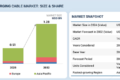
The France point of care diagnostics market is a rapidly advancing sector shaped by an aging population and a rising prevalence of chronic diseases like diabetes and cardiovascular conditions. The landscape is characterized by a significant shift toward decentralized care, with increasing adoption of rapid testing in emergency departments, physician offices, and home settings to enable faster clinical decision-making. Technological innovations, including the integration of artificial intelligence, microfluidics, and molecular diagnostics, are enhancing the accuracy and portability of testing platforms. While the market is influenced by stringent European Union In Vitro Diagnostic Regulations that lengthen approval cycles, it continues to grow as the healthcare system prioritizes early disease detection and outpatient services to relieve the burden on centralized hospitals. Key players such as bioMerieux and Roche are active in this competitive environment, focusing on digital health integration and connected solutions to support telemedicine and remote patient monitoring across the country.
Key Drivers, Restraints, Opportunities, and Challenges in the France Point of Care Diagnostics Market
The France point of care diagnostics market is primarily driven by an aging population with a rising prevalence of chronic and infectious diseases, necessitating rapid and accurate testing near the patient. Growth is further propelled by government initiatives and the expansion of medical reimbursement for high-value tests. However, the market faces significant restraints, including stringent regulatory hurdles like IVDR compliance, which increases time-to-market and compliance costs, alongside the high capital investment required for advanced equipment. Opportunities abound in the shift toward healthcare decentralization, the adoption of digital workflows and AI-integrated systems, and the growth of the over-the-counter self-testing segment. Despite these prospects, the industry must navigate challenges such as acute shortages of qualified medical biologists and technicians, inadequate standardization with centralized laboratory methods, and the persistent threat of cybersecurity breaches in connected diagnostic systems.
Customer Segmentation, Needs, Preferences, and Buying Behavior in the France Point of Care Diagnostics Market
The target customers for the France point-of-care diagnostics market primarily include public and private hospitals, clinical laboratories, physician offices, and a growing segment of home-care users. Institutional customers like hospitals and clinics prioritize rapid, real-time results for emergency and inpatient care to facilitate faster clinical decision-making and streamline treatment pathways, particularly for infectious diseases and cardiometabolic monitoring. Their purchasing behavior is increasingly influenced by the French social security system’s focus on updating healthcare infrastructure and public health initiatives, such as expanded national screening programs that utilize at-home test kits. Meanwhile, individual consumers in the home-care segment prefer over-the-counter solutions for chronic disease management, such as glucose monitoring kits, driven by a desire for convenience and patient-managed care. Across all segments, there is a strong preference for technological advancements like AI-integrated platforms and molecular diagnostics that enhance accuracy and efficiency in decentralized settings.
Regulatory, Technological, and Economic Factors Impacting the France Point of Care Diagnostics Market
The France point-of-care diagnostics market is significantly influenced by a complex interplay of regulatory, technological, and economic factors that shape entry and profitability. From a regulatory standpoint, the French National Authority for Health (HAS) increasingly utilizes Coverage with Evidence Development (CED) agreements, which manage uncertainty by granting early access to innovative diagnostics while requiring clinical data collection for final reimbursement decisions. Technologically, the integration of artificial intelligence, digital health platforms, and miniaturized sensors is driving market expansion by enhancing user-friendliness and diagnostic accuracy, particularly for rapid tests and molecular diagnostics. Economically, while the rising prevalence of chronic conditions like diabetes—projected to affect over 4 million people by 2030—sustains high demand, profitability can be restrained by high capital investments for advanced systems and the fact that point-of-care tests are not always cost-effective compared to traditional antibiotic prescribing. Furthermore, the lack of incentives for healthcare professionals and fragmented price regulations in some areas represent significant hurdles for widespread adoption and market penetration.
Current and Emerging Trends in the France Point of Care Diagnostics Market
The France point-of-care (POC) diagnostics market is undergoing a rapid evolution driven by the decentralization of testing and the integration of advanced technologies like artificial intelligence and molecular diagnostics. Current trends include a significant shift toward self-testing and over-the-counter kits for chronic disease management and infectious diseases, a movement accelerated by the COVID-19 pandemic. These trends are evolving quickly, with the market projected to grow at a CAGR of 7.1%, supported by government initiatives favoring local production and the modernization of healthcare infrastructure. Emerging focus areas such as antimicrobial resistance testing and the adoption of portable molecular platforms are further transforming clinical workflows, enabling real-time diagnosis in emergency and primary care settings to improve patient outcomes and relieve hospital overcrowding.
Technological Innovations and Disruption Potential in the France Point of Care Diagnostics Market
Technological innovations such as microfluidics, lab-on-a-chip systems, and miniaturized biosensors are gaining significant traction and are poised to disrupt the France point-of-care diagnostics market by enabling faster, more precise, and decentralized testing. The integration of artificial intelligence and machine learning is further transforming the industry by automating complex sample preparation, enhancing diagnostic accuracy through automated image analysis, and enabling predictive monitoring for chronic conditions like diabetes. Additionally, the development of connected, portable devices and wearable biosensors is facilitating real-time data transmission to eHealth ecosystems, empowering patients and allowing healthcare providers to make immediate clinical decisions outside of traditional laboratory settings. These advancements, supported by France’s national AI strategy and recent regulatory shifts expanding eligible testing locations, are accelerating the shift toward a more accessible and efficient patient-centric diagnostic model.
Short-Term vs. Long-Term Trends in the France Point of Care Diagnostics Market
In the France point of care diagnostics market, the massive surge in COVID-19 testing volumes is increasingly viewed as a short-term phenomenon that is now declining, whereas several other trends represent long-term structural shifts. The move toward decentralization, characterized by the rising adoption of point-of-care and home-based testing, is a permanent transformation driven by consumer demand for convenience and the need to manage an aging population with chronic conditions like diabetes and cardiovascular diseases. Similarly, the integration of artificial intelligence and digital health platforms into diagnostic workflows is a fundamental shift aimed at addressing the need for cost-efficient, accurate, and rapid clinical decision-making. Other enduring structural changes include the growth of personalized medicine and the adoption of molecular diagnostics, which are fueled by long-term investments in healthcare infrastructure and a national strategy to capitalize on efficient diagnostics to reduce escalating financial pressures on the healthcare system.