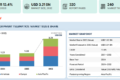
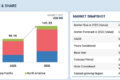
The global pharmaceutical contract manufacturing market is experiencing significant growth, projected to rise from USD 209.90 billion in 2025 to USD 311.95 billion by 2030, growing at a CAGR of 8.2%.
Market Drivers and Trends
The industry is currently undergoing a major transformation fueled by technological advancements and shifting demands. Key factors include:
- Capacity Needs: A critical “GLP-1 capacity crunch” is forcing pharmaceutical companies to rely heavily on Contract Development and Manufacturing Organizations (CDMOs).
- Technological Shifts: Adoption of continuous manufacturing, single-use bioprocessing, and AI-driven quality control is enhancing efficiency and scalability.
- Advanced Modalities: Increased development of antibody-drug conjugates (ADCs) and the rise of cell and gene therapies are driving demand for specialized manufacturing facilities.
- Strategic Outsourcing: Companies are increasingly seeking “one-stop-shop” models to optimize costs, accelerate time-to-market, and strengthen supply chain resilience.
Key Market Insights
- Leading Segments: Pharmaceutical manufacturing services hold the largest market share, while the large molecule segment (biologics, cell & gene therapies) is expected to grow the fastest.
- End Users: Big pharmaceutical companies are the dominant end users, driven by the need for high-volume commercial production.
- Fastest-Growing Region: Asia Pacific is identified as the fastest-growing region, bolstered by rapid infrastructure investment and a strong pool of cost-efficient CDMOs.
- Market Players: Major industry leaders include Thermo Fisher Scientific, Lonza, and Catalent, Inc., which are characterized by their extensive end-to-end service portfolios and global GMP networks.
Challenges
Despite positive growth, the market faces hurdles such as intense pricing pressure on innovator drugs, global trade instability, and the complexity of regulatory compliance, which are prompting firms to diversify manufacturing partners and strengthen regional networks.