PEGylation of therapeutic proteins is becoming increasingly essential because of PEG’s ability to protect against protein enzymatic degradation and increasing half-life of drugs.
Increase in R&D spending of pharmaceutical & biotechnology companies, growth in biologics sector, high prevalence of lifestyle disease, increasing in adoption of protein based drugs over non-protein based drugs and increase of protein stability and circulating half-life with the help of PEGylation are the major drivers of market. On the other hand drug failure and recalls is the major factor restraining the growth of PEGylation of Proteins Market.
A combination of bottom-up and top-down approaches was used to calculate the market sizes and growth rates of the global PEGylation of Proteins Market and its subsegments. All percentage shares, splits, and breakdowns were determined using secondary sources and verified through primary sources. All possible parameters that affect the markets covered in this research study have been accounted for, viewed in extensive detail, verified through primary research, and analyzed to get the final quantitative and qualitative data. Primary interviews with key opinion leaders were also used to determine the percentage shares of each subsegment and the relative differences in growth rates.
–>Geographical Analysis<–
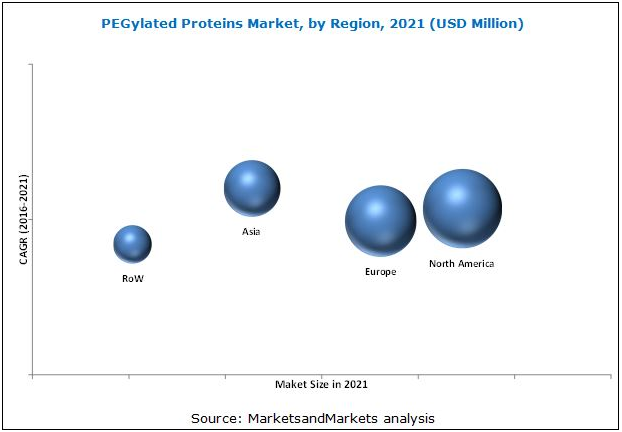
Geographic analysis reveals that North America accounted for the largest share of the PEGylation of Proteins market in 2016. Growth in this market can be attributed to the increasing adoption of biologics drugs such as monoclonal antibodies, erythropoietin and interferon for the treatment of chronic diseases, increasing government funding and grants for research activities, and increase in R&D spending for drug discovery at early stages.
–>Global Market Segmentation<–
On the basis of product, the market is segmented into consumables and services. Of these, the consumables product segment accounted for the largest share of the global PEGylation of Proteins Market in 2016. The large share of this segment can primarily be attributed to the increasing adoption of kit-based PEGylation products. On the basis of end-user, the market is segmented into pharmaceutical & biotechnology companies, CROs, and academic research institutes. Of these, the pharmaceutical & biotechnology companies end-user segment accounted for the largest share of the global PEGylation of Proteins Market in 2016, owing to increased R&D spending by pharmaceutical and biotechnology companies.
You Can Also Request to Get the Customized Information as per Your Requirements
By protein type, the market is divided into colony stimulating factors, interferons, erythropoietin, mAbs, and recombinant factor VIII. Of these, colony stimulating factors accounted for the largest growing segment in the global PEGylation of Proteins Market by 2021. On the basis of application, the PEGylation of Proteins Market is categorized into cancer treatment, hepatitis, chronic kidney diseases, hemophilia, multiple sclerosis, and gastrointestinal disorders.
The major players in PEGylation of Proteins Market include Merck Millipore (U.S.), Thermo Fisher Scientific, Inc. (U.S.), NOF Corporation (Japan), JenKem Technology USA, Inc. (U.S.), Creative PEGworks (U.S), Celares GmbH (Germany), Quanta BioDesign, Ltd. (U.S.), Biomatrik, Inc, (China), Iris Biotech GmbH (Germany) , Laysan Bio, Ltd. (U.S.).
Target audience for this report:
- Academic research institutes
- Pharmaceutical companies
- Biotechnology Companies
- PEGylation products manufacturing companies
- Contract research organizations (CROs)
- Market research & consulting firms
Read More@
https://www.marketsandmarkets.com/Market-Reports/pegylated-protein-market-19242378.html
