The aerospace testing industry is one of the most technologically demanding sectors, requiring rigorous testing procedures to ensure the safety, performance, and reliability of aircraft and spacecraft. As the complexity of aerospace systems increases, so does the need for more advanced testing methods. Modern technologies such as simulation, artificial intelligence (AI), and automation are transforming how testing is conducted—making processes faster, more accurate, and cost-efficient.
Advancements in Simulation for Aerospace Testing
Simulation has become a cornerstone of aerospace testing, enabling engineers to virtually model and analyze complex systems before physical prototypes are built. The use of physics-based digital twins, finite element analysis (FEA), and computational fluid dynamics (CFD) allows for in-depth study of performance under various stress, thermal, and flight conditions.
Next-generation simulators now integrate real-time environmental conditions, such as turbulence, temperature fluctuations, and atmospheric pressure, allowing engineers to test systems more accurately under lifelike scenarios. This has significantly reduced the number of physical tests needed, cutting costs and accelerating development timelines.
Use of AI and Machine Learning in Testing
AI and machine learning (ML) are redefining how aerospace testing data is interpreted. These technologies are being used to:
- Analyze sensor data in real time to detect anomalies or failure patterns.
- Predict system degradation and recommend maintenance schedules.
- Improve test accuracy by identifying correlations across multiple variables that humans might overlook.
- For instance, machine learning algorithms can process data from wind tunnel tests and flight simulations to optimize wing designs. AI also plays a critical role in autonomous system validation, particularly for drones and unmanned aerial vehicles (UAVs), ensuring they can operate safely in dynamic environments.
Download PDF Brochure @ https://www.marketsandmarkets.com/pdfdownloadNew.asp?id=32924426
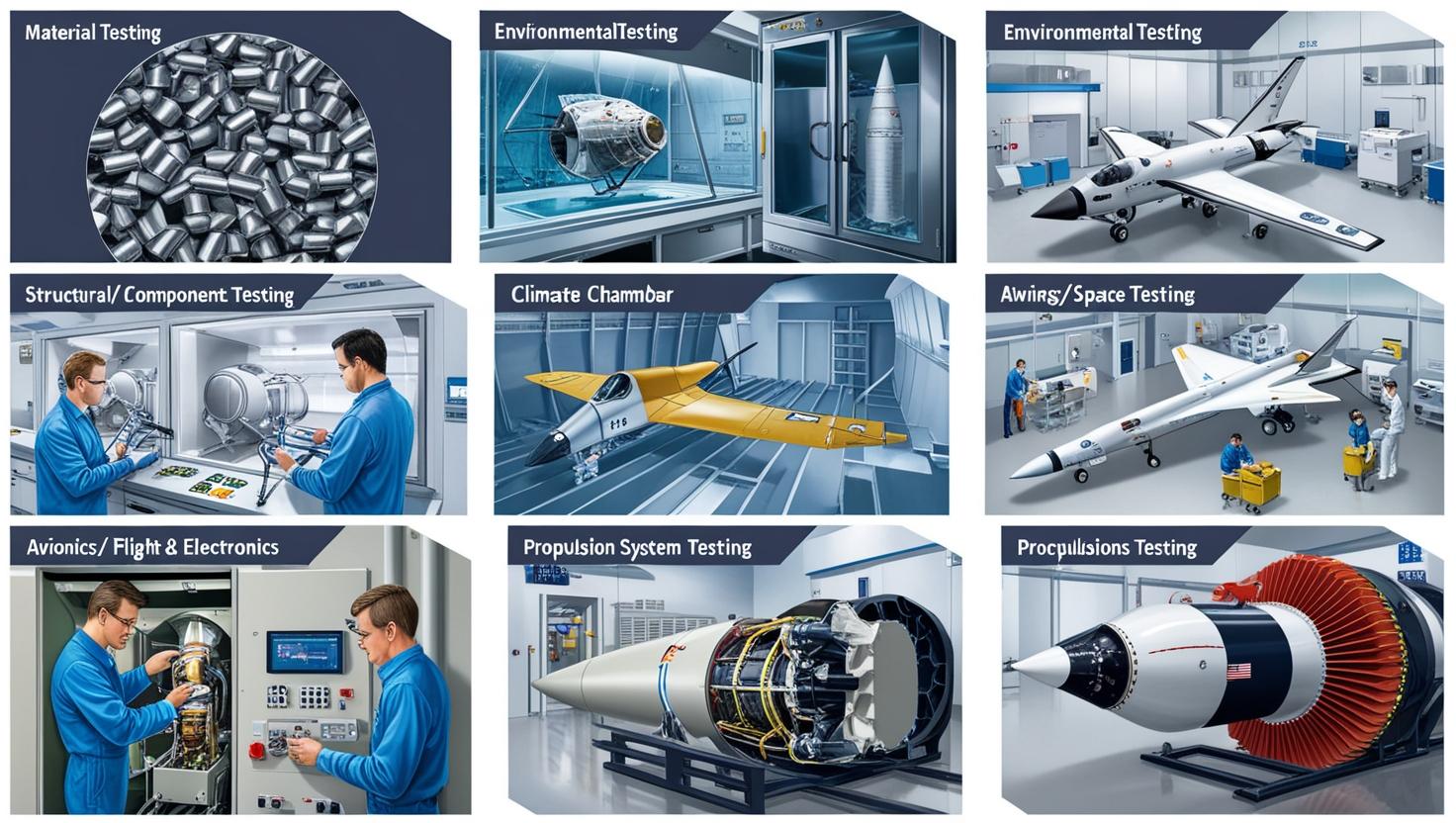
Innovative Testing Tools and Equipment
New tools and equipment have significantly increased the precision and efficiency of aerospace testing:
Smart sensors embedded into aircraft structures offer real-time feedback during tests, allowing engineers to assess strain, vibration, and fatigue.
Laser-based measurement systems, such as laser Doppler vibrometers, enable contactless measurement of surface vibrations.
Non-destructive testing (NDT) techniques using ultrasonic, eddy current, and X-ray technologies allow for internal inspections without dismantling parts.
Additionally, portable testing rigs and modular hardware setups are enabling more flexible testing environments, especially useful for on-site validation or in-field assessments.
Aerospace Testing Industry Growth :
The global aerospace testing market is projected to reach USD 5.50 billion in 2025 and USD 6.91 billion by 2030, registering a CAGR of 4.6% during the forecast period.
Automation in Aerospace Testing Processes
Automation is streamlining various facets of aerospace testing. Automated test benches, robotic arms, and computer-controlled test sequences are reducing human intervention, enhancing repeatability and reducing error rates.
In software and electronics testing, automated test scripts are widely used to validate embedded systems, avionics, and flight control software. This is especially important for verifying compliance with industry standards like DO-178C and DO-254.
Furthermore, the integration of automated data collection and analytics platforms ensures that vast amounts of test data can be efficiently stored, processed, and visualized—making decision-making quicker and more data-driven.
Challenges and Solutions in Testing Integration
Despite these advancements, integrating these new technologies into traditional aerospace testing processes presents challenges:
Legacy Systems: Many aerospace companies still rely on outdated infrastructure that doesn’t support AI or automation. Bridging the gap requires modular, backward-compatible tools.
Data Management: With the surge in testing data, managing and securing it becomes critical. The use of cloud-based platforms and cybersecure data pipelines is becoming standard practice.
Interoperability: Different testing systems and tools often lack interoperability. This is being addressed through standardized communication protocols and data formats.
Cost and Training: Advanced tools and software come with high upfront costs and require skilled personnel. Companies are increasingly investing in training programs and public-private partnerships to build workforce capabilities.
Technological innovation is revolutionizing the aerospace testing market, enabling faster, safer, and more reliable development cycles. Simulation, AI, advanced testing tools, and automation are not just enhancing performance—they are reshaping the testing ecosystem itself. While challenges remain, the industry’s shift toward digital and intelligent testing strategies marks a pivotal evolution. For aerospace manufacturers and service providers, staying at the forefront of these innovations is critical to maintaining competitiveness and meeting ever-stricter regulatory and safety standards.
