The global battery production machinery market is currently experiencing a period of unprecedented growth, fundamentally driven by the escalating transition to electric mobility and the increasing demand for energy storage solutions. The global battery production machine market is expected to grow from USD 13.26 billion in 2024 to USD 37.59 billion by 2029, at a CAGR of 23.2%. This expansion is a direct consequence of the global race to build out battery manufacturing capacity, with dozens of new gigafactories being announced and constructed across Asia, Europe, and North America.
The automotive sector remains the primary catalyst, as electric vehicle (EV) sales continue to break records worldwide. This insatiable demand for high-quality, reliable batteries necessitates a massive scaling up of production lines, fueling investment in advanced and automated manufacturing equipment. Beyond EVs, the consumer electronics market and the deployment of grid-scale battery storage systems to support renewable energy sources are also significant contributors to the market’s dynamic growth.
Download PDF Brochure @ https://www.marketsandmarkets.com/pdfdownloadNew.asp?id=168163488
Current Trends Shaping the Industry
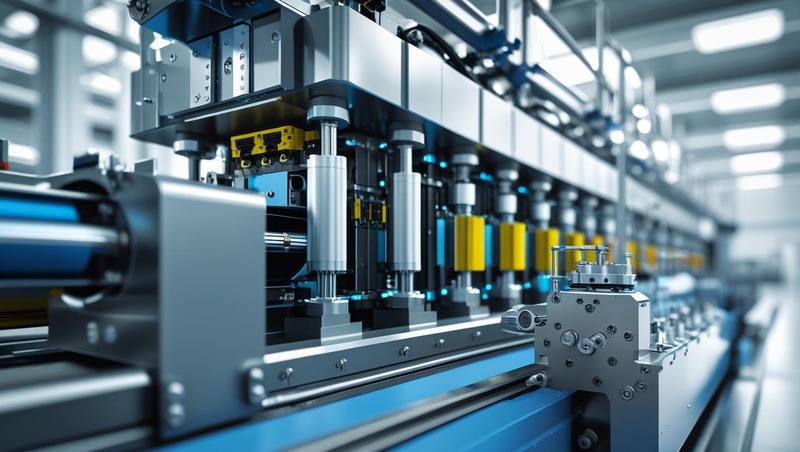
In 2025, several key trends are defining the battery production machinery landscape. The most dominant is the push for automation and high-speed processing. To meet the sheer volume required by gigafactories, manufacturers are demanding fully automated lines for every stage of production—from initial electrode mixing, coating, and calendering to cell stacking, welding, and final formation and testing. This emphasis on automation not only boosts throughput but also enhances precision and reduces the rate of defects, which is critical for ensuring battery safety and longevity.
The market is also heavily influenced by the prevailing battery chemistries. Machinery designed for lithium-ion battery production, particularly for Nickel Manganese Cobalt (NMC) and Lithium Iron Phosphate (LFP) cells, currently dominates capital expenditure. The choice between these chemistries impacts equipment selection, as their material properties require different handling and processing techniques. Geographically, the Asia-Pacific region, led by China, continues to be the largest market for and producer of battery production machinery. However, Europe is emerging as the fastest-growing region, driven by aggressive government policies, stringent emissions targets, and substantial investments from major automakers to localize their supply chains.
The Future Outlook: Next-Generation Technology and Digitalization
Looking beyond 2025, the future of the battery production machinery market will be characterized by technological disruption and intelligent manufacturing. The most significant shift will be the gradual transition towards next-generation batteries, particularly solid-state technology. These batteries, which offer the promise of higher energy density and improved safety, require entirely new manufacturing processes and machinery. Equipment capable of handling solid electrolytes, ensuring perfect material interfaces, and operating under different environmental conditions will become a major focus of research and development.
Furthermore, the integration of Industry 4.0 principles is set to revolutionize the factory floor. The use of Artificial Intelligence (AI), machine learning, and the Internet of Things (IoT) will become standard. AI-powered algorithms will enable predictive maintenance of machinery, optimize production parameters in real-time, and perform highly accurate quality control, significantly reducing scrap rates and operational costs. The concept of the “digital twin”—a virtual replica of the production line—will allow for simulation and optimization before physical implementation, accelerating innovation and efficiency. Finally, sustainability will be a core pillar of future machinery design, with a growing emphasis on equipment that supports battery recycling and utilizes greener manufacturing processes like dry electrode coating to minimize environmental impact.
Frequently Asked Questions (FAQs) on the Battery Production Machine Market
1. What is the battery production machine market?
The battery production machine market refers to the global industry focused on the manufacturing, development, and sale of specialized machinery and equipment used to produce different types of batteries—especially lithium-ion batteries. This includes machines for electrode coating, cell assembly, electrolyte filling, formation, testing, and packaging.
2. What are the key drivers of the battery production machine market?
Major drivers include the growing demand for electric vehicles (EVs), the rapid adoption of renewable energy storage systems, government policies supporting local battery manufacturing, and increasing consumer electronics usage. Technological advancements and the need for automation and higher production efficiency also fuel market growth.
3. Which battery types are commonly supported by production machines?
Battery production machines are primarily designed for lithium-ion batteries but are increasingly being adapted to accommodate emerging battery chemistries such as solid-state, lithium iron phosphate (LFP), sodium-ion, and lithium-sulfur batteries.
4. What role does automation play in battery manufacturing?
Automation is critical in battery production to ensure precision, reduce human error, enhance product consistency, and boost production speed. Automated systems, including robotics and AI-integrated tools, are now standard in modern battery manufacturing lines.
5. How are government policies influencing the battery production machine market?
Governments worldwide are providing subsidies, tax incentives, and infrastructure support to promote local battery manufacturing. Policies like the U.S. Inflation Reduction Act, Europe’s Green Deal, and China’s industrial plans are encouraging investments in battery gigafactories, thereby increasing demand for production machinery.
6. What are the major components of battery production equipment?
Key equipment includes electrode coating machines, calendaring machines, slitting and winding machines, electrolyte filling machines, formation and testing systems, and packaging units. Each plays a crucial role in specific stages of battery production.
See More Latest Semiconductor Reports:
Lithium-ion Battery Market by Battery Type (NMC, LFP, LCO, LTO, LMO, NCA), Cell Type (Prismatic, Pouch, Cylindrical), Capacity (<50 kWh, 50-100 kWh, >100 kWh), Energy Storage (Residential, Utilities) Consumer Electronics, Medical – Global Forecast to 2033
Photovoltaics Market by Material (Silicon, CIGS, CdTe, Perovskite, Organic Photovoltaic, Quantum Dot), Component (Modules, Inverters, BOS), Installation Type (Ground-mounted, Building-integrated, Floating), Cell Type and Region – Global Forecast to 2030
SCADA in Renewable Energy Market by Hardware (PLCs, Remote Terminal Units, HMIs, Communication Systems), Software (On-premises, Cloud-based), Services (Professional, Managed), Sector Type (Solar, Wind, Hydropower) and Region – Global Forecast to 2030
