As the global shift toward electrification gains speed, one technology is quietly transforming the electric vehicle (EV) experience: wireless charging. No longer just a futuristic concept, wireless charging is emerging as a practical, efficient, and transformative solution—reshaping how we think about powering our vehicles and enabling a more seamless mobility ecosystem.
Why Traditional Charging Models Are Due for Disruption
Electric vehicles have made significant strides in performance, affordability, and range. However, charging infrastructure remains a key hurdle for widespread adoption. Plug-in stations, while effective, pose issues such as physical wear, compatibility concerns, and user inconvenience—particularly in densely populated urban areas and for fleet operations where time and efficiency are critical.
This is where wireless charging steps in, eliminating the need for physical cables and allowing vehicles to charge simply by parking over a charging pad. It not only enhances user convenience but also opens the door to new charging models such as dynamic in-road charging, where vehicles can charge while in motion—potentially revolutionizing long-distance travel.
How Wireless Charging Works in EVs
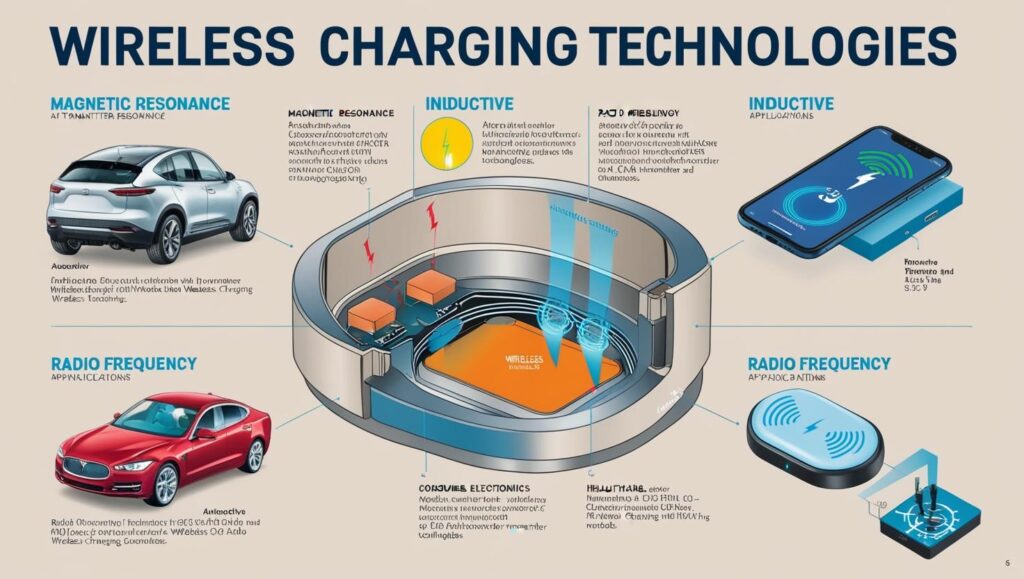
Most wireless EV charging systems rely on inductive charging, where electricity is transferred via magnetic fields between two coils—one embedded in the ground and the other in the vehicle. This method has evolved rapidly in recent years, with advances improving charging efficiency, speed, and safety.
Some companies are also exploring resonant inductive coupling, which offers more flexibility in vehicle alignment and greater efficiency over short distances. These innovations ensure that wireless charging can match, or even exceed, the capabilities of traditional plug-in methods.
Download PDF Brochure @ https://www.marketsandmarkets.com/pdfdownloadNew.asp?id=640
Transforming Public and Commercial Mobility
Wireless charging is not just a consumer convenience—it’s a game changer for fleets, public transit, and autonomous vehicles. Fleets operating delivery vans, taxis, and buses can benefit from strategically placed charging pads that keep vehicles powered during stops or idle periods—drastically improving operational uptime.
Autonomous vehicles, which lack human drivers to plug them in, are particularly well-suited to wireless systems. By integrating charging into parking spots or depots, autonomous fleets can remain charged and available with minimal downtime or human intervention.
Global Adoption and Regional Growth Hotspots
The Asia-Pacific region, particularly China and South Korea, is at the forefront of wireless EV charging adoption, driven by aggressive government policies, urban innovation, and EV expansion. Meanwhile, Europe and North America are actively piloting wireless public transport systems and smart city infrastructure to support future mobility.
Global automotive giants and tech startups alike are investing in the space, signaling strong confidence in wireless charging’s future. Companies such as WiTricity, Electreon, and Qualcomm are leading innovation, while OEMs like BMW, Hyundai, and Volvo are integrating wireless tech into their upcoming EV models.
Overcoming Challenges for Mass Adoption
Despite its promise, the wireless charging market faces several hurdles, including high initial costs, standardization issues, and the need for widespread infrastructure deployment. However, ongoing R&D, supportive regulations, and partnerships between automakers and technology firms are helping address these barriers.
As costs fall and technology matures, the appeal of wireless systems will become increasingly difficult to ignore—not just for consumers, but for municipalities, transport operators, and corporate fleets.
The wireless charging industry size is expected to reach USD 16.0 billion by 2029 from USD 6.4 billion in 2024, at a CAGR of 20.3% during 2024–2029.
The Road Ahead: Seamless, Sustainable, and Smart
Wireless charging is more than just a technological upgrade—it’s a foundational enabler for a truly connected and autonomous electric vehicle ecosystem. By removing the need for plugs, enhancing user convenience, and supporting dynamic mobility solutions, it paves the way for a cleaner, smarter transportation future.
As cities evolve into intelligent, sustainable hubs, and vehicles become increasingly autonomous, wireless charging will serve as a vital bridge between energy infrastructure and mobility innovation.
Bottom Line:
The wireless charging market is no longer just an option—it’s fast becoming an integral part of the EV ecosystem. With growing global momentum, this contactless technology is set to revolutionize how vehicles are powered, how infrastructure is designed, and how we move through the world.
FAQ – Wireless Charging Market
1. What is wireless charging and how does it work?
Wireless charging is a technology that enables the transfer of electrical energy from a charging pad to a device without the use of cables. It typically uses inductive or resonant coupling where power is transferred through electromagnetic fields between two coils—one in the charger and the other in the device.
2. What are the key applications of wireless charging?
Wireless charging is used in a wide range of applications, including:
- Consumer electronics (smartphones, wearables)
- Electric vehicles (EVs)
- Medical devices
- Industrial equipment
- Public transport systems
3. Why is wireless charging important for the electric vehicle (EV) ecosystem?
Wireless charging enhances convenience, automation, and safety in EV charging. It supports both stationary charging (e.g., while parked) and dynamic charging (charging while in motion), making it ideal for autonomous vehicles, fleets, and public transportation systems.
About MarketsandMarkets™
MarketsandMarkets™ is a blue ocean alternative in growth consulting and program management, leveraging a man-machine offering to drive supernormal growth for progressive organizations in the B2B space. We have the widest lens on emerging technologies, making us proficient in co-creating supernormal growth for clients.
The B2B economy is witnessing the emergence of $25 trillion of new revenue streams that are substituting existing revenue streams in this decade alone. We work with clients on growth programs, helping them monetize this $25 trillion opportunity through our service lines – TAM Expansion, Go-to-Market (GTM) Strategy to Execution, Market Share Gain, Account Enablement, and Thought Leadership Marketing.
Built on the ’GIVE Growth’ principle, we work with several Forbes Global 2000 B2B companies – helping them stay relevant in a disruptive ecosystem. Our insights and strategies are molded by our industry experts, cutting-edge AI-powered Market Intelligence Cloud, and years of research. The KnowledgeStore™ (our Market Intelligence Cloud) integrates our research, facilitates an analysis of interconnections through a set of applications, helping clients look at the entire ecosystem and understand the revenue shifts happening in their industry.
To find out more, visit www.MarketsandMarkets™.com or follow us on Twitter, LinkedIn and Facebook.
Contact:
Mr. Aashish Mehra
MarketsandMarkets™ INC.
630 Dundee Road
Suite 430
Northbrook, IL 60062
USA : 1-888-600-6441