We live in an era of wireless wonder. We stream 4K videos on our phones, participate in seamless international video conferences, and are on the cusp of a revolution powered by 5G and the Internet of Things (IoT). This world is built on the promise of instant, ubiquitous, and high-speed connectivity, seemingly delivered through the air. However, this perception is an illusion. The true backbone of our global digital economy—the unsung hero enabling this wireless magic—lies deep beneath the ocean’s surface: the vast network of submarine telecommunications cables.
This article delves into the intricate and fascinating world of submarine cables, exploring their indispensable role in carrying the world’s data traffic and, more specifically, how they are the fundamental foundation upon which next-generation technologies like 5G are built. We will unravel the technology, the economics, and the future of these critical digital infrastructures.
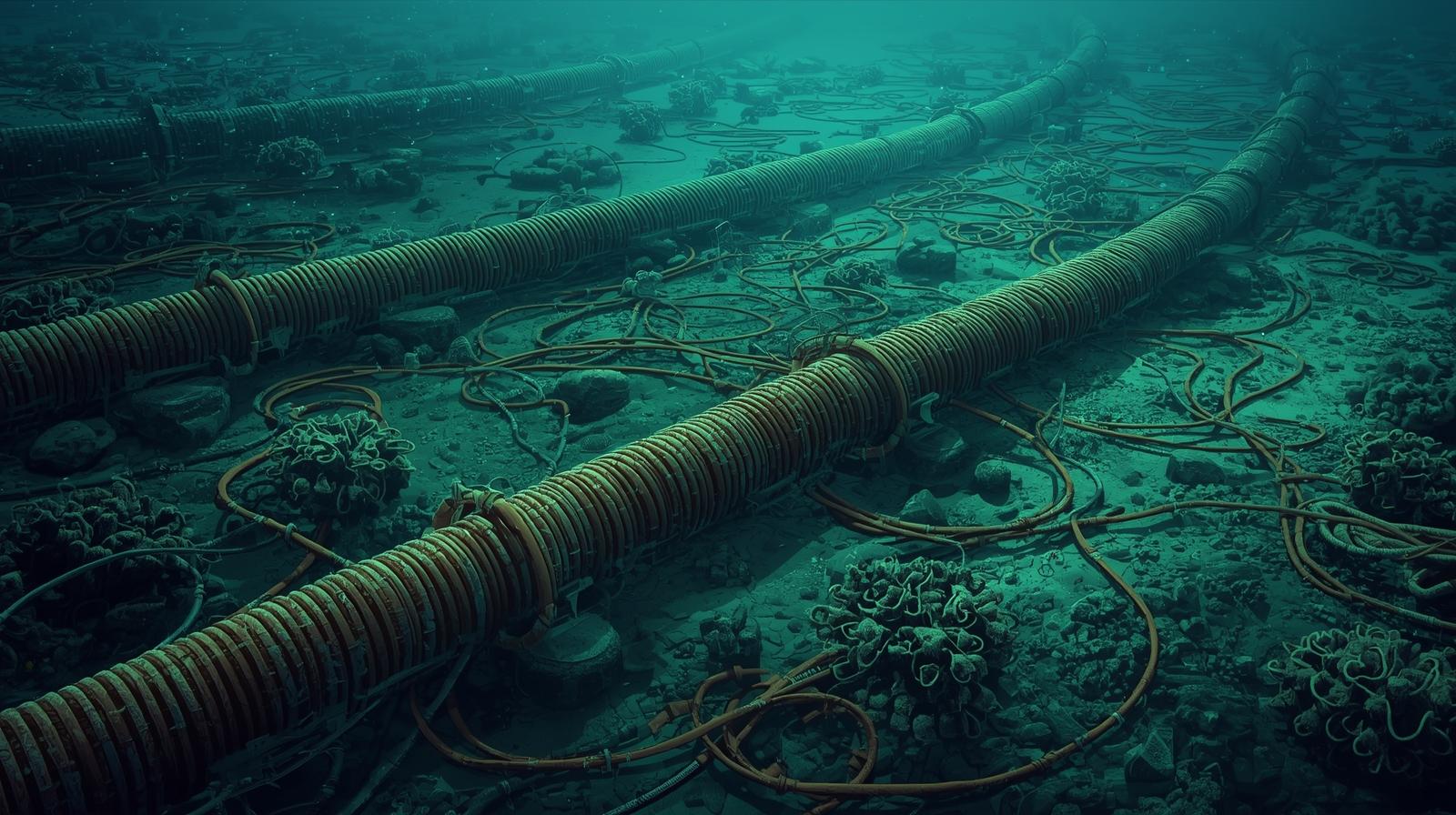
The Invisible Backbone: What Are Submarine Cables?
Submarine communications cables are fiber-optic cables laid on the sea bed between land-based stations to transmit telecommunication signals across oceans and seas. Modern cables are typically less than an inch thick, yet they contain multiple pairs of hair-thin glass fibers that carry data as pulses of light. These fibers are protected by layers of steel armor, copper shielding, and waterproof insulation to withstand immense oceanic pressure, accidental anchor drops, and even curious shark bites.
The 5G Revolution: More Than Just a Tower
To understand the role of submarine cables in 5G, one must first move beyond the common misconception that 5G is solely about the radio antenna on a tower. 5G technology promises three revolutionary enhancements: Enhanced Mobile Broadband (eMBB) for blazing fast speeds, Ultra-Reliable Low-Latency Communication (URLLC) for critical applications, and Massive Machine Type Communication (mMTC) for connecting billions of IoT devices.
Each of these pillars places immense demands on the network’s core, known as the backhaul and fronthaul. The radio tower is merely the last mile; the data it sends and receives must travel vast distances to reach data centers, cloud servers, and other users. For a 5G network to deliver on its promise of ultra-low latency (response time of 1ms or less), the entire data pathway must be optimized. This is where submarine cables become irreplaceable. They are the ultra-fast, high-capacity highways that connect national 5G networks to the global internet cloud.
The Symbiotic Relationship: How Submarine Cables Empower 5G
The relationship between 5G and submarine cables is deeply symbiotic. 5G is the demanding application that requires immense bandwidth and speed, while submarine cables are the foundational infrastructure that delivers it on a global scale. This synergy manifests in several critical ways.
1. Handling the Data Tsunami: 5G is designed to generate and consume exponentially more data than previous generations. From widespread adoption of 8K streaming and immersive AR/VR experiences to industrial IoT sensors generating constant data streams, the volume of international data traffic will skyrocket. Submarine cables, with their virtually unlimited capacity (modern cables can carry hundreds of terabits per second), are the only medium capable of transporting this colossal data flow between continents efficiently and economically.
2. The Low-Latency Imperative: Applications like autonomous vehicles, remote robotic surgery, and real-time cloud gaming are not just about speed; they are about minimizing delay. Latency is the enemy of real-time interaction. A signal traveling to a satellite in geostationary orbit (35,786 km up) experiences a inherent delay of about 500 milliseconds for a round trip. A signal traveling through a fiber-optic submarine cable moves at the speed of light in glass (about 200,000 km/s), resulting in latency figures that are a fraction of satellite delay. For time-sensitive 5G applications, this difference is not negligible; it is the difference between success and failure. New cables are often laid along the most direct routes possible to shave off precious milliseconds, a critical competitive advantage for financial trading and tech firms.
3. Global Cloud and Edge Computing Integration: 5G networks are deeply integrated with cloud computing. The concept of Multi-access Edge Computing (MEC), where compute and storage resources are placed closer to the user at the network’s edge, is a core tenet of 5G. However, this distributed “edge” cloud still needs to communicate with centralised data centers and other regional edges across the globe. This inter-cloud connectivity, essential for data syncing, backup, and accessing centralized AI processing power, happens primarily over submarine cables. They ensure that a smart factory in Germany can reliably and instantly communicate with its headquarters and cloud analytics platform in the United States.
4. Network Redundancy and Reliability: The 5G era demands unprecedented network reliability. A failure in a single cable, while impactful, does not sever a country’s connection thanks to the meshed nature of the global cable system. Data traffic can be automatically re-routed through other cables, ensuring continuity for critical 5G services. This built-in redundancy provided by multiple submarine cable systems is a cornerstone of a resilient global digital economy.
Beyond 5G: Submarine Cables and the Global Data Ecosystem
The role of submarine cables extends far beyond just supporting 5G smartphones. They are the lifeline of the entire modern digital world. The global financial system depends on them for high-frequency trading, where microsecond advantages translate to millions of dollars. Social media platforms, cloud service providers (like AWS, Google Cloud, and Microsoft Azure), and multinational corporations rely on this infrastructure for their daily operations. The content streaming industry (Netflix, YouTube, etc.) uses this network to distribute vast media libraries from their central servers to local caching centers around the world. In essence, any service that requires real-time or near-real-time global communication is fundamentally enabled by the submarine cable network.
Download PDF Brochure @
https://www.marketsandmarkets.com/pdfdownloadNew.asp?id=184625
The Future: Investing in the Deep-Sea Data Highway
Recognizing their critical importance, tech giants like Google, Facebook, Microsoft, and Amazon have moved from being mere consumers of bandwidth to becoming primary investors in new cable projects. Cables like Dunant (Google), Marea (Meta/Microsoft), and Jupiter (led by a consortium including Amazon and Facebook) are built to cater specifically to the explosive data growth driven by their own services and the wider adoption of 5G.
Future trends point towards cables with even higher capacity using advanced fiber-optic technology like Space-Division Multiplexing (SDM). There is also a strategic push for new diverse routes to enhance security and reduce dependency on choke points. Furthermore, the integration of submarine cable monitoring systems with smart network management will allow for predictive maintenance and even more efficient traffic routing, further optimizing the performance of global 5G networks.
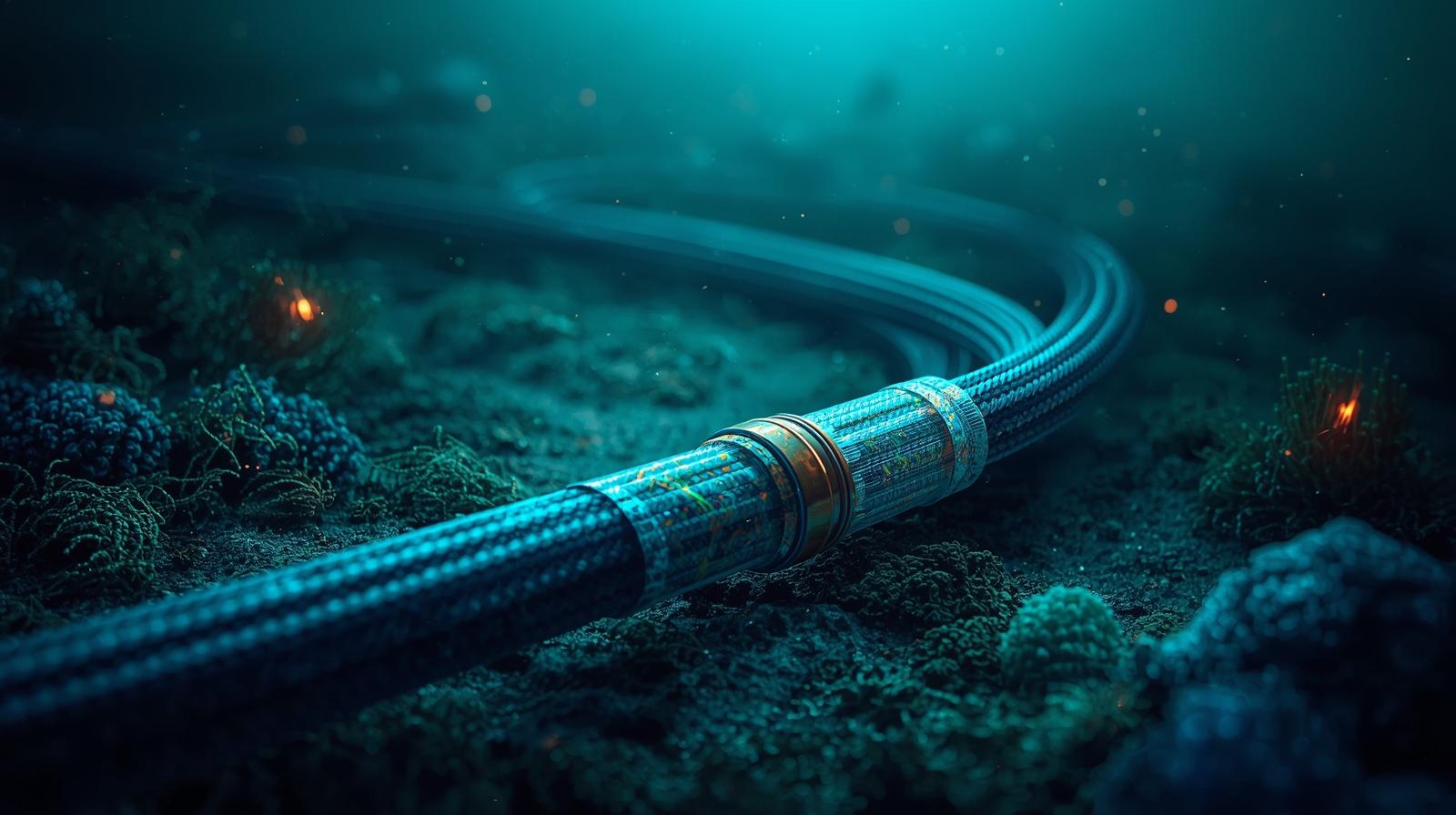
The Foundation of a Connected World
In conclusion, while 5G towers represent the visible, accessible face of modern connectivity, the true workhorse operating silently in the depths of the ocean is the submarine cable network. It is the indispensable, high-capacity, low-latency foundation that makes global real-time communication possible. The role of submarine cables in 5G and data traffic is not just supportive; it is foundational and absolute. They are the critical arteries of the digital world, pumping the lifeblood of data that sustains our economies, societies, and technological progress. As we embrace a future of ever-greater connectivity, the importance of these underwater marvels will only continue to grow, reminding us that the most advanced wireless technologies are ultimately powered by a wired world.
Explore In-Depth Semiconductor & Electronics Market Research
https://www.marketsandmarkets.com/semiconductorand-electonics-market-research-87.html
FAQs
Q1: If 5G is wireless, why does it need physical submarine cables?
A1: 5G wireless technology only covers the “last mile” connection from the tower to your device. The data from your device must then travel vast distances to reach its destination (e.g., a cloud server in another country). Submarine cables provide the only practical, high-capacity, and low-latency physical infrastructure to carry this data across oceans globally.
Q2: Don’t satellites handle international internet traffic?
A2: No. Satellites account for less than 1% of all international data traffic. They are incredibly important for reaching remote areas, broadcasting, and GPS, but they cannot compete with the massive bandwidth, lower latency, and significantly lower cost-per-bit offered by submarine fiber-optic cables for bulk data transfer.
Q3: How do submarine cables reduce latency for 5G applications?
A3: Light travels faster in fiber-optic cables than radio waves can travel to and from satellites through the vacuum of space. The much shorter physical path and faster medium mean data sent via submarine cables experiences far less delay (latency), which is critical for real-time 5G applications like autonomous driving and remote surgery.
Q4: Who owns and maintains these submarine cables?
A4: Submarine cables are typically owned by consortiums of telecommunications companies, tech giants (like Google, Meta, Microsoft), and infrastructure investment firms. Specialized ships are used for the initial laying of the cable and for ongoing maintenance and repairs if a fault is detected.
Q5: Are submarine cables vulnerable to attack or damage?
A5: Yes, they are critical infrastructure and can be vulnerable. Damage most commonly occurs from accidental anchor drags and fishing trawlers (shark bites are rare and usually superficial). They are also considered points of geopolitical interest and potential sabotage, which is why security and diverse routing are major priorities for owners and governments.
Q6: How will future technologies like 6G rely on submarine cables?
A6: Future networks like 6G will demand even higher data rates, lower latency, and more reliable global connectivity. The evolution of submarine cable technology—with increased capacity through new fiber types and multiplexing technologies—will continue to be the fundamental bedrock upon which all advanced wireless networks are built.
See The Latest Semiconductor Reports:
Oil Condition Monitoring Market Size, Share & Trends : https://www.marketsandmarkets.com/Market-Reports/oil-condition-monitoring-market-62105661.html
Agriculture IoT Market Size, Share & Trends : https://www.marketsandmarkets.com/Market-Reports/iot-in-agriculture-market-199564903.html
Real-time Location Systems (RTLS) Market Size, Share & Trends : https://www.marketsandmarkets.com/Market-Reports/real-time-location-systems-market-1322.html
LiDAR Market Size, Share & Trends: https://www.marketsandmarkets.com/Market-Reports/lidar-market-1261.html
HVDC Transmission Market Size, Share & Trends: https://www.marketsandmarkets.com/Market-Reports/hvdc-grid-market-1225.html