The thin-film photovoltaic (TFPV) market size is poised for remarkable growth as the world accelerates its transition toward renewable energy. Unlike conventional crystalline silicon solar panels, thin-film photovoltaics use extremely thin layers of photovoltaic material, typically only a few micrometers thick, allowing for lightweight, flexible, and cost-effective energy solutions. This combination of versatility and efficiency has made TFPV an attractive option for residential, commercial, and industrial solar applications.
Understanding Thin-Film Photovoltaics
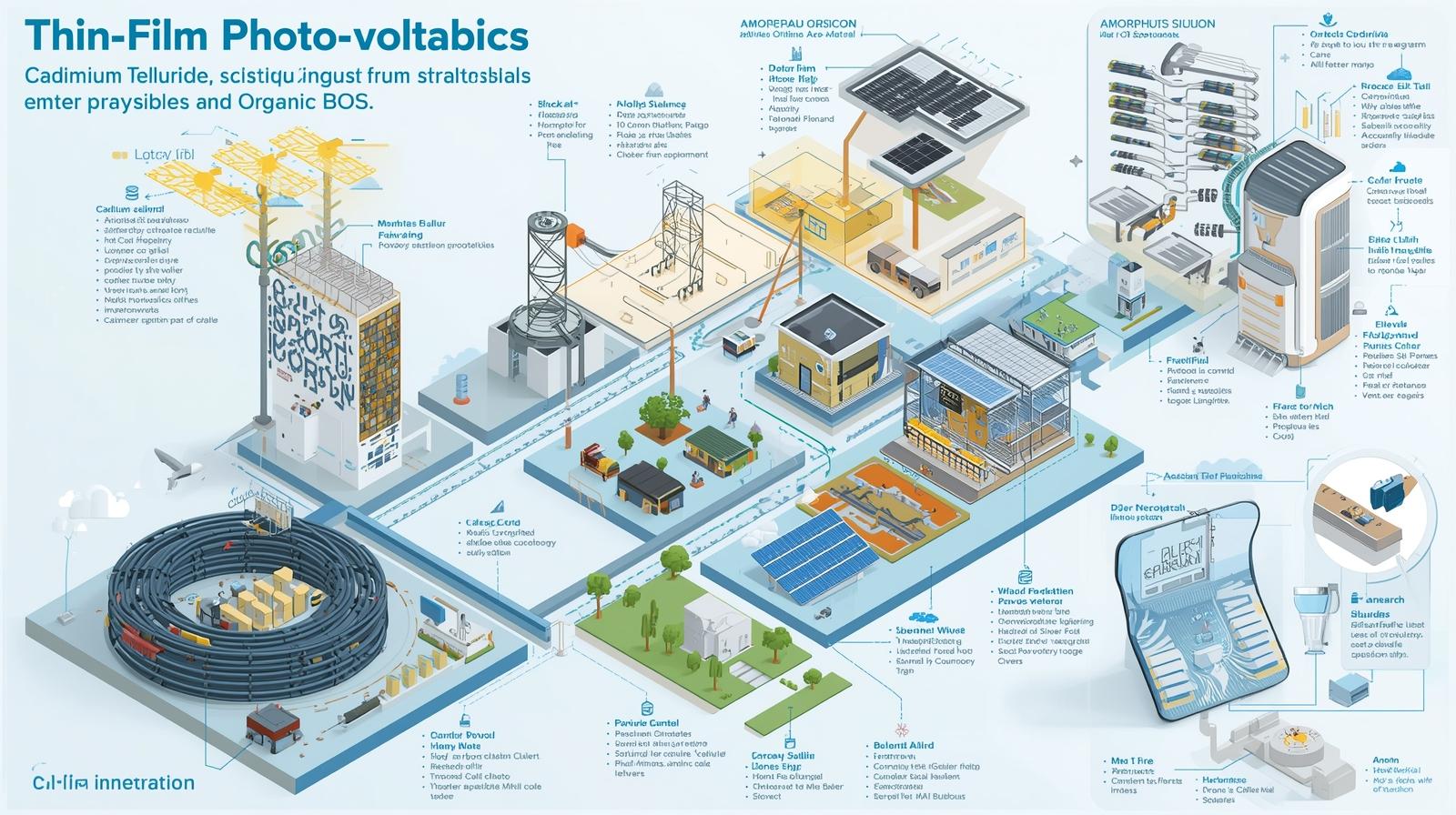
Thin-film photovoltaics differ significantly from traditional solar panels in both construction and performance. By depositing semiconductor materials directly onto substrates such as glass, metal, or flexible polymers, TFPV modules can be produced at lower costs and with less material consumption. The main types of thin-film technology include Cadmium Telluride (CdTe), Copper Indium Gallium Selenide (CIGS), and amorphous silicon (a-Si). Each technology offers unique advantages; CdTe is known for cost-effectiveness and large-scale commercial deployment, CIGS provides higher conversion efficiency and flexibility, while a-Si is often used in low-power and integrated applications. These characteristics enable thin-film solar panels to perform effectively even in diffuse light or partially shaded conditions, further enhancing their applicability in diverse environments.
Market Trends Driving Growth
The growth of the thin-film photovoltaic market is being propelled by global policies supporting clean energy and carbon reduction. Governments across Europe, Asia, and North America are investing heavily in renewable energy infrastructure, providing incentives, subsidies, and regulatory support that have significantly boosted solar adoption. Technological innovations have also played a pivotal role in advancing TFPV efficiency and durability. Recent developments in material science and deposition techniques have narrowed the performance gap between thin-film and conventional silicon modules, making thin-film increasingly competitive. Another important trend is the rise of building-integrated photovoltaics (BIPV). Thin-film solar cells can be seamlessly incorporated into building materials such as windows, facades, and roofing tiles, enabling architects and developers to meet energy targets without compromising aesthetics.
Download PDF Brochure @ https://www.marketsandmarkets.com/pdfdownloadNew.asp?id=31
Opportunities in Emerging Markets
Emerging economies represent a significant growth opportunity for the thin-film photovoltaic market. Countries such as India, Brazil, and several regions in Africa are experiencing rising energy demand combined with limited grid infrastructure. In such regions, the lightweight and flexible characteristics of thin-film modules make them ideal for rooftop installations, rural electrification, and portable solar applications. Additionally, the adoption of green construction practices globally is creating new avenues for thin-film solar integration. Developers increasingly prioritize energy-efficient and sustainable solutions, and thin-film photovoltaics can be incorporated into modern building designs to generate electricity without consuming additional space or compromising architectural integrity. The expansion of off-grid and hybrid energy solutions, including energy storage systems, also presents a growing market for thin-film technologies, particularly in remote or decentralized energy applications.
Challenges Facing the Market
Despite its promising growth, the thin-film photovoltaic market faces several challenges. Efficiency remains a key concern, as thin-film modules generally produce lower energy output per unit area compared to crystalline silicon panels. This can be a limiting factor for installations where space is constrained. Additionally, some thin-film technologies rely on rare or potentially hazardous materials, raising concerns about supply chain stability and environmental safety. Market competition is another factor, as crystalline silicon technology still dominates the global solar sector due to its higher efficiency, established manufacturing processes, and broad consumer acceptance. To remain competitive, thin-film manufacturers must continue to innovate, reduce costs, and target applications where flexibility, weight, and form factor offer clear advantages.
Future Outlook
The outlook for the thin-film photovoltaic market is highly positive. Analysts project sustained growth through the next decade, driven by continued technological advancements, cost reductions, and strong policy support. Emerging applications such as portable solar panels, electric vehicles, and BIPV are expected to accelerate adoption further. The market is also witnessing increasing interest in hybrid systems, where thin-film panels are combined with energy storage and smart grid solutions to provide reliable, decentralized power. As governments, industries, and consumers increasingly prioritize sustainable energy solutions, thin-film photovoltaics are set to play a central role in the global energy transition.
Thin-film photovoltaics are no longer a niche technology. Their unique combination of flexibility, lightweight design, and cost-effectiveness positions them as a vital component of the renewable energy landscape. With ongoing innovation, growing adoption in emerging markets, and increasing integration into buildings and portable applications, the thin-film photovoltaic market is on the cusp of transformative growth. As the world continues to embrace sustainable energy solutions, TFPV technology is expected to redefine how solar energy is harnessed, making clean, efficient, and versatile solar power more accessible than ever.
About MarketsandMarkets™
MarketsandMarkets™ is a blue ocean alternative in growth consulting and program management, leveraging a man-machine offering to drive supernormal growth for progressive organizations in the B2B space. We have the widest lens on emerging technologies, making us proficient in co-creating supernormal growth for clients.
The B2B economy is witnessing the emergence of $25 trillion of new revenue streams that are substituting existing revenue streams in this decade alone. We work with clients on growth programs, helping them monetize this $25 trillion opportunity through our service lines – TAM Expansion, Go-to-Market (GTM) Strategy to Execution, Market Share Gain, Account Enablement, and Thought Leadership Marketing.
Built on the ’GIVE Growth’ principle, we work with several Forbes Global 2000 B2B companies – helping them stay relevant in a disruptive ecosystem. Our insights and strategies are molded by our industry experts, cutting-edge AI-powered Market Intelligence Cloud, and years of research. The KnowledgeStore™ (our Market Intelligence Cloud) integrates our research, facilitates an analysis of interconnections through a set of applications, helping clients look at the entire ecosystem and understand the revenue shifts happening in their industry.
To find out more, visit www.MarketsandMarkets™.com or follow us on Twitter, LinkedIn and Facebook.
Contact:
Mr. Rohan Salgarkar
MarketsandMarkets™ INC.
1615 South Congress Ave.
Suite 103
Delray Beach, FL 33445
USA : 1-888-600-6441
