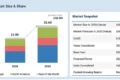
The connected car security market is projected to grow from USD 3.37 billion in 2025 to USD 6.99 billion by 2032, at a CAGR of 11.0%.
The rapid rise in vehicle connectivity and V2X communication technologies is driving strong demand for connected car security solutions, as modern vehicles increasingly rely on cloud-based features, OTA updates, and real-time data exchange. With expanding attack surfaces across telematics, infotainment, ADAS, and EV ecosystems, OEMs are prioritizing end-to-end cybersecurity to meet global regulations such as UNECE WP.29 R155/R156 and China’s GB/T automotive cybersecurity guidelines. These mandates require continuous monitoring, secure software lifecycle management, and robust encryption mechanisms, prompting manufacturers to adopt advanced security platforms offered by players, such as BlackBerry Limited (Canada), Harman International (US), AUMOVIO SE Germany), and NXP Semiconductors (Netherlands).
The rapid shift toward centralized vehicle architecture, domain controllers, and software-defined vehicles (SDVs) further accelerates the need for intrusion detection, identity management, and secure communication frameworks that can efficiently scale across fleets. However, high deployment costs, complexity of securing legacy ECUs, and inconsistent regulatory enforcement across emerging markets may limit adoption for mid-range vehicles. Additionally, the shortage of automotive cybersecurity specialists and the rising sophistication of cyberattacks challenge OEMs’ ability to implement comprehensive security strategies, suggesting that growth will be strongest among premium and highly connected vehicle segments.
The network security segment is projected to account for the largest market during the forecast period.
By security type, the network security segment is projected to capture the largest share of the connected car security market during the forecast period, as connected vehicles rely heavily on continuous data exchange between the car, cloud, infrastructure, and external devices. Securing in-vehicle and out-of-vehicle communication channels, including CAN, Ethernet, 5G, Wi-Fi, and V2X, is critical in preventing spoofing, man-in-the-middle attacks, and remote takeover attempts. As SDVs migrate toward centralized computing, OEMs are increasingly deploying secure firewalls, encrypted gateways, and anomaly-detection systems to safeguard data integrity and vehicle operations. The demand is further strengthened by regulations mandating secure communication frameworks and by the rise of OTA updates, cybersecurity telemetry, and connected fleet management. While network security offers strong protection, challenges around legacy protocol vulnerabilities and integration complexity can increase deployment costs, especially for mass-market vehicles.
Download PDF Brochure @ https://www.marketsandmarkets.com/pdfdownloadNew.asp?id=109563614
The software-based solutions segment is projected to lead the connected car security market during the forecast period.
By solution type, the software-based solutions segment is projected to dominate the connected car security landscape due to the scalability, flexibility, and alignment of these solutions with the automotive industry’s shift toward SDVs and OTA-driven architectures. Solutions such as IDS/IPS, secure OS, firmware integrity verification, cryptography, and key management are becoming foundational as vehicles evolve into software-centric platforms. Software security enables continuous updates without hardware replacement, making it cost-efficient for OEMs facing stringent compliance requirements. With the rising adoption of EVs and the deployment of zonal architecture, software solutions support real-time threat analytics and secure lifecycle management across vehicle fleets. However, the growing dependency on software introduces challenges such as patch management complexity, potential zero-day vulnerabilities, and the need for continuous monitoring to stay ahead of cyberattacks.
Europe is projected to be the second-fastest-growing market during the forecast period.
Europe emerges as the second-fastest-growing market due to the early and strict implementation of automotive cybersecurity regulations, particularly UNECE WP.29, which is mandatory for all new vehicle types. The region’s intense EV penetration, mature premium car segment, and rapidly advancing SDV initiatives by OEMs like BMW, Mercedes-Benz, Volkswagen, Stellantis, and Volvo further accelerate adoption. European OEMs are investing heavily in secure OTA frameworks, V2X infrastructure, and in-vehicle monitoring systems to comply with cybersecurity management system (CSMS) and software update management system (SUMS) requirements. Cybersecurity R&D clusters in Germany and France are supported by EU-wide programs on cooperative mobility, which enhance the momentum. However, varying readiness levels across Eastern Europe and high integration costs could create adoption gaps relative to Western Europe.
Key Players
The connected car security market is dominated by major players, such as NXP Semiconductors (Netherlands), AUMOVIO SE (Germany), Harman International (US), Vector Informatik GmbH (Germany), BlackBerry Limited (Canada), Thales (France), ARM Limited (UK), WirelessCar (Sweden), Astemo Ltd. (Japan), and Keysight Technologies (US). These companies offer secure gateways, IDS/IPS, cryptographic modules, and OTA security platforms, supported by dedicated cybersecurity labs and strong global OEM partnerships. Through product launches, technology upgrades, and strategic collaborations, they continue to expand their footprint and strengthen their position in the connected car security market.
Request Free Sample Report @ https://www.marketsandmarkets.com/requestsampleNew.asp?id=109563614