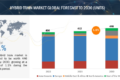
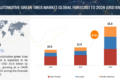
The global forklift market is estimated to grow from USD 91.19 billion in 2025 to USD 141.32 billion by 2032, with a CAGR of 6.5% over the forecast period.
The global forklift market is witnessing strong growth due to growth in the e-commerce, warehouse, and logistics sectors. Increased demand for warehouse automation and rising labor costs drive this growth in the forklift market. Moreover, the rising demand for sustainable and emission-free material handling equipment will drive the demand for electric forklifts further. Asia Pacific is expected to be the largest market during the forecast period. This is due to the expansion of cross-border e-commerce, which creates demand for intralogistics solutions. Key challenges include volatile battery costs and high upfront costs for integrating automation. High upfront cost for automation is a key entry-level barrier for small and regional players amidst regional and tariff policy shifts.
The class 32 segment will dominate the forklift market during the forecast period.
Class 32 forklifts, which include electric pedestrian trucks for warehouses, are expected to dominate the global market by 2025. This is due to their excellent maneuverability, low emissions, and minimal downtime. These features are crucial for e-commerce, retail, and logistics hubs, where space optimization and productivity are top priorities. Recent launches by original equipment manufacturers (OEMs) highlight improvements in energy efficiency, ergonomic design, and advanced lithium-ion systems. These advancements contribute to quieter, emission-free operations and enhance workplace safety.
Asia Pacific is the largest and fastest-growing region for Class 32 forklifts. Growth in Asia Pacific is fueled by rapid growth in e-commerce and 3PL logistics, automotive and food sectors, urban warehouse expansion, and government incentives that favor smart logistics and green equipment adoption. Strategic factors for Class 32 forklift adoption include high density of mega-distribution centers, availability of skilled and affordable labor, and national policies supporting digital supply chains. As automation and ESG-driven procurement accelerate across industries, Class 32 forklifts are becoming important core assets in modern warehousing ecosystems.
Download PDF Brochure @ https://www.marketsandmarkets.com/pdfdownloadNew.asp?id=2439790
Autonomous forklift is estimated to be the fastest-growing market during the forecast period.
Autonomous forklifts are expected to be the fastest-growing segment during the forecast period, with multiple academic and government studies projecting a multi-billion-dollar market by 2030. E-commerce and pharmaceuticals drive growth in the autonomous forklift segment and the retail warehousing industry, where these self-navigating vehicles reduce labor dependence, improve productivity, and provide better space utilization. Additionally, with SLAM (Simultaneous Localization and Mapping) and LIDAR sensor navigation, the operational performance of autonomous forklifts is significantly improved. These technologies also provide real-time environment positioning and increased adaptability, lowering the risk of injuries or mistakes during material handling.
Research at the Fraunhofer Institute shows that 3-D LiDAR–based SLAM reduces pick-and-place errors by up to 70% while increasing pallet moves per hour by 25% in simulated e-commerce warehouses. Additionally, Amazon has deployed numerous autonomous forklifts within its warehouses and distribution centers to decrease dependence on labor for its warehouse operations and further enhance the efficiency of its operations. It had further planned automation adoption in all its stores and fulfillment centers to reach 65% of its stores and 55% of its fulfillment volume by 2026. Government safety bodies also support this adoption trend for autonomous forklifts. Manual forklifts hold the largest market share globally, valued for their proven reliability and versatility across industries. In contrast, autonomous forklifts represent the fastest-growing segment, with the strongest expansion in the Asia Pacific—propelled by rapid e-commerce growth, labor shortages, and heavy investment in advanced warehouse automation.
Asia Pacific is estimated to be the largest forklift market from 2025 to 2032.
The Asia Pacific region is projected to lead the global forklift market during the forecast period. The rapid growth can be attributed to the booming e-commerce industry and increasing exports in fast-moving consumer goods (FMCG), automotive, pharmaceuticals, and food & beverage sectors, especially in fast-growing economies of Asia like China, India, and other ASEAN countries. Recent technological and business shifts highlight this growth momentum in the Asian forklift market. For example, China’s import and export e-commerce sector reached about USD 331 billion in 2023 at 15.6% annual growth, according to China Briefing Magazine, fueled by supportive government policies and consumer preference for global online shopping.
In recent years, E-commerce, warehousing, and logistics have undergone significant transformations in Asia Pacific. Countries like Japan, India, and South Korea play vital roles in the growth of the forklift market in the region. Japan’s forklift market is recognized for its technological maturity and strict safety standards, while South Korea’s investment in automation and export-oriented manufacturing boosts demand for advanced forklift solutions. As the region’s e-commerce and manufacturing networks continue to grow more complex and efficient, forklifts, especially those featuring automation and digital integration, will become essential for managing distribution and logistics operations at scale.
Key Market Players
The report profiles key players such as Toyota Industries Corporation (Japan), Kion Group AG (Germany), Jungheinrich AG (Germany), Crown Equipment Corporation (US), and Mitsubishi Logisnext Co Ltd (Japan). These companies adopted new product development and supply contract strategies to gain traction in the forklift market.
Request Free Sample Report @ https://www.marketsandmarkets.com/requestsampleNew.asp?id=2439790