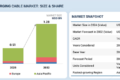
The Smart Home Industry is undergoing a rapid transformation driven by advancements in IoT devices, automation technologies, and seamless connectivity. As consumers seek enhanced comfort, energy efficiency, security, and convenience, companies in the smart home ecosystem are innovating to meet these evolving demands. Understanding the Smart Home Industry Trends provides insight into the future of connected living. The global smart home industry was valued at USD 84.5 billion in 2024 and is projected to reach USD 116.4 billion by 2029; it is expected to register a CAGR of 6.6% during the forecast period
IoT Devices Driving Smart Home Innovation
One of the most significant Smart Home Industry Trends is the proliferation of IoT-enabled devices. These devices allow homeowners to control and monitor their homes remotely through smartphones, voice assistants, or centralized platforms. Key developments include:
Smart Thermostats and Energy Management: Devices that optimize energy usage, reduce costs, and integrate with renewable energy sources.
Connected Lighting Systems: Intelligent lighting solutions that adjust brightness and color based on user preferences or schedules.
Smart Appliances: Refrigerators, washing machines, and ovens with IoT connectivity for remote control and predictive maintenance.
Home Security Devices: Smart locks, cameras, sensors, and alarms that provide real-time monitoring and alerts.
These IoT devices enhance convenience, safety, and energy efficiency, solidifying their position as a core driver of Smart Home Industry Trends.
Automation: Redefining Home Experiences
Download PDF Brochure @ https://www.marketsandmarkets.com/pdfdownloadNew.asp?id=121
Automation is another major factor shaping the Smart Home Industry Trends. Home automation systems allow devices to interact with each other and perform tasks without manual intervention. Notable trends include:
Voice-Activated Assistants: Integration with Amazon Alexa, Google Assistant, and Apple Siri for controlling multiple devices.
Routine and Scenario Automation: Smart homes that adjust lighting, temperature, and appliances automatically based on schedules or user habits.
Energy Optimization: Automated systems that monitor and reduce energy consumption through predictive algorithms.
Health and Wellness Integration: Smart beds, air purifiers, and fitness devices that adapt to user health needs.
By combining IoT devices with automation, homeowners enjoy a fully integrated experience, highlighting the growing sophistication in the Smart Home Industry Trends.
Connectivity: The Backbone of Smart Homes
Connectivity is essential for the success of the Smart Home Industry Trends. Without reliable communication between devices and platforms, smart homes cannot function effectively. Key connectivity trends include:
Wi-Fi 6 and 5G Integration: Faster, low-latency networks enable seamless device communication.
Zigbee, Z-Wave, and Bluetooth Mesh: Specialized protocols for smart home ecosystems to ensure interoperability.
Cloud-Based Platforms: Allow remote monitoring, data analytics, and integration of multiple devices under one interface.
Cybersecurity Enhancements: Ensuring secure connections and protecting data from cyber threats.
Robust connectivity infrastructure is enabling smarter, safer, and more efficient homes, reinforcing the trajectory of Smart Home Industry Trends.
Market Drivers Shaping Smart Home Industry Trends
Several factors are fueling growth in the smart home sector:
- Rising Consumer Awareness: Homeowners increasingly value convenience, security, and energy savings.
- Technological Advancements: AI, machine learning, and predictive analytics are enhancing device intelligence.
- Integration of Multiple Platforms: Unified ecosystems allow seamless interaction between IoT devices.
- Energy Efficiency and Sustainability: Smart homes reduce energy consumption, aligning with eco-conscious lifestyles.
- Increased Investment: Startups and tech giants are investing heavily in R&D to launch innovative solutions.
- These drivers ensure that Smart Home Industry Trends continue to evolve rapidly, offering new opportunities for businesses and consumers alike.
- Challenges Facing the Smart Home Industry
Despite growth, challenges remain:
- High Initial Costs: Premium devices and integrated systems may deter price-sensitive consumers.
- Interoperability Issues: Devices from different manufacturers may face compatibility challenges.
- Data Privacy Concerns: Increased data collection raises potential cybersecurity risks.
- Addressing these challenges through innovation, standardization, and secure platforms will be critical for sustained growth in the Smart Home Industry Trends.
The Smart Home Industry Trends in IoT devices, automation, and connectivity are shaping the way people live, work, and interact with their homes. From intelligent energy management and voice-controlled devices to secure cloud-based systems, these trends are driving a new era of convenience, efficiency, and safety.
As technology continues to advance and consumer demand grows, the Smart Home Industry is set to expand rapidly, offering opportunities for businesses, innovators, and homeowners to embrace the connected lifestyle of the future.
Frequently Asked Questions (FAQ): Smart Home Industry Trends
1. What are the key Smart Home Industry Trends?
The main Smart Home Industry Trends include the adoption of IoT devices, automation technologies, and advanced connectivity solutions that enhance convenience, energy efficiency, and security in homes.
2. How are IoT devices shaping the Smart Home Industry?
IoT devices like smart thermostats, lighting, appliances, and security systems allow homeowners to remotely monitor and control their homes. This drives efficiency, convenience, and safety, making IoT a core driver of Smart Home Industry Trends.
3. What role does automation play in smart homes?
Automation enables devices to interact and perform tasks without manual intervention. Key trends include voice-activated assistants, scenario-based automation, energy optimization, and health-focused smart devices, which are central to Smart Home Industry Trends.
4. Why is connectivity important for smart homes?
Connectivity ensures seamless communication between devices and platforms. Wi-Fi 6, 5G, Zigbee, Z-Wave, Bluetooth Mesh, and cloud-based solutions are key technologies supporting Smart Home Industry Trends.
About MarketsandMarkets™
MarketsandMarkets™ has been recognized as one of America’s Best Management Consulting Firms by Forbes, as per their recent report.
MarketsandMarkets™ is a blue ocean alternative in growth consulting and program management, leveraging a man-machine offering to drive supernormal growth for progressive organizations in the B2B space. With the widest lens on emerging technologies, we are proficient in co-creating supernormal growth for clients across the globe.
Today, 80% of Fortune 2000 companies rely on MarketsandMarkets, and 90 of the top 100 companies in each sector trust us to accelerate their revenue growth. With a global clientele of over 13,000 organizations, we help businesses thrive in a disruptive ecosystem.
The B2B economy is witnessing the emergence of $25 trillion in new revenue streams that are replacing existing ones within this decade. We work with clients on growth programs, helping them monetize this $25 trillion opportunity through our service lines – TAM Expansion, Go-to-Market (GTM) Strategy to Execution, Market Share Gain, Account Enablement, and Thought Leadership Marketing.
Built on the ‘GIVE Growth’ principle, we collaborate with several Forbes Global 2000 B2B companies to keep them future-ready. Our insights and strategies are powered by industry experts, cutting-edge AI, and our Market Intelligence Cloud, KnowledgeStore™, which integrates research and provides ecosystem-wide visibility into revenue shifts.
To find out more, visit www.MarketsandMarkets™.com or follow us on Twitter , LinkedIn and Facebook .
Contact:
Mr. Rohan Salgarkar
MarketsandMarkets™ INC.
1615 South Congress Ave.
Suite 103, Delray Beach, FL 33445
USA: +1-888-600-6441