The Quantum Computing Ecosystem represents a rapidly evolving landscape where hardware, software, services, and applications converge to unlock computational capabilities far beyond classical systems. Unlike traditional computing, quantum computing leverages the principles of superposition and entanglement, enabling simultaneous processing of complex datasets and solving problems previously considered intractable. This ecosystem is not just about building quantum machines; it encompasses the full spectrum of technologies, deployment models, applications, and services required to translate quantum potential into real-world outcomes.
The quantum computing market is projected to reach USD 20.20 billion by 2030 from USD 3.52 billion in 2025, at a CAGR of 41.8% during the forecast period.
Quantum Computing Offerings
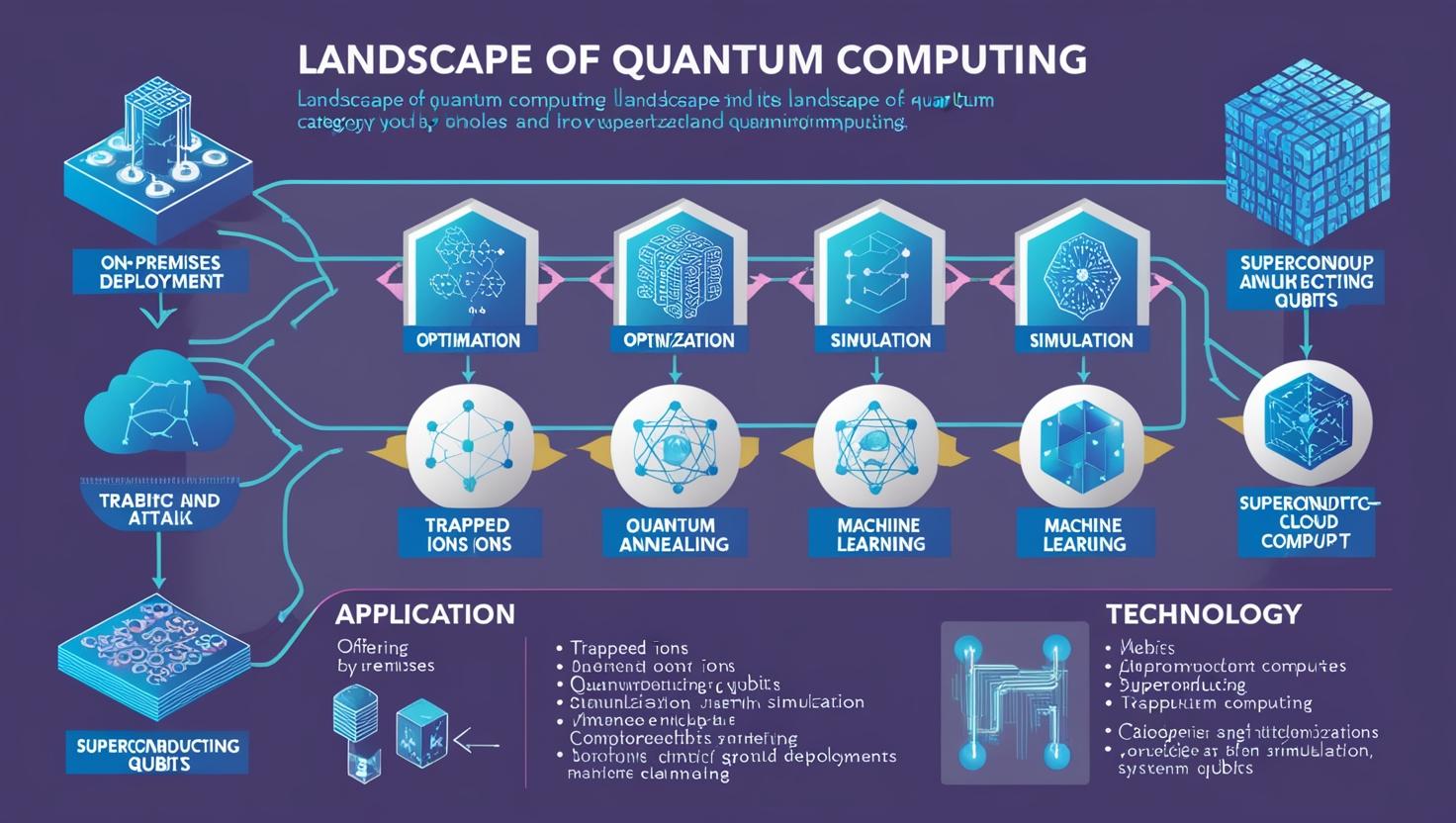
At the heart of the Quantum Computing Ecosystem are its diverse offerings. Quantum hardware forms the foundation, including processors built on superconducting qubits, trapped ions, and quantum annealing architectures. These hardware platforms provide the physical means to perform quantum operations with increasing stability and fidelity. Complementing the hardware is quantum software, which includes programming frameworks, simulation tools, and algorithm libraries designed to harness the unique capabilities of quantum systems. Beyond hardware and software, the ecosystem includes services such as consulting, integration, and managed solutions. These services allow enterprises to access quantum capabilities without the need for in-house expertise, bridging the gap between experimental technology and practical deployment.
Deployment: On-Premises and Cloud
Deployment models play a critical role in shaping the Quantum Computing Ecosystem. On-premises quantum systems offer organizations full control over sensitive data and infrastructure, making them ideal for sectors with stringent security or regulatory requirements. These systems allow direct integration with existing IT and operational technology environments, enabling tailored applications for research, defense, and industrial purposes. Conversely, cloud-based quantum computing has emerged as a flexible and scalable option. By providing remote access to quantum processors, cloud deployments democratize quantum technology, allowing businesses, researchers, and startups to experiment, develop, and scale applications without investing in expensive hardware. Hybrid models are also gaining traction, combining the control of on-premises systems with the scalability and accessibility of cloud-based platforms.
Download PDF Brochure @ https://www.marketsandmarkets.com/pdfdownloadNew.asp?id=144888301
Applications Driving the Ecosystem
The Quantum Computing Ecosystem is being propelled forward by diverse applications across industries. Optimization problems, such as complex supply chains, financial portfolio management, and resource allocation, are now being tackled more efficiently with quantum algorithms. Simulation is another critical area, particularly in pharmaceuticals and material science, where quantum computing accelerates molecular modeling and enables discoveries that were previously computationally prohibitive. Machine learning applications are increasingly integrated within the ecosystem, with quantum-enhanced models providing faster pattern recognition and predictive capabilities that surpass classical AI methods. Together, these applications are not only expanding the ecosystem but also demonstrating its transformative potential across sectors.
Core Technologies of the Ecosystem
The technologies underpinning the Quantum Computing Ecosystem are diverse and complementary. Trapped ion systems utilize individual ions manipulated with precise lasers to perform high-fidelity quantum operations. Quantum annealing focuses on solving complex combinatorial optimization problems efficiently, making it ideal for logistics and financial modeling. Superconducting qubits remain the most widely adopted technology due to their scalability and ability to integrate into larger circuits. Each of these technologies contributes to the robustness and versatility of the ecosystem, allowing quantum computing to address a range of scientific, industrial, and commercial challenges.
The Future of the Quantum Computing Ecosystem
Looking ahead, the Quantum Computing Ecosystem is poised for exponential growth. Investments from governments, tech giants, and startups are accelerating the development of both hardware and software platforms. As cloud access, hybrid deployment models, and advanced services become more widespread, the ecosystem will become increasingly accessible to businesses of all sizes. The combination of quantum-enabled optimization, simulation, and machine learning applications is expected to redefine industries, from logistics and energy management to drug discovery and cybersecurity. The Quantum Computing Ecosystem is no longer a distant vision; it is a transformative framework that is steadily shaping the future of computing and global innovation.
FAQ: Quantum Computing Ecosystem
Q1: What is the Quantum Computing Ecosystem?
The Quantum Computing Ecosystem refers to the interconnected network of technologies, software, hardware, applications, and services that collectively enable quantum computing. It includes quantum processors, software platforms, cloud and on-premises deployment options, and specialized services that help organizations develop and deploy quantum solutions.
Q2: What are the key components of the ecosystem?
The ecosystem consists of quantum hardware (superconducting qubits, trapped ions, and quantum annealers), quantum software (algorithms, simulation tools, and development frameworks), deployment models (on-premises, cloud, or hybrid), and services such as consulting, integration, and managed solutions. Together, these components allow businesses and researchers to implement practical quantum computing applications.
Q3: What deployment options are available in the Quantum Computing Ecosystem?
The ecosystem supports both on-premises and cloud-based deployments. On-premises systems offer maximum control and security, ideal for regulated industries. Cloud-based quantum computing provides scalable and accessible resources without the need for high upfront hardware investments. Hybrid models are emerging, combining the benefits of both approaches.
Q4: What applications drive the Quantum Computing Ecosystem?
The ecosystem supports applications in optimization, simulation, and machine learning. Optimization is used in logistics, supply chains, and financial modeling. Simulation accelerates material science and drug discovery, while machine learning leverages quantum-enhanced algorithms to improve predictive analytics and pattern recognition.
Q5: What are the main technologies powering quantum computing?
Key technologies include trapped ions, which use laser-controlled ions for high-fidelity operations; quantum annealing, specialized for optimization problems; and superconducting qubits, which are scalable and widely adopted for building complex quantum circuits. Each technology contributes to different types of applications and strengthens the ecosystem’s versatility.
About MarketsandMarkets™
MarketsandMarkets™ has been recognized as one of America’s Best Management Consulting Firms by Forbes, as per their recent report.
MarketsandMarkets™ is a blue ocean alternative in growth consulting and program management, leveraging a man-machine offering to drive supernormal growth for progressive organizations in the B2B space. With the widest lens on emerging technologies, we are proficient in co-creating supernormal growth for clients across the globe.
Today, 80% of Fortune 2000 companies rely on MarketsandMarkets, and 90 of the top 100 companies in each sector trust us to accelerate their revenue growth. With a global clientele of over 13,000 organizations, we help businesses thrive in a disruptive ecosystem.
The B2B economy is witnessing the emergence of $25 trillion in new revenue streams that are replacing existing ones within this decade. We work with clients on growth programs, helping them monetize this $25 trillion opportunity through our service lines – TAM Expansion, Go-to-Market (GTM) Strategy to Execution, Market Share Gain, Account Enablement, and Thought Leadership Marketing.
Built on the ‘GIVE Growth’ principle, we collaborate with several Forbes Global 2000 B2B companies to keep them future-ready. Our insights and strategies are powered by industry experts, cutting-edge AI, and our Market Intelligence Cloud, KnowledgeStore™, which integrates research and provides ecosystem-wide visibility into revenue shifts.
To find out more, visit www.MarketsandMarkets™.com or follow us on Twitter , LinkedIn and Facebook .
Contact:
Mr. Rohan Salgarkar
MarketsandMarkets™ INC.
1615 South Congress Ave.
Suite 103, Delray Beach, FL 33445
USA: +1-888-600-6441
