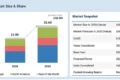
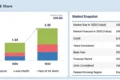
The automotive solid-state LiDAR market is expected to increase from USD 0.85 billion in 2025 to USD 6.76 billion by 2032, registering a CAGR of 34.5%. The rapid adoption of driver assistance systems, the growth of autonomous driving technology, related investments, and the need for compact, reliable, and cost-effective sensing solutions are driving the demand for automotive solid-state LiDAR.
Short- and mid-range solid-state LiDAR systems at 905 nm and 940 nm are expected to dominate the market in the forecast period. These systems are increasingly integrated into advanced driver-assistance features such as parking assistance, obstacle detection, collision avoidance, and urban driving, expanding into low-volume passenger vehicles. Their lower cost compared to long-range options makes them more suitable for large-scale deployment, helping OEMs manage overall vehicle prices. Additionally, their compact designs and solid-state architecture facilitate integration into vehicle platforms with minimal design adjustments. Furthermore, mature supply chains and regulatory approval support mass production. Although long-range solid-state LiDAR at 1550 nm will be employed in premium segments and high-autonomy vehicles, its higher cost will limit volume, allowing short- and mid-range systems to retain most of the market share.
FMCW (frequency modulated continuous wave) automotive solid-state LiDAR is expected to see the fastest growth in the automotive solid-state LiDAR market because of its high accuracy, long detection range, and ability to provide detailed 3D perception data. It works by using continuously modulated laser signals, allowing it to increase its output, detection distance, and speed measurements. This technology gives a clearer and more dependable understanding of the environment, which is vital for advanced ADAS and autonomous driving systems. Compared to traditional time-of-flight (TOF) methods, FMCW automotive solid-state LiDAR performs better under challenging conditions like darkness, glare, and heavy traffic. Its capacity to detect objects at longer distances enhances safety on high-speed highways and supports high-speed autonomous driving applications. Recent product launches and commercial deployments indicate a growing acceptance of FMCW-based automotive solid-state LiDAR solutions. Currently, sensors can achieve detection ranges of several hundred meters or more. The adoption of FMCW automotive solid-state LiDAR is expected to speed up as automakers focus on long-range, high-precision, and durable sensing technologies. Consequently, the automotive solid-state LiDAR market is poised for significant growth.
Download PDF Brochure @ https://www.marketsandmarkets.com/pdfdownloadNew.asp?id=109133980
Semi-autonomous vehicles are expected to dominate the automotive solid-state LiDAR market. This is primarily due to the increasing integration of Level 2 and Level 3 driving features in passenger cars. Consequently, the adoption of automotive solid-state LiDAR is rapidly expanding to support advanced driver assistance systems that enhance safety, reliability, and comfort while driving. Many vehicle models already include automotive solid-state LiDAR, enabling features like adaptive cruise control, lane assistance, and collision prevention. Government initiatives, particularly in China, that promote the adoption of new vehicles with Level 2 or Level 3 capabilities, further boost the demand for automotive solid-state LiDAR as automakers adhere to regulations and meet consumer demand. As ADAS deployment continues to grow and automotive solid-state LiDAR technology advances in performance and affordability, semi-autonomous vehicles are positioned for continued growth.
China is poised to be a major contributor to the Asia Pacific market for automotive solid-state LiDAR, driven by rapid technological advancements in autonomous driving, supportive policies, and the growing demand for advanced vehicle safety features. Locally designed cars are accelerating the adoption of automotive solid-state LiDAR in the mainstream by introducing many new models across different price segments, scheduled for launch from 2024 onward, which integrate automotive solid-state LiDAR systems. Some major Chinese tech companies, such as RoboSense Technology Co., Ltd., Hesai Group, and Huawei Technologies Co., Ltd., play a leading role in this by providing cost-efficient automotive solid-state LiDAR solutions with excellent performance, making it possible to extend the penetration of premium vehicles to mass-market models. The regulatory greenlight for testing Level 3 autonomous vehicles granted to several Chinese OEMs in 2024 is another reason for a ramp-up in integrating automotive solid-state LiDAR. The market landscape in Asia Pacific thus looks bright for automotive solid-state LiDAR, with China leading the region.
Key Players
Leading companies in the automotive solid-state LiDAR market include Hesai Group (China), RoboSense (China), Huawei Technologies (China), Seyond (China), Luminar Technologies (US), Valeo (France), and Innoviz Technologies (Israel). These companies manufacture automotive solid-state LiDAR sensors that meet automotive standards and offer perception solutions accessible worldwide. They focus on ongoing product innovation, OEM partnerships, and platform compatibility to keep pace with higher levels of vehicle automation.
Request Free Sample Report @ https://www.marketsandmarkets.com/requestsampleNew.asp?id=109133980