An electric fuse is a safety device for electrical circuits and devices designed to protect against overcurrent (including short circuit conditions). A fuse is made of metal wire or a strip that degrades when too much current passes through it, breaking the circuit and preventing damage to devices or causing a fire. The growing deployment of digital substations and smart grid infrastructure is driving the adoption of advanced fuse systems compatible with intelligent relays and IoT-based monitoring, ensuring faster isolation and system reliability.
Market Size & Growth
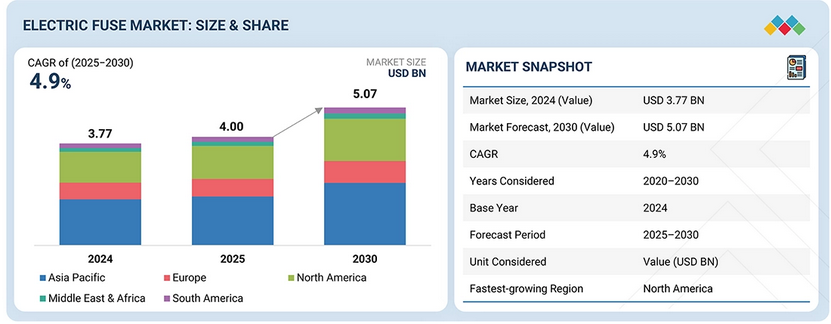
- The electric fuse market is projected to grow from USD 4.0B in 2025 to USD 5.07B by 2030, at a 4.9% CAGR.
- Growth is driven by electrification, renewable energy integration, and smart grid expansion.
Key Companies
- ABB (Switzerland),
- Siemens (Germany),
- Eaton (Ireland),
- Schneider Electric (France),
- Mersen (France) among others…
Download PDF Brochure @ https://www.marketsandmarkets.com/pdfdownloadNew.asp?id=35385419
By type, the power fuses & fuse links segment is forecasted to be the largest segment in the electric fuse market during the forecast period, driven by the expansion and upgrade of power transmission and distribution networks. Reliability in overcurrent protection is a critical consideration for increasing investments in substation automation, smart-grid infrastructure, and renewable energy integration. The replacement of outdated fuse systems in North America and Europe, along with the rapid electrification in Asia Pacific, continues to support the growth of this segment. Power fuses and fuse links are increasingly becoming the product of choice due to their high interrupting capacity, compact designs, and increased reliability, which is essential for today’s utility or industrial applications.
By end user, the electric fuse market is categorized based on end users into utilities, residential, commercial, transportation, and industrial. The transportation sector is expanding rapidly and is expected to be the fastest-growing end-user segment during the forecast period. The growth in this segment is driven mainly by the increasing adoption of electric vehicles (EVs), the expansion of EV charging infrastructure, and the growing demand for high-voltage direct current (HVDC) protection in automotive systems. The increasing use of fuses in railways, aviation, and marine applications for power distribution and compliance is further driving market growth. The increasing trend of vehicle electrification and other advanced onboard electronics continues to drive the use of fuses in this segment.
Regional Insights
- Asia Pacific leads the market, driven by rapid industrialization and investments in power infrastructure (China, India, Japan, South Korea).
- North America is expected to show the highest growth rate due to grid upgrades and EV adoption.
North America holds the second-largest share of the global electric fuse market in 2024, supported by strong investments in power transmission and distribution (T&D) infrastructure modernization, aging grid replacement programs, and widespread electrification across industries. Large-scale investments in transmission, distribution and substation upgrades in the U.S. are driving demand for advanced fuse solutions. These upgrades focus on reliability, aging system replacement and integration of renewables. The rapid expansion of hyperscale data centers and cloud computing facilities has also fueled demand for high-performance fuses to ensure power stability and equipment protection. Moreover, the increasing deployment of renewable energy systems and electric vehicle (EV) charging infrastructure is boosting the use of medium- and high-voltage fuses for DC applications. Stringent safety standards enforced by organizations such as UL, NEC, and ANSI have compelled manufacturers to innovate fuse designs, improving thermal endurance and coordination capabilities.
Request Sample Pages of the Report @ https://www.marketsandmarkets.com/requestsampleNew.asp?id=35385419
The ongoing shift toward smart grids and digitalized electrical networks is creating significant demand for intelligent fuse systems with real-time monitoring and fault detection capabilities. The growing adoption of electric vehicles and expansion of EV charging infrastructure are generating new application opportunities for fuses in both DC and AC circuits. Additionally, the increasing deployment of distributed energy resources such as solar PV systems, wind farms, and energy storage installations requires reliable overcurrent protection solutions, further boosting fuse demand.