The global Resistive Temperature Detector (RTD) temperature sensor market is experiencing strong growth, driven by the rapid adoption of smart manufacturing technologies and the increasing demand for high-precision temperature measurement across industries. As industrial processes become more automated and data-driven, RTD sensors are emerging as a preferred choice due to their accuracy, stability, and reliability in critical applications.Resistive Temperature Detector (RTD) temperature sensor market is projected to grow from USD 1.64 billion in 2025and to reach USD 1.96 billion by 2030, at a Compound Annual Growth Rate (CAGR) of 3.7% during the forecast period.
Rising Demand Fueled by Smart Manufacturing
The transition toward Industry 4.0 has significantly accelerated the deployment of advanced sensing technologies. RTD temperature sensors, known for their consistent performance and long-term stability, are playing a vital role in enabling real-time monitoring and process optimization. Integration with IoT platforms, predictive maintenance systems, and advanced control units is further boosting their adoption across manufacturing environments.
Market Segmentation by Material
Based on material, the RTD temperature sensor market is segmented into platinum, nickel, and copper:
Platinum RTD sensors dominate the market due to their superior accuracy, wide temperature range, and excellent chemical resistance. These sensors are widely used in high-precision industrial applications and laboratory environments.
Nickel RTD sensors offer a cost-effective alternative with good sensitivity, making them suitable for moderate temperature ranges and less demanding applications.
Copper RTD sensors are valued for their linear response and affordability, though their usage is limited due to a narrower temperature range and susceptibility to oxidation.
Among these, platinum-based RTDs are expected to maintain their leading position owing to their reliability in critical sectors such as oil & gas and chemicals.
Download PDF Brochure @ https://www.marketsandmarkets.com/pdfdownloadNew.asp?id=167152360
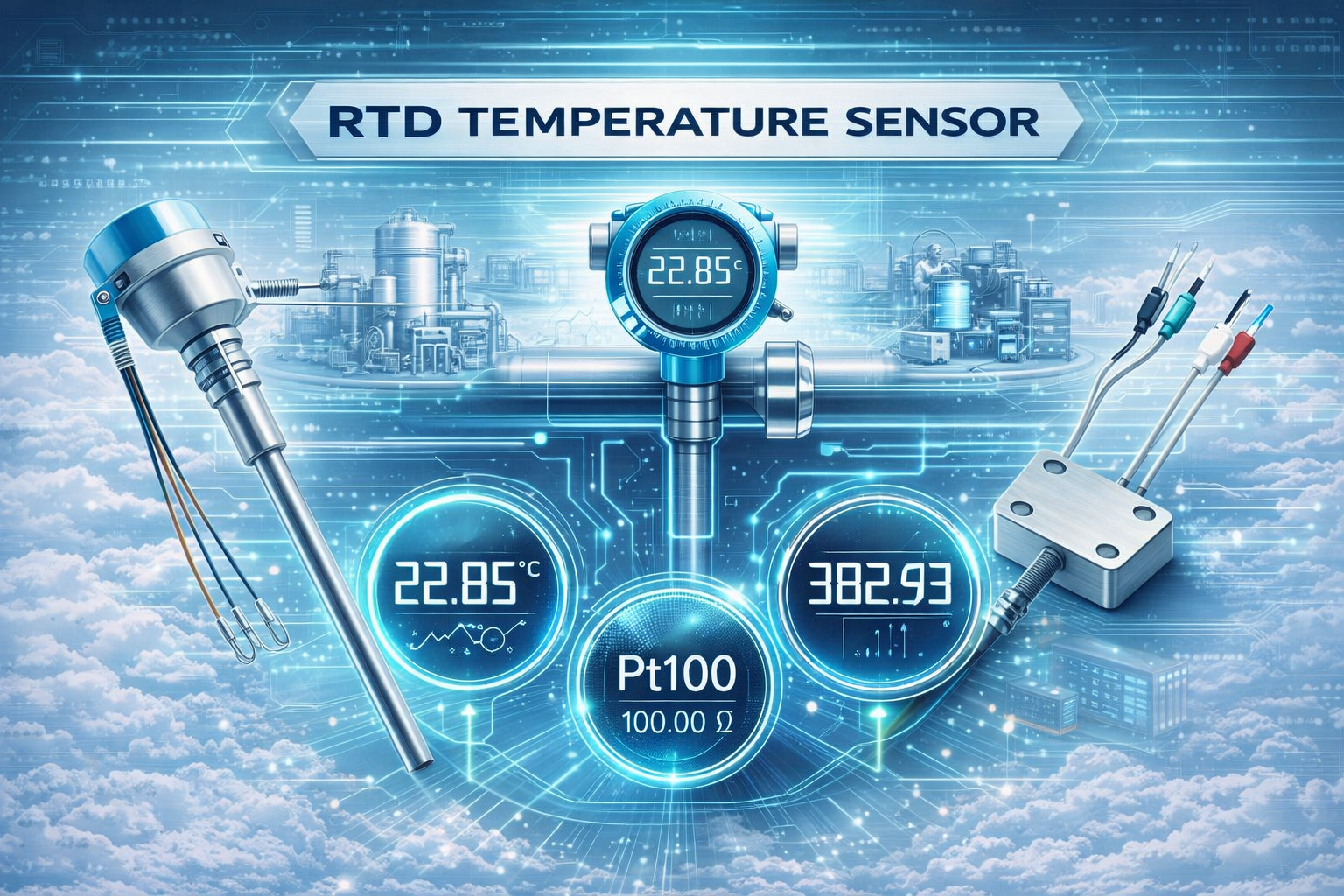
Market Segmentation by Output
In terms of output, RTD temperature sensors are categorized into analog and digital:
Analog RTD sensors continue to be widely used in traditional industrial systems due to their simplicity and compatibility with legacy equipment.
Digital RTD sensors are gaining traction as industries shift toward smart systems. These sensors offer enhanced accuracy, noise immunity, and seamless integration with digital control and monitoring platforms.
The growing emphasis on automation and connectivity is expected to drive faster growth in the digital segment over the coming years.
RTD temperature sensors Market Segmentation by End User
RTD temperature sensors are extensively utilized across a variety of end-user industries:
Chemicals: High-precision temperature monitoring is essential for maintaining product quality and ensuring safety in chemical processing.
Oil & Gas: RTDs are critical for monitoring extreme temperatures in exploration, refining, and transportation operations.
Consumer Electronics: Increasing miniaturization and thermal management needs are driving sensor adoption in electronic devices.
Automotive: RTDs are used in engine management systems, battery monitoring (especially in electric vehicles), and climate control systems.
Others: Additional sectors such as power generation, food & beverages, and pharmaceuticals are also contributing to market growth.
RTD temperature sensors Market Key Growth Drivers
Several factors are contributing to the expansion of the RTD temperature sensor market:
Increasing demand for precise and stable temperature measurement
Rapid industrial automation and adoption of smart manufacturing practices
Growth in energy, automotive, and electronics sectors
Rising focus on safety, efficiency, and regulatory compliance
Advancements in sensor materials and digital communication technologies
Challenges and Opportunities
While the market outlook remains positive, certain challenges persist. RTD sensors are generally more expensive than thermocouples, which may limit adoption in cost-sensitive applications. Additionally, slower response times compared to other sensor types can be a drawback in highly dynamic environments.
However, ongoing technological innovations, including miniaturization, improved response times, and enhanced digital capabilities, are expected to address these limitations. The growing integration of RTDs with wireless systems and cloud-based analytics platforms presents significant opportunities for future growth.
Future RTD temperature sensor market Outlook
The RTD temperature sensor market is poised for sustained expansion as industries continue to prioritize precision, efficiency, and digital transformation. With smart manufacturing trends reshaping industrial landscapes, RTD sensors are set to play an increasingly critical role in enabling intelligent, connected, and optimized operations worldwide.
As demand continues to rise across diverse sectors, market players are expected to focus on innovation, product differentiation, and strategic partnerships to strengthen their competitive position and capitalize on emerging opportunities.
FAQ
1. What is an RTD temperature sensor?
An RTD (Resistive Temperature Detector) is a temperature sensor that measures temperature by correlating the resistance of a metal (typically platinum) with temperature changes. It is known for high accuracy and stability.
2. What are the key materials used in RTD sensors?
RTD sensors are commonly made from:
Platinum – Most widely used due to high accuracy and wide temperature range
Nickel – Cost-effective with moderate performance
Copper – Offers linear response but has a limited temperature range
3. Why is platinum the preferred material for RTDs?
Platinum provides excellent stability, repeatability, and resistance to corrosion, making it ideal for precise temperature measurement in demanding environments such as chemical and industrial applications.
4. What is the difference between analog and digital RTD sensors?
Analog RTDs: Provide continuous resistance-based output and are compatible with traditional systems
Digital RTDs: Convert signals into digital output, offering better accuracy, noise immunity, and easy integration with smart systems
5. Which industries use RTD temperature sensors?
RTD sensors are widely used in:
Chemicals
Oil & Gas
Automotive
Consumer Electronics
Power generation
Food & beverages
Pharmaceuticals
6. What are the advantages of RTD sensors over other temperature sensors?
High accuracy and repeatability
Long-term stability
Wide temperature measurement range
Less drift over time compared to thermocouples
About MarketsandMarkets™
MarketsandMarkets™ has been recognized as one of America’s Best Management Consulting Firms by Forbes, as per their recent report.
MarketsandMarkets™ is a blue ocean alternative in growth consulting and program management, leveraging a man-machine offering to drive supernormal growth for progressive organizations in the B2B space. With the widest lens on emerging technologies, we are proficient in co-creating supernormal growth for clients across the globe.
Today, 80% of Fortune 2000 companies rely on MarketsandMarkets, and 90 of the top 100 companies in each sector trust us to accelerate their revenue growth. With a global clientele of over 13,000 organizations, we help businesses thrive in a disruptive ecosystem.
The B2B economy is witnessing the emergence of $25 trillion in new revenue streams that are replacing existing ones within this decade. We work with clients on growth programs, helping them monetize this $25 trillion opportunity through our service lines – TAM Expansion, Go-to-Market (GTM) Strategy to Execution, Market Share Gain, Account Enablement, and Thought Leadership Marketing.
Built on the ‘GIVE Growth’ principle, we collaborate with several Forbes Global 2000 B2B companies to keep them future-ready. Our insights and strategies are powered by industry experts, cutting-edge AI, and our Market Intelligence Cloud, KnowledgeStore™, which integrates research and provides ecosystem-wide visibility into revenue shifts.
To find out more, visit www.MarketsandMarkets™.com or follow us on Twitter , LinkedIn and Facebook .
Contact:
Mr. Rohan Salgarkar
MarketsandMarkets™ INC.
630 Dundee Road
Suite 430
Northbrook, IL 60062
USA : 1-888-600-6441
