The global medical immersive simulation market is projected to grow from USD 0.77 billion in 2025 to USD 1.37 billion by 2030, at a CAGR of 12.3% during the forecast period. The market was valued at USD 0.66 billion in 2024. The immersive simulation market is expanding steadily as healthcare systems increasingly prioritize advanced training methods and digital transformation. Growing procedural complexity and the need to reduce clinical errors are encouraging hospitals and academic institutions to adopt immersive VR, AR, and haptic-enabled solutions.
Download PDF Brochure: https://www.marketsandmarkets.com/pdfdownloadNew.asp?id=229737891
The increasing volume of surgical procedures worldwide is significantly driving the demand for medical immersive simulation technologies. The increasing adoption of immersive technologies and technological advancements is expected to boost the growth of the medical immersive simulation market.
In Australia, approximately 394,000 (2023–24) emergency hospital admissions required surgical intervention, underscoring the growing procedural burden on healthcare systems. Additionally, in July 2024, ImmersiveTouch Inc. received 510 (k) clearance from the US Food and Drug Administration (FDA) for its ImmersiveAR augmented reality surgical system. The platform uses 3D holographic images to improve surgical precision and reduce complications.
All these developments point toward the rising inclination of the healthcare sector toward immersive simulation technologies.
The academic institutes segment accounted for the largest share of the medical immersive simulation market in 2024.
By end user, the academic institutes segment accounted for the largest share of the market in 2024, driven by the widespread integration of simulation-based training into medical, nursing, and allied health curricula. Universities and teaching hospitals invest significantly in VR, AR, and high-fidelity simulation labs to meet accreditation standards, support competency-based education, and manage large student enrollment. Institutions such as Stanford University School of Medicine and Johns Hopkins University have incorporated immersive VR and simulation technologies into their medical training programs to strengthen procedural skills and clinical preparedness.
The virtual reality-based simulation segment is expected to dominate the medical immersive simulation software market in 2024.
By technology, the virtual reality-based simulation segment accounted for the largest share in the medical immersive simulation market in 2024 due to its high level of immersion, realism, and widespread adoption in clinical training. The availability of advanced VR hardware, established use cases in surgical training, and relatively higher scalability compared to other immersive technologies have driven its dominant position in the market. For example, platforms like Osso VR provide immersive surgical training modules that allow surgeons to practice orthopedic procedures, while FundamentalVR combines VR with haptic feedback to simulate real surgical touch, reinforcing its strong adoption across medical institutions.
Asia Pacific is expected to be the fastest-growing region in the medical immersive simulation market during the forecast period, driven by expanding healthcare infrastructure, rising surgical volumes, and increasing investments in digital health technologies. Countries such as China, India, Japan, and South Korea are actively modernizing medical education and integrating VR, AR, and AI-enabled simulation into training programs to address workforce shortages and improve clinical competency.
In November 2024, South Korea’s VRAD Co., Ltd. introduced two VR-based medical simulators, NS Core for nursing skills training and IP Trauma for immersive trauma care scenarios. Such advancements and increasing institutional adoption across emerging countries are expected to significantly accelerate the growth of the medical immersive simulation market in the Asia Pacific region.
MARKET DYNAMICS
Drivers
- Growing adoption of VR, AR, and AI in medical training
- Increasing focus on patient safety and error reduction
RESTRAINTS
- Limited technical expertise and faculty training
- Budgetary constraints
OPPORTUNITIES
- Integration of artificial intelligence and adaptive learning technologies
- Expansion in emerging markets
CHALLENGES
- Frequent technology upgrades
- Resistance to adopting digital training methods
Key Players
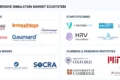
Key players profiled in this market include Surgical Science Sweden AB (Sweden), Laerdal Medical (Norway), Gaumard Scientific (US), Mentice AB (Sweden), Limbs & Things (US), Anatomage (US), and SimX (US), among others.
RECENT DEVELOPMENTS
- April 2025 : SimX partnered with Elevate Healthcare to launch next-generation healthcare simulation solutions by combining SimX’s advanced VR medical simulation platform with Elevate’s expertise in physical simulation and clinical training.
- July 2024 : MediSim VR launched India’s first virtual reality (VR) skill training lab for nursing at Kusum Dhirajlal (KD) Hospital in Ahmedabad.
- January 2024 : GigXR and CAE Healthcare formed a strategic partnership to enhance clinical and multimodal simulation training by combining GigXR’s immersive XR learning applications with CAE’s extensive simulation infrastructure.
- COLUMN ‘A’ SHOULD BE IN TEXT FORMAT AND NOT DATE FORMAT :
Inquire Before Buying: https://www.marketsandmarkets.com/Enquiry_Before_BuyingNew.asp?id=229737891