The exoskeleton technology market is rapidly gaining traction as industries and healthcare systems explore innovative ways to enhance human strength, endurance, and mobility. Once confined to science fiction, exoskeletons—wearable robotic systems designed to augment physical capabilities—are now becoming a practical solution across sectors such as healthcare, manufacturing, defense, and logistics.
As advancements in robotics, artificial intelligence (AI), and sensor technologies continue to accelerate, the exoskeleton market is entering a phase of strong growth, driven by increasing demand for ergonomic solutions, rehabilitation support, and workforce productivity enhancement. The global exoskeleton market is projected to grow from USD 0.56 billion in 2025 to USD 2.03 billion by 2030, at a CAGR of 29.4% during the forecast period.
Understanding Exoskeleton Technology
Exoskeletons are wearable devices that work in tandem with the human body to assist movement, reduce fatigue, or restore mobility. These systems can be powered (active) or non-powered (passive), depending on their design and application.
Powered exoskeletons use motors, actuators, and sensors to assist or enhance movement.
Passive exoskeletons rely on mechanical structures to support posture and reduce strain without external power.
These technologies are designed to improve human performance while minimizing the risk of injury, making them highly valuable in physically demanding environments.
Market Growth Drivers
1. Rising Demand in Healthcare and Rehabilitation
One of the most significant drivers of the exoskeleton market is its application in healthcare. Exoskeletons are being used to assist patients with mobility impairments caused by spinal cord injuries, strokes, or neurological disorders.
They enable:
- Improved rehabilitation outcomes
- Enhanced patient mobility and independence
- Reduced burden on caregivers
With aging populations and increasing prevalence of mobility-related conditions, demand for rehabilitation exoskeletons is expected to grow substantially.
2. Workplace Safety and Ergonomics
Industries such as manufacturing, construction, and logistics are increasingly adopting exoskeletons to improve worker safety and productivity. These devices help reduce physical strain during repetitive tasks such as lifting, bending, and overhead work.
Benefits include:
- Reduced risk of musculoskeletal injuries
- Increased worker endurance
- Improved productivity and efficiency
As companies focus on employee well-being and compliance with safety regulations, exoskeleton adoption is becoming a strategic investment.
3. Advancements in Robotics and AI
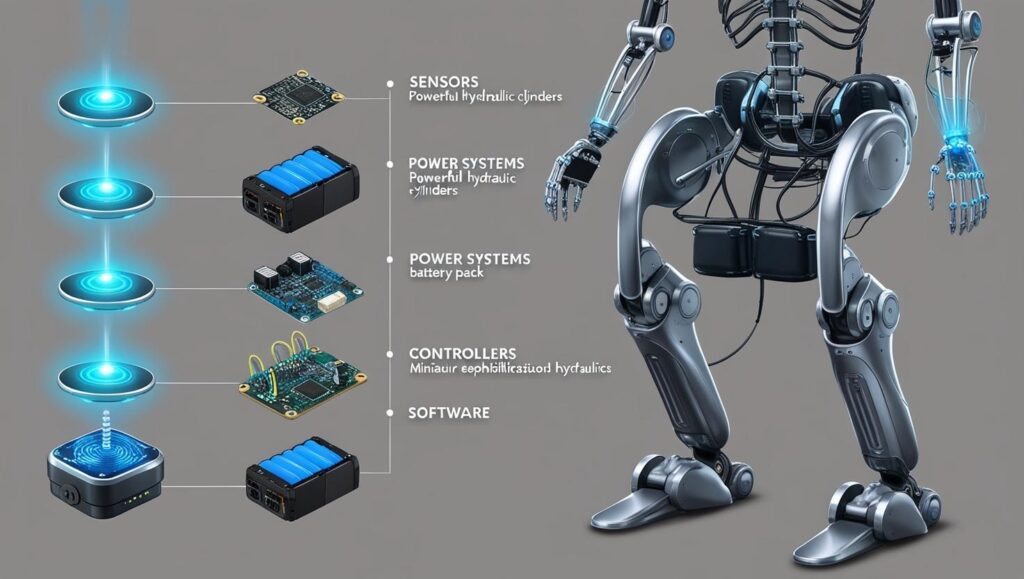
Technological advancements are playing a crucial role in driving market growth. Modern exoskeletons are equipped with:
- Smart sensors for motion detection
- AI algorithms for adaptive movement
- Lightweight materials for improved comfort
- Battery-efficient power systems
These innovations are making exoskeletons more practical, affordable, and user-friendly, accelerating their adoption across industries.
Download PDF Brochure @ https://www.marketsandmarkets.com/pdfdownloadNew.asp?id=40697797
4. Growing Defense Applications
Military organizations are investing in exoskeleton technology to enhance soldier performance. These systems can help soldiers carry heavy loads, reduce fatigue, and improve endurance in challenging environments.
Defense applications include:
- Load-bearing support
- Injury prevention
- Enhanced mobility in rugged terrains
This segment is expected to contribute significantly to market growth in the coming years.
5. Expansion in Logistics and Warehousing
The rise of e-commerce and global supply chains has increased the demand for efficient warehouse operations. Exoskeletons are being deployed to assist workers in lifting and transporting goods, improving efficiency while reducing injury risks.
Market Segmentation Overview
The exoskeleton technology market can be segmented based on type, mobility, body part, and end-use industry.
By Type
Powered exoskeletons
Passive exoskeletons
By Mobility
Mobile exoskeletons
Stationary exoskeletons
By Body Part
Lower body exoskeletons
Upper body exoskeletons
Full-body exoskeletons
By End-Use Industry
Healthcare
Industrial
Defense
Logistics and warehousing
Construction
Each segment is contributing to the overall expansion of the market, with healthcare and industrial applications leading adoption.
Emerging Trends in the Exoskeleton Market
1. Integration with AI and IoT
Exoskeletons are increasingly being integrated with IoT platforms and AI systems, enabling real-time monitoring, performance optimization, and predictive maintenance.
2. Lightweight and Ergonomic Designs
Manufacturers are focusing on developing lightweight, flexible, and comfortable exoskeletons to improve user adoption and usability.
3. Customization and Personalization
Advanced exoskeletons are being designed to adapt to individual user needs, improving efficiency and comfort in both medical and industrial applications.
4. Expansion into Consumer Markets
While currently dominated by industrial and healthcare sectors, exoskeletons are gradually entering consumer markets for fitness, mobility assistance, and personal use.
5. Collaboration Between Tech and Healthcare Companies
Partnerships between robotics firms, healthcare providers, and research institutions are accelerating innovation and commercialization of exoskeleton technologies.
Challenges in Market Growth
Despite its strong potential, the exoskeleton market faces several challenges:
- High cost of advanced exoskeleton systems
- Limited awareness and adoption in emerging markets
- Technical complexity and maintenance requirements
- Regulatory and safety concerns in medical applications
- Battery life limitations in powered systems
Addressing these challenges will be critical for achieving widespread adoption.
Future Outlook
The future of the exoskeleton technology market is highly promising. As technology continues to evolve, exoskeletons are expected to become more accessible, efficient, and widely adopted across industries.
Key future developments include:
- Fully autonomous exoskeleton systems
- Enhanced AI-driven adaptability
- Wider adoption in small and medium enterprises
- Integration with smart workplace ecosystems
- Increased affordability through mass production
By 2030 and beyond, exoskeletons are likely to become a standard tool for improving human performance, safety, and quality of life.
The exoskeleton technology market is on a strong growth trajectory, driven by advancements in robotics, AI, and wearable technologies. From improving patient mobility in healthcare to enhancing productivity in industrial environments, exoskeletons are redefining the way humans interact with machines.
As industries continue to prioritize safety, efficiency, and innovation, exoskeleton technology will play a pivotal role in shaping the future of human augmentation and smart workforce solutions.
Frequently Asked Questions (FAQs) – Exoskeleton Technology Market
1. What is exoskeleton technology?
Exoskeleton technology refers to wearable robotic systems designed to enhance, support, or restore human movement. These devices can assist with mobility, reduce physical strain, and improve strength and endurance in various applications.
2. What are the main types of exoskeletons?
Exoskeletons are primarily categorized into:
Powered exoskeletons – Use motors, sensors, and actuators for movement assistance
Passive exoskeletons – Use mechanical support without external power
They can also be classified by body part (upper body, lower body, full body) and application.
3. Which industries are driving the growth of the exoskeleton market?
Key industries include:
Healthcare (rehabilitation and mobility assistance)
Manufacturing (worker safety and productivity)
Construction and logistics (heavy lifting support)
Defense (enhanced soldier performance)
4. What are the benefits of using exoskeletons?
Exoskeletons offer several advantages:
Reduced risk of workplace injuries
Improved worker productivity and endurance
Enhanced mobility for patients
Better ergonomics and safety compliance
5. What challenges does the exoskeleton market face?
Some of the major challenges include:
High costs of advanced systems
Limited awareness and adoption
Technical complexity and maintenance
Battery limitations for powered exoskeletons
Regulatory concerns in healthcare applications
About MarketsandMarkets™
MarketsandMarkets™ has been recognized as one of America’s Best Management Consulting Firms by Forbes, as per their recent report.
MarketsandMarkets™ is a blue ocean alternative in growth consulting and program management, leveraging a man-machine offering to drive supernormal growth for progressive organizations in the B2B space. With the widest lens on emerging technologies, we are proficient in co-creating supernormal growth for clients across the globe.
Today, 80% of Fortune 2000 companies rely on MarketsandMarkets, and 90 of the top 100 companies in each sector trust us to accelerate their revenue growth. With a global clientele of over 13,000 organizations, we help businesses thrive in a disruptive ecosystem.
The B2B economy is witnessing the emergence of $25 trillion in new revenue streams that are replacing existing ones within this decade. We work with clients on growth programs, helping them monetize this $25 trillion opportunity through our service lines – TAM Expansion, Go-to-Market (GTM) Strategy to Execution, Market Share Gain, Account Enablement, and Thought Leadership Marketing.
Built on the ‘GIVE Growth’ principle, we collaborate with several Forbes Global 2000 B2B companies to keep them future-ready. Our insights and strategies are powered by industry experts, cutting-edge AI, and our Market Intelligence Cloud, KnowledgeStore™, which integrates research and provides ecosystem-wide visibility into revenue shifts.
To find out more, visit www.MarketsandMarkets™.com or follow us on Twitter , LinkedIn and Facebook .
Contact:
Mr. Rohan Salgarkar
MarketsandMarkets™ INC.
1615 South Congress Ave.
Suite 103, Delray Beach, FL 33445
USA: +1-888-600-6441
