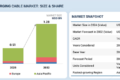
The South Korea pharmaceutical contract manufacturing market is a rapidly maturing and highly competitive landscape, increasingly recognized as a global hub for biopharmaceutical production. Driven by substantial government support, including the designation of specialized bio-industrial strategic zones and significant funding for biotech innovation, the sector is characterized by a shift toward high-value biologics, biosimilars, and advanced therapy medicinal products. The market is dominated by major domestic players such as Samsung Biologics and Celltrion, which operate some of the world’s largest production facilities, alongside a dense ecosystem of over 200 registered service providers. While traditional small-molecule manufacturing remains a core component, the industry is undergoing a digital transformation with the integration of artificial intelligence and automated workflows to enhance efficiency. Despite challenges like intense price competition among local providers and stringent regulatory requirements, the market is poised for continued expansion as global pharmaceutical companies increasingly leverage South Korea’s advanced infrastructure and technical expertise for large-scale GMP production.
Key Drivers, Restraints, Opportunities, and Challenges in the South Korea Pharmaceutical Contract Manufacturing Market
The South Korea pharmaceutical contract manufacturing market is primarily driven by the increasing complexity of drug pipelines, particularly in biologics and precision medicine, alongside a strategic shift toward outsourcing to optimize costs and accelerate time-to-market. Significant growth opportunities exist in the development of specialized capabilities for cell and gene therapies, mRNA vaccines, and high-potency APIs, further supported by government initiatives such as tax incentives and grants for biotech innovation. However, the industry faces substantial restraints including high capital investments for advanced manufacturing facilities and intense competition among over 200 registered service providers, which can lead to price wars and reduced margins. Critical challenges remain, such as navigating a stringent regulatory environment overseen by the Ministry of Food and Drug Safety, managing rising operational costs for digital transformation, and addressing talent shortages and high turnover rates within the specialized workforce.
Customer Segmentation, Needs, Preferences, and Buying Behavior in the South Korea Pharmaceutical Contract Manufacturing Market
The target customers for the South Korea pharmaceutical contract manufacturing market primarily include large-scale global pharmaceutical corporations, emerging biotechnology firms, and virtual companies that lack internal manufacturing infrastructure. These customers prioritize access to specialized technical expertise in complex modalities such as biologics, cell and gene therapies, and high-potency active pharmaceutical ingredients (APIs) to manage the increasing complexity of drug development. Their preferences are shifting toward long-term, end-to-end strategic partnerships with CDMOs like Samsung Biologics and SK Pharmteco that offer integrated services from process development to large-scale commercial production and sterile fill-finish. Purchasing behavior is driven by a need for cost optimization and speed-to-market, with clients selecting partners based on proven regulatory track records with the FDA and EMA, substantial manufacturing capacity, and the ability to ensure supply chain resilience. Additionally, domestic and international clients increasingly value localized solutions in major bio-hubs like Songdo and Seoul to facilitate efficient technical transfers and collaboration.
Regulatory, Technological, and Economic Factors Impacting the South Korea Pharmaceutical Contract Manufacturing Market
The South Korea pharmaceutical contract manufacturing market is significantly influenced by a complex interplay of regulatory, technological, and economic factors. Regulatory entry is governed by the Ministry of Food and Drug Safety (MFDS), where stringent Good Manufacturing Practice (GMP) standards and lengthy approval processes—often exceeding a year for new facilities—can delay market entry and increase compliance costs. Technologically, the industry is being transformed by the integration of AI-driven process optimization, continuous manufacturing, and advanced bioprocessing for cell and gene therapies, which offer a competitive edge but require substantial capital for specialized infrastructure. Economically, while robust government support through tax incentives for R&D and a rising global demand for biopharmaceuticals sustain high market value, profitability is often challenged by intense competition among over 200 local providers, high labor costs, and a heavy reliance on imported active pharmaceutical ingredients that leaves the supply chain vulnerable to global price fluctuations.
Current and Emerging Trends in the South Korea Pharmaceutical Contract Manufacturing Market
The South Korea pharmaceutical contract manufacturing market is undergoing a rapid transformation driven by the aggressive expansion of biologics and the integration of advanced technologies like continuous manufacturing, single-use bioprocessing, and AI-driven quality control. These trends are evolving quickly as major players like Samsung Biologics and Celltrion invest billions to address the rising global demand for complex modalities, including antibody-drug candidates, cell and gene therapies, and biosimilars. This evolution is further accelerated by a shift toward integrated “one-stop-shop” service models and a significant push for digital health integration, with the market for specialized segments like large molecule CDMOs projected to grow at double-digit rates through 2031. Furthermore, the industry is increasingly focused on personalized medicine and onshoring high-value production to enhance supply chain resilience, supported by the South Korean government’s strategic designation of bio-industrial zones and tax incentives for R&D.
Technological Innovations and Disruption Potential in the South Korea Pharmaceutical Contract Manufacturing Market
Technological innovations such as full single-use systems, artificial intelligence, and advanced robotics are gaining significant traction and are poised to disrupt the South Korean pharmaceutical contract manufacturing market by enhancing operational efficiency and reducing cross-contamination risks. The integration of Industry 4.0 solutions, including digital twins, IoT, and real-time data-driven quality monitoring, is streamlining workflows and improving supply chain visibility across the country’s growing network of smart biofactories. Furthermore, the development of novel modalities such as antibody-drug conjugates (ADCs), mRNA vaccines, and cell and gene therapies, supported by specialized technologies like microfluidics for nano-drug delivery and subcutaneous formulation tools, is reshaping production capabilities to handle increasingly complex treatments. These advancements, coupled with the emergence of automated “smart plants” and customized engineering models like the ALITA Smart BioFactory, are enabling CDMOs to provide the scale and flexibility necessary to meet the surging global demand for biopharmaceuticals.
Short-Term vs. Long-Term Trends in the South Korea Pharmaceutical Contract Manufacturing Market
In the South Korea pharmaceutical contract manufacturing market, the surge in demand for COVID-19 related products is increasingly viewed as a short-term phenomenon that has sharply declined, whereas several other trends represent permanent structural shifts. The move toward biologics and biosimilars is a long-term transformation driven by major players like Samsung Biologics and Celltrion, supported by demographic realities of an aging population and increasing chronic disease prevalence. Similarly, the integration of Industry 4.0 technologies, including artificial intelligence for process optimization and the adoption of continuous manufacturing, represents a fundamental shift aimed at enhancing operational efficiency and meeting the high-complexity needs of modern drug pipelines. Other enduring structural changes include the strategic move toward integrated “one-stop-shop” service models and the expansion of specialized manufacturing for cell and gene therapies, which are fueled by robust government support and the country’s emergence as a global bio-hub.