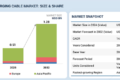
The Mexico home healthcare market is a rapidly evolving sector experiencing significant growth, driven by a growing elderly population and a rising prevalence of chronic conditions like diabetes and cardiovascular diseases. This landscape is characterized by a notable shift toward personalized, home-based services as patients increasingly seek the convenience and comfort of receiving care outside traditional hospital settings. Technological integration, including the adoption of home-based diagnostic equipment, mobile health apps, and telehealth, is enhancing delivery efficiency and patient control. While the market is supported by government initiatives and the expansion of the private healthcare sector to address public system underfunding, it remains competitive with both local and international players. Despite challenges such as a shortage of trained healthcare professionals and financial barriers for low-income families, the market is positioned for sustained expansion as healthcare providers and families prioritize cost-effective, long-term monitoring and specialized in-home care solutions.
Key Drivers, Restraints, Opportunities, and Challenges in the Mexico Home Healthcare Market
The Mexico home healthcare market is primarily driven by an aging population and the increasing prevalence of chronic conditions like diabetes and cardiovascular diseases, which necessitate long-term management and more affordable alternatives to hospital care. Technological advancements, particularly the integration of telehealth and remote monitoring tools, present significant growth opportunities by enhancing the efficiency of at-home treatments and reaching rural areas. However, the market faces notable restraints such as high out-of-pocket costs in a country with high poverty rates and a lack of specific insurance policies for home-based care. Furthermore, the industry is challenged by a critical shortage of skilled home healthcare professionals and a general public perception of low healthcare quality, which providers must address to sustain long-term growth.
Customer Segmentation, Needs, Preferences, and Buying Behavior in the Mexico Home Healthcare Market
The target customers for the Mexico home healthcare market primarily include the rapidly growing geriatric population and individuals suffering from chronic conditions such as diabetes, cardiovascular diseases, and respiratory illnesses. These customers prioritize personalized care, convenience, and the comfort of being treated at home rather than in a hospital setting, seeking specialized services like skilled nursing, rehabilitation therapy, and palliative care. Their preferences are increasingly leaning toward technology-driven solutions, such as telehealth and remote monitoring, which allow for continuous management of long-term health issues. Purchasing behavior in this market is characterized by a mix of private out-of-pocket spending, especially among low- and middle-income households who use corporate-partnered service packages, and institutional demand for cost-effective therapeutic and monitoring equipment that reduces the burden on the public healthcare system.
Regulatory, Technological, and Economic Factors Impacting the Mexico Home Healthcare Market
The Mexico home healthcare market is significantly influenced by a complex interplay of regulatory, technological, and economic factors. Regulatory entry is governed by COFEPRIS, where mandatory sanitary registrations and lengthy approval timeframes can create significant backlogs and barriers for new medical devices and pharmaceuticals. Technologically, the integration of telemedicine, wearable health sensors, and remote patient monitoring is driving market expansion by enabling personalized care and improving patient outcomes, though these advancements require ongoing investment in digital infrastructure. Economically, while the rising prevalence of chronic diseases and a growing geriatric population sustain high demand, significant income inequality and the high cost of advanced home medical equipment can restrain profitability and limit the adoption of sophisticated technologies to higher-income urban segments.
Current and Emerging Trends in the Mexico Home Healthcare Market
The Mexico home healthcare market is undergoing a rapid transformation driven by an aging population and a rising prevalence of chronic conditions like diabetes and cardiovascular diseases, with the elderly population projected to reach 25% of the total by 2050. These trends are evolving quickly, as evidenced by a projected compound annual growth rate of up to 12.7% through 2030 and the government’s 2024 launch of the House-to-House Health program to provide individualized care to the elderly and disabled. Furthermore, the integration of technological innovations such as telemedicine, remote patient monitoring, and wearable sensors is accelerating the decentralization of care, making home-based treatments more efficient and cost-effective. While service segments currently dominate the landscape, the demand for specialized home equipment is expected to be the fastest-growing market component as healthcare providers and insurance companies increasingly prioritize affordable alternatives to expensive in-hospital treatments.
Technological Innovations and Disruption Potential in the Mexico Home Healthcare Market
Technological innovations such as telemedicine, remote patient monitoring, and wearable health sensors are gaining significant traction and are poised to disrupt the Mexico home healthcare market by enabling real-time vital sign tracking and personalized care delivery. The integration of digital healthcare records and mobile health applications is further transforming the industry by enhancing data management, improving patient engagement, and streamlining consultations through virtual platforms. Additionally, advancements in home-based diagnostic equipment, such as smart glucose monitors and connected respiratory devices, are decentralizing care, while emerging infrastructure like satellite LTE broadband is expanding these high-tech services to previously underserved rural populations. In the long term, the incorporation of artificial intelligence and machine learning is expected to revolutionize the sector by providing predictive analytics for chronic disease management and more accurate, timely interventions.
Short-Term vs. Long-Term Trends in the Mexico Home Healthcare Market
In the Mexico home healthcare market, the initial surge in rapid, temporary telehealth deployments driven by emergency pandemic protocols is increasingly viewed as a short-term phenomenon that has leveled off, whereas several other trends represent long-term structural shifts. The move toward decentralization, characterized by the rising adoption of home-based specialized care for chronic conditions like diabetes and hypertension, is a permanent transformation driven by an aging population that is projected to reach 25% of the total population by 2050. Similarly, the integration of digital health technologies, such as remote patient monitoring and wearable sensors, represents a fundamental shift aimed at improving clinical outcomes and reducing the burden on the public hospital system. Other enduring structural changes include the implementation of government-led initiatives like the House-to-House Health program and the expansion of private healthcare services in urban areas, which ensure a sustained growth trajectory for home-based therapeutic and diagnostic solutions.