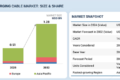
The Switzerland companion diagnostics market is a sophisticated and growing sector driven by a robust healthcare infrastructure and the presence of global diagnostic leaders like Roche, which is actively integrating AI-powered technology and digital pathology to enhance precision oncology. The market is increasingly defined by a shift toward personalized medicine and the adoption of next-generation sequencing, allowing for more comprehensive molecular profiling beyond traditional single-biomarker assays. To ensure seamless market access and alignment with the broader European landscape, the Swiss government has updated its regulatory framework to maintain equivalence with European Union In Vitro Diagnostic Regulations. While oncology remains the primary application for these diagnostics, there is a clear trend toward diversifying into therapeutic areas such as neurology, immunology, and infectious diseases, supported by advancements in multiplex PCR and multi-omics integration. Despite challenges like high capital investment and complex reimbursement pathways, the industry is poised for steady expansion as healthcare providers prioritize targeted treatment regimens that improve patient outcomes and reduce clinical trial attrition.
Key Drivers, Restraints, Opportunities, and Challenges in the Switzerland Companion Diagnostics Market
The Switzerland companion diagnostics market is primarily driven by a growing elderly population, an increasing prevalence of chronic and infectious diseases—particularly cancer— and rising awareness of precision medicine. Technological advancements in genomic and molecular technologies, alongside strong regulatory backing for targeted therapies and a well-developed healthcare system, further propel growth. Significant opportunities exist in the expansion of companion diagnostics into non-cancer therapeutic areas like neurology and cardiology, the development of disease-specific biomarkers, and the integration of AI and bioinformatics to improve diagnostic accuracy. However, the market faces restraints such as substantial upfront costs for research and biomarker validation, as well as high capital investments and a low cost-benefit ratio due to high drug attrition rates. Key challenges include a shortage of adequately trained laboratory professionals, limited clinician awareness of the latest advancements, and complex reimbursement policies that often lag behind technological innovations.
Customer Segmentation, Needs, Preferences, and Buying Behavior in the Switzerland Companion Diagnostics Market
The target customers for the Switzerland companion diagnostics market primarily include pharmaceutical and biotechnology companies, hospitals, and clinical reference laboratories. These institutional buyers prioritize precision and diagnostic accuracy to support personalized medicine initiatives, particularly in oncology and infectious diseases. Their preferences are shifting toward integrated, end-to-end diagnostic solutions that incorporate next-generation sequencing and AI-driven data analytics to streamline clinical decision-making and improve patient outcomes. Purchasing behavior is characterized by a strategic B2B model where customers seek long-term partnerships with established manufacturers like Roche and QIAGEN, valuing robust technical support, regulatory compliance, and the ability to co-develop diagnostics alongside novel therapeutics to reduce development costs and accelerate time-to-market.
Regulatory, Technological, and Economic Factors Impacting the Switzerland Companion Diagnostics Market
The Switzerland companion diagnostics market is significantly influenced by a complex interplay of regulatory, technological, and economic factors that shape entry and profitability. Regulatory compliance is a primary hurdle, as the implementation of the European Union’s In Vitro Diagnostic Medical Devices Regulation (IVDR) imposes stringent requirements for scientific validity and clinical performance, creating a challenging launch environment characterized by high regulatory barriers and limited transparency. Technologically, market expansion is driven by the integration of next-generation sequencing, multiplex assays, and artificial intelligence, which enhance diagnostic precision and enable multi-omics profiling, though these advancements necessitate substantial upfront investment in specialized infrastructure. Economically, while the rising demand for precision medicine and targeted therapies among an aging population sustains high market value, profitability is often challenged by high development costs, complex pricing and reimbursement policies that lag behind innovation, and a lack of parallel economic incentives to encourage the co-development of diagnostics alongside pharmaceutical treatments.
Current and Emerging Trends in the Switzerland Companion Diagnostics Market
The Switzerland companion diagnostics market is undergoing a rapid transformation driven by the integration of artificial intelligence and the shift toward multi-omics and next-generation sequencing. These trends are evolving quickly, as evidenced by Roche’s 2026 acquisition of PathAI to automate digital pathology workflows and the increasing use of multiplex assays that assess hundreds of biomarkers simultaneously. The market is also expanding beyond its traditional focus on oncology into complex areas such as neurology and infectious diseases, supported by a regulatory environment that is aligning with European IVD standards to accelerate the approval of novel diagnostics. This evolution is further propelled by the adoption of liquid biopsy technologies for non-invasive monitoring and a growing emphasis on co-development models between pharmaceutical and diagnostic giants to ensure synchronized therapeutic and diagnostic launches.
Technological Innovations and Disruption Potential in the Switzerland Companion Diagnostics Market
Technological innovations such as next-generation sequencing (NGS) and multi-omics integration are gaining significant traction, disrupting the Switzerland companion diagnostics market by enabling the simultaneous assessment of hundreds of biomarkers and a more holistic view of disease biology. The integration of artificial intelligence and machine learning is further transforming the industry by streamlining laboratory workflows, enhancing diagnostic accuracy through digital pathology, and accelerating the development of predictive companion diagnostic algorithms. Additionally, the emergence of liquid biopsies and blood-based biomarker testing offers less invasive alternatives to traditional tissue samples, while advancements in automated, standardized mass spectrometry and digital companion diagnostics are providing the foundation for more precise, data-driven, and personalized treatment decisions.
Short-Term vs. Long-Term Trends in the Switzerland Companion Diagnostics Market
In the Switzerland companion diagnostics market, the temporary dip in non-COVID testing volumes observed during the pandemic is viewed as a short-term phenomenon that has stabilized, whereas the integration of artificial intelligence and multi-omics represents a long-term structural shift. The move toward digital pathology, exemplified by Roche’s 2024 acquisition of PathAI, is a permanent transformation aimed at automating manual workflows and enhancing diagnostic precision. Similarly, the transition from single-biomarker assays to comprehensive next-generation sequencing and multiplexing is a fundamental change driven by the need for holistic molecular profiling in complex diseases. Other enduring structural shifts include the diversification of companion diagnostics beyond oncology into neurology and immunology, as well as the alignment of Swiss medical device regulations with the European IVD Regulation to ensure sustained market accessibility and innovation.