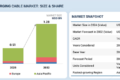
The Switzerland active pharmaceutical ingredient (API) market is a highly sophisticated and export-oriented sector that serves as a cornerstone of the nation’s economy, accounting for a significant portion of its global pharmaceutical leadership. Centered around major innovation hubs in Basel, Zug, and Lucerne, the landscape is defined by a concentration of global giants such as Novartis, Roche, and Sandoz, alongside a robust layer of specialized small-to-medium enterprises that focus on high-value, research-intensive specialties. The market is increasingly shifting toward biotech-derived APIs and complex synthetic molecules, driven by a world-class research and development infrastructure and the highest number of patent applications per capita globally. While the industry faces challenges from international competition and rising regulatory density, it maintains a competitive edge through its technical know-how, a highly skilled workforce, and a strategic emphasis on quality and clinical differentiation. Growing investments in biotechnology and the presence of advanced manufacturing clusters ensure that Switzerland remains a critical global hub for both innovative and generic API production.
Key Drivers, Restraints, Opportunities, and Challenges in the Switzerland Active Pharmaceutical Ingredient Market
The Switzerland active pharmaceutical ingredient market is primarily driven by a robust research and development infrastructure, strong intellectual property protections, and a rising prevalence of chronic diseases that necessitates a consistent supply of complex and innovative APIs. Significant growth opportunities exist in the expansion of biologics and biosimilars manufacturing, the adoption of green chemistry for sustainable synthesis, and the shift toward continuous processing and modular designs. However, the industry faces restraints such as high production costs compared to Asian manufacturing hubs and stringent regulatory requirements for impurity controls, such as nitrosamine standards. Key challenges include balancing the capital-intensive investments required for high-containment facilities against the risk of under-utilization, navigating intensifying international price competition, and addressing a recent negative trend in timely market access for new therapies.
Customer Segmentation, Needs, Preferences, and Buying Behavior in the Switzerland Active Pharmaceutical Ingredient Market
The target customers for the Switzerland active pharmaceutical ingredient (API) market primarily include large multinational pharmaceutical corporations, such as Novartis and Roche, as well as a robust layer of small-to-medium enterprise (SME) manufacturers and global biotechnology firms. These customers prioritize high-quality, specialized APIs, particularly those requiring advanced containment for highly potent or cytotoxic substances used in oncology and chronic disease treatments. Their preferences are increasingly leaning toward biotech-based synthesis and innovative small molecules that offer genuine clinical differentiation to maintain strong intellectual property positions and physician preference. Purchasing behavior in this market is characterized by a strategic focus on reliability and regulatory compliance, with a significant portion of production destined for the export market, as Switzerland serves as a high-tech global hub for specialized API manufacturing and complex life sciences research.
Regulatory, Technological, and Economic Factors Impacting the Switzerland Active Pharmaceutical Ingredient Market
The Switzerland active pharmaceutical ingredient market is shaped by a complex interplay of regulatory, technological, and economic factors that influence entry and profitability. Regulatory compliance is a primary hurdle, as firms must navigate the Therapeutic Products Act and align with evolving EU-MDR and EU-IVDR standards, which increase operational complexity and costs. Technologically, the market is being transformed by the integration of continuous processing, modular designs, and advanced biotech synthesis, which enhance efficiency and enable the production of complex large-molecule APIs, though they require substantial capital investment. Economically, while Switzerland’s position as a global research hub with high R&D spending and robust intellectual property protections sustains demand, the industry faces challenges from high energy costs, skilled labor shortages, and the pressure of rising healthcare costs. These factors, combined with the strategic need for reshoring to ensure supply chain resilience, dictate the competitive landscape and the long-term profitability of market participants.
Current and Emerging Trends in the Switzerland Active Pharmaceutical Ingredient Market
The Switzerland active pharmaceutical ingredient market is undergoing a rapid transformation driven by the integration of advanced biotechnological processes and a significant shift toward the production of complex, high-potency APIs and biologics. These trends are evolving quickly as the industry aligns with European Union regulations, such as the EU-MDR and EU-IVDR, and adopts continuous manufacturing and green synthesis approaches to enhance efficiency and sustainability. While synthetic APIs currently dominate the landscape, the biotech segment is emerging as the fastest-growing modality, reflecting Switzerland’s position as a global innovation hub for life sciences. This evolution is further accelerated by strategic investments in manufacturing capacity and partnerships aimed at addressing the healthcare needs of an aging population and the rising prevalence of chronic conditions like cancer and cardiovascular diseases.
Technological Innovations and Disruption Potential in the Switzerland Active Pharmaceutical Ingredient Market
Technological innovations such as artificial intelligence and machine learning are fundamentally disrupting the Switzerland active pharmaceutical ingredient market by accelerating molecular structure prediction, optimizing manufacturing processes, and ensuring consistent quality control. The industry is seeing a significant shift toward biotechnological advancements, including recombinant DNA technology for therapeutic proteins and monoclonal antibodies, as well as the adoption of continuous manufacturing and green chemistry practices like enzyme catalysis to reduce waste and production costs. Additionally, the development of high-containment facilities for highly potent APIs (HPAPIs) and the integration of automation and robotics are enhancing operational efficiency and enabling the production of complex, next-generation medicines.
Short-Term vs. Long-Term Trends in the Switzerland Active Pharmaceutical Ingredient Market
In the Switzerland active pharmaceutical ingredient market, the initial surge in demand for APIs related to COVID-19 and temporary supply chain disruptions are increasingly viewed as short-term phenomena, whereas several other trends represent long-term structural shifts. The strategic reshoring of API production to Europe to enhance supply chain resilience and national security is a permanent transformation driven by recent medicine shortages. Similarly, the integration of advanced technologies like continuous manufacturing and artificial intelligence into production workflows is a fundamental shift aimed at improving operational efficiency and quality. Other enduring structural changes include the rising demand for complex and innovative APIs, such as high-potency APIs, peptides, and biotechnological synthesis, which are fueled by the long-term demographic realities of an aging population and the increasing prevalence of chronic diseases like cancer and diabetes. These shifts are further supported by Switzerland’s robust intellectual property protections and its position as a global hub for pharmaceutical innovation and high-value research and development.