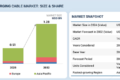
The Switzerland MRI systems market is a mature and growing sector of the diagnostic imaging industry, valued at over $20 million and driven by a high-income economy with a strong emphasis on early disease detection. The landscape is characterized by a high concentration of established global players, with Siemens Healthineers leading the market followed by GE Healthcare, Philips Healthcare, and Canon Medical Systems. Demand is largely fueled by an aging population, with nearly 20% of citizens aged 65 or older, leading to a rising prevalence of chronic conditions such as neurological disorders, cancer, and cardiovascular diseases. Technological trends are shifting toward high-field systems like 3T MRI for superior image quality and the integration of artificial intelligence and machine learning to streamline workflows and improve diagnostic accuracy. While traditional hospitals remain the primary end users, there is a notable expansion in private imaging centers and a growing interest in open MRI systems to accommodate claustrophobic, obese, and pediatric patients. Despite challenges like high installation and maintenance costs, the market is poised for steady growth as universal health coverage continues to facilitate regular diagnostic testing and the adoption of advanced, non-invasive imaging techniques.
Key Drivers, Restraints, Opportunities, and Challenges in the Switzerland MRI Systems Market
The Switzerland MRI systems market is primarily driven by increasing healthcare expenditure, a growing geriatric population susceptible to chronic diseases, and a strong emphasis on early disease diagnosis. Technological advancements, such as improved image quality through software updates and the integration of artificial intelligence for faster scanning, further propel growth. However, the market faces significant restraints and challenges, including the high capital and maintenance costs of advanced systems, stringent regulatory approval processes, and a shortage of skilled professionals to operate complex machinery. Despite these hurdles, substantial opportunities exist in the adoption of high-field 3T and 7T systems, the expansion of public-private partnerships to improve accessibility, and the rising demand for personalized medicine and non-invasive diagnostic tools in hospitals and imaging centers.
Customer Segmentation, Needs, Preferences, and Buying Behavior in the Switzerland MRI Systems Market
The target customers for the Switzerland MRI systems market primarily include public hospitals, private hospitals, and diagnostic imaging centers, with private facilities representing the largest end-use segment due to an increasing number of specialized centers and a rising prevalence of chronic diseases. These customers prioritize high diagnostic confidence, accuracy, and patient safety, particularly for neurology, oncology, and orthopedic applications. Their preferences are shifting toward value-based imaging models that emphasize reduced scan turnaround times, improved patient comfort—such as through open and wide-bore architectures—and the integration of AI-enabled workflows to enhance operational efficiency. Purchasing behavior is characterized by significant capital investment in high-field strength systems, such as 1.5T and 3T units, driven by the need for clear and detailed scans, while there is a growing demand for cost-effective refurbished units and portable solutions in orthopedic and critical care settings. Additionally, these stakeholders value strategic partnerships that offer robust technical support and facilitate data interoperability within the Swiss healthcare infrastructure.
Regulatory, Technological, and Economic Factors Impacting the Switzerland MRI Systems Market
The Switzerland MRI systems market is influenced by a complex interplay of regulatory, technological, and economic factors. Regulatory oversight involves stringent approval processes for new equipment and evolving reimbursement policies that can impact hospital procurement decisions and market entry for smaller players. Technologically, the market is driven by the rapid integration of artificial intelligence for image analysis and the adoption of high-field systems like 3T and 7T, which offer superior diagnostic precision but require significant digital infrastructure and technical expertise. Economically, while high healthcare expenditure and a growing aging population sustain demand for early disease detection, the substantial capital investment for advanced MRI units and high maintenance costs can restrain profitability. Furthermore, competition among established leaders like Siemens Healthineers and GE Healthcare creates a concentrated landscape that necessitates strategic innovation and cost-effective modular upgrades to maintain a competitive advantage.
Current and Emerging Trends in the Switzerland MRI Systems Market
The Switzerland MRI systems market is undergoing a rapid transformation characterized by the integration of artificial intelligence for faster image reconstruction and the migration toward helium-free or low-helium magnet designs to reduce high operational costs. These trends are evolving quickly as clinical institutions increasingly shift from 1.5T systems to 3T and 7T ultra-high-field modalities to meet the demand for precision diagnostics, quantitative analysis, and functional mapping. Furthermore, the market is seeing a steady move toward decentralized care through the adoption of open MRI systems for claustrophobic and bariatric patients, as well as the emergence of public-private partnerships to scale diagnostic accessibility. While traditional hospital-based high-field installations remain the largest segment, the transition toward AI-driven workflows and advanced software-defined differentiation is accelerating to address the needs of an aging population and a rising burden of neurological and chronic diseases.
Technological Innovations and Disruption Potential in the Switzerland MRI Systems Market
Technological innovations such as ultra-low-field mobile devices, artificial intelligence-powered image processing, and high-precision magnetic field monitoring are gaining significant traction and are poised to disrupt the Switzerland MRI systems market. The emergence of portable, AI-assisted scanners like the MGNTQ™ and low-field units at institutions like CHUV is decentralizing care by moving imaging to the patient’s bedside and reducing reliance on costly, high-field infrastructure and liquid helium. Furthermore, the integration of physics-informed AI and specialized sensorics, such as Skope’s magnetic field monitoring and Siemens’ BioMatrix technology, is enhancing diagnostic accuracy and speed while enabling free-breathing and non-Cartesian imaging. These advancements, along with sustainable “DryCool” technologies and energy-efficient “Eco Power Modes,” are shifting the industry toward more accessible, affordable, and patient-centric diagnostic solutions.
Short-Term vs. Long-Term Trends in the Switzerland MRI Systems Market
In the Switzerland MRI systems market, the immediate surge in procedures following the pandemic is viewed as a short-term phenomenon, whereas several other trends represent long-term structural shifts. The transition toward high-field systems, particularly 3T and 7T scanners, is a permanent transformation driven by the demand for precision diagnostics and institutional leadership in neuroscience research. Similarly, the integration of artificial intelligence and machine learning into imaging workflows is a fundamental shift aimed at enhancing diagnostic accuracy and streamlining data handling to address operational pressures. Other enduring structural changes include the rising adoption of patient-friendly open MRI systems and the shift toward value-based care, which are fueled by the long-term demographic realities of an aging population and the increasing prevalence of chronic neurological conditions requiring frequent monitoring.