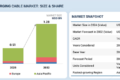
The Japan companion diagnostics market is a rapidly maturing sector driven by a sophisticated regulatory environment and a strong national commitment to precision medicine, particularly in oncology. The landscape is characterized by a “co-development” approach, where the Ministry of Health, Labour and Welfare generally mandates the simultaneous development and approval of diagnostic tests alongside their corresponding therapeutic drugs. While the market is experiencing robust growth fueled by an aging population and a rising incidence of cancer, it remains defined by a transition toward advanced technologies such as next-generation sequencing and liquid biopsies. Despite challenges like complex reimbursement pathways and the high costs of clinical validation, the integration of companion diagnostics into routine clinical care is expanding beyond cancer into neurological and infectious diseases, supported by favorable insurance coverage and strategic collaborations between pharmaceutical and diagnostic manufacturers.
Key Drivers, Restraints, Opportunities, and Challenges in the Japan Companion Diagnostics Market
The Japan companion diagnostics market is primarily driven by the increasing incidence of various cancer types, a robust regulatory framework that prioritizes patient safety, and favorable reimbursement policies that support the integration of personalized medicine. Significant growth opportunities exist in the expansion of these diagnostics into therapeutic areas beyond oncology—such as neurology, cardiology, and infectious diseases—and the rising adoption of next-generation sequencing and liquid biopsy technologies. However, the industry faces restraints including substantial capital investment requirements for biomarker discovery and the high costs associated with clinical validation and regulatory approvals. Key challenges include navigating complex local regulatory documentation, meeting stringent facility standards for reimbursement eligibility, and addressing a scarcity of technically knowledgeable laboratory professionals to operate advanced diagnostic platforms.
Customer Segmentation, Needs, Preferences, and Buying Behavior in the Japan Companion Diagnostics Market
The target customers for the Japan companion diagnostics market primarily include pharmaceutical and biopharmaceutical companies, reference laboratories, hospitals, and contract research organizations. These customers prioritize diagnostic accuracy, clinical validity, and seamless integration with targeted therapies, particularly in oncology where identifying specific genetic mutations is critical for personalized treatment. Their preferences are shifting toward advanced technologies like next-generation sequencing and automated molecular testing that can provide comprehensive genomic profiling. Purchasing behavior is characterized by a high reliance on Japan’s robust reimbursement framework, which reduces the financial burden on providers and incentivizes the adoption of these tools as a standard part of clinical care. Furthermore, customers value long-term strategic partnerships with manufacturers that can navigate the complex PMDA regulatory approval process and provide continuous technical support for high-throughput laboratory workflows.
Regulatory, Technological, and Economic Factors Impacting the Japan Companion Diagnostics Market
The Japan companion diagnostics market is significantly influenced by a complex interplay of regulatory, technological, and economic factors. Regulated by the Pharmaceuticals and Medical Devices Agency (PMDA), the market benefits from a well-established regulatory framework that prioritizes the co-development of drugs and diagnostics, often resulting in streamlined nine-month approval timelines; however, compliance with evolving standards for high-risk assays and localization requirements like Japanese documentation can increase entry costs. Technologically, the integration of next-generation sequencing, liquid biopsies, and artificial intelligence is driving market expansion by enabling more precise identification of biomarkers and streamlining laboratory workflows, though these advanced systems necessitate significant investment in digital infrastructure and data security. Economically, the market is propelled by a robust reimbursement system that offers a nearly 100% probability of coverage through a points-based scheme, incentivizing the adoption of precision medicine to manage rising healthcare costs associated with an aging population and high cancer prevalence. Despite these drivers, the substantial capital required for research and development, alongside high equipment and maintenance costs for sophisticated diagnostic platforms, can restrain profitability for smaller firms and new market entrants.
Current and Emerging Trends in the Japan Companion Diagnostics Market
The Japan companion diagnostics market is undergoing a rapid evolution characterized by the increasing adoption of next-generation sequencing (NGS) and liquid biopsy technologies, which allow for the detection of complex biomarkers that were previously challenging to identify. These trends are evolving quickly, supported by a favorable regulatory environment where the PMDA frequently grants simultaneous approvals for drugs and their corresponding diagnostics, and a robust reimbursement framework that boasts a nearly 100% approval likelihood for certain companion diagnostic medical devices. Furthermore, the market is shifting toward personalized medicine beyond oncology into areas such as infectious, cardiovascular, and neurological conditions, with a projected CAGR of 11.48% through 2034. Emerging shifts also include the transition toward drug-agnostic testing and the integration of artificial intelligence for sophisticated data analysis and cybersecurity in program medical devices, ensuring that diagnostic tools keep pace with the increasing clinical demand from Japan’s aging population.
Technological Innovations and Disruption Potential in the Japan Companion Diagnostics Market
Technological innovations such as Next-Generation Sequencing (NGS) and liquid biopsies are gaining significant traction and are poised to disrupt the Japan companion diagnostics market by enabling more precise, high-throughput, and non-invasive testing. The shift toward multi-omics integration—incorporating genomics, proteomics, and metabolomics—is further transforming the industry by allowing for a more holistic view of disease pathways and improved patient stratification beyond traditional single-biomarker models. Additionally, the integration of artificial intelligence and machine learning is enhancing diagnostic accuracy and streamlining data interpretation, while the development of multiplex PCR and microfluidic technologies is facilitating the simultaneous detection of multiple targets, thereby accelerating the move toward comprehensive personalized medicine across oncology and emerging therapeutic areas like neurology and immunology.
Short-Term vs. Long-Term Trends in the Japan Companion Diagnostics Market
In the Japan companion diagnostics market, the decline in testing volumes following the COVID-19 pandemic is viewed as a short-term phenomenon, whereas the integration of next-generation sequencing and liquid biopsy represents a long-term structural shift. The move toward personalized medicine is a permanent transformation driven by Japan’s rapidly aging population and a healthcare system that prioritizes early diagnosis and targeted cancer treatments. Similarly, the regulatory trend toward simultaneous approval of drugs and their companion diagnostics, supported by robust reimbursement pathways from the Ministry of Health, Labour, and Welfare, constitutes an enduring shift aimed at improving patient access to precision therapies. Other long-term structural changes include the expansion of genomic medicine for chronic and infectious diseases and the increasing reliance on advanced biomarkers to minimize ineffective treatments and reduce overall healthcare costs.