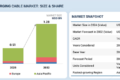
The Switzerland IVD reagents market is a highly sophisticated and stable sector, characterized by one of the highest per capita healthcare expenditures globally and a strong emphasis on diagnostic accuracy and innovation. As a leading hub for the life sciences industry, Switzerland hosts major global players such as F. Hoffmann-La Roche Ltd, which consistently invests in advanced testing platforms across infectious diseases, oncology, and tissue diagnostics. The landscape is currently defined by a transition toward stricter regulatory alignment with European standards, specifically through the Ordinance on In Vitro Diagnostic Medical Devices (IvDO), and a rapid shift toward automated lab workflows and molecular diagnostics. Reagents represent the most lucrative and fastest-growing segment of this market, driven by the increasing volume of tests for chronic disease management and the adoption of decentralized, point-of-care solutions. Despite high equipment and compliance costs, the market is poised for steady growth as Swiss healthcare providers prioritize early disease detection and the integration of artificial intelligence to optimize clinical decision-making.
Key Drivers, Restraints, Opportunities, and Challenges in the Switzerland IVD Reagents Market
The Switzerland IVD reagents market is primarily driven by an aging population and a high prevalence of chronic conditions like diabetes, cancer, and cardiovascular diseases, which necessitate frequent diagnostic screening and long-term monitoring. Growth is further propelled by technological advancements in molecular diagnostics and the integration of artificial intelligence into laboratory automation to improve accuracy. However, the market faces significant restraints such as stringent regulatory requirements and the high cost of advanced diagnostic equipment. Despite these hurdles, substantial opportunities exist in the development of disease-specific biomarkers and the expansion of personalized medicine through companion diagnostics. Ongoing challenges include operational complexities such as laboratory staffing shortages and the rising threat of cybersecurity breaches in connected diagnostic systems.
Customer Segmentation, Needs, Preferences, and Buying Behavior in the Switzerland IVD Reagents Market
The target customers for the Switzerland IVD reagents market primarily include hospitals, diagnostic laboratories, and point-of-care testing facilities, alongside a growing segment of academic and research institutions. These customers prioritize high diagnostic accuracy, reliability, and speed to manage the increasing burden of chronic and infectious diseases within an aging population. Their preferences are increasingly leaning toward advanced, automated systems and molecular diagnostics, with a specific focus on products that comply with stringent Swiss and European regulatory standards, such as the IVD Ordinance and EU-IVDR. Purchasing behavior is characterized by a high demand for continuous, recurring supplies of reagents and consumables to support established instrument platforms, often favoring global leaders like Roche and Abbott that offer robust technical support and integrated diagnostic solutions.
Regulatory, Technological, and Economic Factors Impacting the Switzerland IVD Reagents Market
The Switzerland IVD reagents market is shaped by a complex interplay of regulatory, technological, and economic factors that influence entry and profitability. Regulatory compliance is the primary hurdle, as Switzerland has aligned its Ordinance on In Vitro Diagnostic Medical Devices (IvDO) with the European Union’s IVDR, introducing stricter classification systems and mandate-heavy conformity assessments that have significantly increased the administrative burden and costs for laboratories. Technologically, market expansion is driven by the integration of artificial intelligence, next-generation sequencing, and a shift toward point-of-care and home-based testing, which improve diagnostic accuracy and accessibility but require substantial investment in digital infrastructure and specialized personnel. Economically, while Switzerland leads Europe in per capita healthcare spending and possesses a robust infrastructure that sustains high demand, profitability is challenged by the high capital costs of advanced automated platforms and the loss of the Mutual Recognition Agreement (MRA) with the EU. This “third country” status necessitates the appointment of Swiss Authorized Representatives (CH-REP) and separate registration with Swissmedic, adding operational complexity and potential supply chain costs that may limit the entry of smaller global competitors.
Current and Emerging Trends in the Switzerland IVD Reagents Market
The Switzerland IVD reagents market is undergoing a rapid transformation driven by the integration of automation, the decentralization of testing through point-of-care solutions, and a significant shift toward molecular diagnostics. These trends are evolving quickly, as evidenced by the molecular diagnostics segment’s projected growth to USD 132.4 million by 2030 and the reagent category’s dominance as the most lucrative and fastest-growing product segment. Furthermore, the market is adapting to a post-pandemic landscape where extraordinary SARS-CoV-2 testing volumes have stabilized, shifting focus toward enduring structural changes such as the expansion of companion diagnostics for personalized medicine and the adoption of advanced technologies like next-generation sequencing. This evolution is supported by Switzerland’s high healthcare investment and a revised regulatory framework aligned with the European IVD Regulation (IVDR) to streamline the entry of innovative diagnostic tools.
Technological Innovations and Disruption Potential in the Switzerland IVD Reagents Market
Technological innovations such as next-generation sequencing (NGS), liquid biopsies, and microfluidics are gaining significant traction and are poised to disrupt the Switzerland IVD reagents market by enabling faster, more precise, and non-invasive molecular characterization. The integration of artificial intelligence and machine learning is further transforming the industry by streamlining laboratory workflows, enhancing diagnostic accuracy through automated data analysis, and supporting the development of advanced companion diagnostics for personalized medicine. Additionally, the rapid advancement of point-of-care (POC) and at-home testing technologies, including lab-on-a-chip and wearable biosensors, is decentralizing healthcare by providing real-time results and shifting monitoring away from traditional clinical settings. These disruptions are further supported by innovations in biomanufacturing, such as the use of disposable bioreactors and recombinant DNA technology, which improve the production efficiency of high-sensitivity reagents like monoclonal antibodies and nucleic acid probes.
Short-Term vs. Long-Term Trends in the Switzerland IVD Reagents Market
In the Switzerland IVD reagents market, the unprecedented surge in demand for SARS-CoV-2 testing is viewed as a short-term phenomenon that led to significant market contraction in 2023 as volumes returned to stable patterns. In contrast, several trends represent long-term structural shifts, most notably the integration of automation and artificial intelligence into laboratory workflows to improve operational efficiency and manage increasing sample volumes. The move toward decentralization through point-of-care and at-home testing is another permanent transformation driven by the need for convenience and real-time results for chronic condition monitoring. Additionally, the adoption of molecular diagnostics and next-generation sequencing for personalized medicine represents an enduring shift fueled by Switzerland’s aging population and the rising prevalence of complex chronic diseases. These structural changes are further supported by the alignment of Swiss regulations with the European In-Vitro Diagnostic Regulation (IVDR) to ensure high standards for diagnostic accuracy and market accessibility.