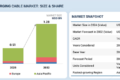
The Switzerland clinical trial supplies market is a highly sophisticated and integral component of the nation’s globally dominant life sciences ecosystem, which serves as a premier hub for pharmaceutical and biotechnology innovation. Centered around powerful clusters in Basel, Zurich, and the Lemanic region, the landscape is characterized by a dense network of global industry leaders, specialized biotechs, and advanced manufacturing centers that prioritize high-value areas such as oncology and cell and gene therapies. The market is increasingly defined by the adoption of decentralized trial models and the integration of digital technologies, necessitating complex, temperature-controlled supply chains and specialized logistics for direct-to-patient drug delivery. Governed by the stringent regulatory oversight of Swissmedic and aligned with evolving European standards, the sector benefits from a predictable legal framework and significant local R&D investment, which reached over EUR 830 million annually. While facing modern challenges such as geopolitical trade pressures and rising operational costs, Switzerland maintains its leadership through an exceptional talent base and a strategic focus on the “molecule-to-market” lifecycle, ensuring its continued role as a critical pillar in global clinical research and drug development.
Key Drivers, Restraints, Opportunities, and Challenges in the Switzerland Clinical Trial Supplies Market
The Switzerland clinical trial supplies market is primarily driven by the country’s status as a global pharmaceutical hub with high R&D spending, a rising number of complex clinical trials in areas like oncology and biologics, and the increasing adoption of decentralized trial models. Significant growth opportunities exist in the integration of digital technologies such as blockchain and AI for supply chain visibility, the expansion of direct-to-patient delivery models, and the demand for specialized cold chain logistics for temperature-sensitive therapies. However, the market faces restraints from high operational and storage costs and stringent regulatory requirements that vary across regions, complicating global distribution. Key challenges include managing supply chain disruptions and drug shortages, navigating the impact of international trade tariffs on Swiss goods, and addressing the critical need for advanced infrastructure to handle increasingly complex and personalized medicine protocols.
Customer Segmentation, Needs, Preferences, and Buying Behavior in the Switzerland Clinical Trial Supplies Market
The target customers for the Switzerland clinical trial supplies market primarily consist of pharmaceutical and biotechnology companies, contract research organizations (CROs), and academic and research institutions. These customers prioritize regulatory expertise and efficiency to navigate the complex Swiss healthcare landscape, particularly with upcoming 2026 mandates for accelerated ethics committee reviews for innovative therapies. Their preferences are shifting toward technology-driven solutions, such as real-time temperature monitoring for biologics and decentralized trial models that incorporate direct-to-patient drug delivery. Purchasing behavior is characterized by a move toward strategic, long-term partnerships with specialized supply providers that can ensure supply chain resilience, cold-chain integrity, and compliance with stringent international standards while managing the high costs associated with specialized packaging and global logistics.
Regulatory, Technological, and Economic Factors Impacting the Switzerland Clinical Trial Supplies Market
The Switzerland clinical trial supplies market is influenced by a sophisticated interplay of regulatory, technological, and economic factors that shape entry and long-term profitability. From a regulatory perspective, strict Swissmedic standards and evolving compliance requirements for temperature-sensitive biologics and Good Manufacturing Practices (GMP) impose high operational costs on new entrants, particularly for cross-border logistics. Technologically, the market is being transformed by the integration of artificial intelligence for demand forecasting, blockchain for supply chain transparency, and IoT-enabled sensors for real-time cold chain monitoring, which improve efficiency but require significant upfront capital investment. Economically, while high R&D expenditures by Switzerland’s robust biopharmaceutical sector sustain strong demand, profitability is often challenged by rising costs associated with specialized packaging, global supply chain disruptions, and the logistical complexities of decentralized trial models. Furthermore, high labor costs and the need for specialized storage infrastructure can act as barriers to expansion for smaller providers seeking to compete with established global players.
Current and Emerging Trends in the Switzerland Clinical Trial Supplies Market
The Switzerland clinical trial supplies market is undergoing a rapid evolution characterized by the widespread adoption of decentralized clinical trials and the integration of digital technologies to enhance supply chain transparency. These trends are moving quickly, as evidenced by the Swiss authority Swissmedic’s 2026 update on decentralized clinical trials and the implementation of a new harmonized fast-track procedure between ethics committees and Swissmedic to accelerate enrollment. The market is also being shaped by an increasing focus on temperature-controlled logistics for biologics and the adoption of Industry 4.0 innovations, such as AI-driven forecasting and blockchain for end-to-end traceability. While traditional in-house management remains significant, the shift toward outsourcing to specialized contract research organizations and the use of adaptive packaging are accelerating to meet the complexities of precision medicine and a rising burden of chronic diseases.
Technological Innovations and Disruption Potential in the Switzerland Clinical Trial Supplies Market
Technological innovations such as artificial intelligence (AI), machine learning, and the Internet of Things (IoT) are gaining significant traction and are poised to disrupt the Switzerland clinical trial supplies market by streamlining complex logistics and enhancing supply chain transparency. AI and machine learning algorithms are being increasingly deployed to optimize logistics routes, predict potential delays, and improve overall forecasting accuracy, which is critical for managing the high costs and strict regulatory requirements of the Swiss life sciences sector. Additionally, the integration of digital tools like blockchain, wearable sensors, and automated temperature monitoring solutions—such as TSS Dry Ice Probes for ultra-low environments—is enabling the rise of decentralized clinical trials (DCTs) and direct-to-patient (DTP) delivery models. These advancements allow for real-time, GxP-compliant tracking of sensitive supplies, ensuring product integrity while reducing waste and improving participant retention in an increasingly digitalized clinical research landscape.
Short-Term vs. Long-Term Trends in the Switzerland Clinical Trial Supplies Market
In the Switzerland clinical trial supplies market, the initial logistical disruptions and volatile demand patterns caused by the COVID-19 pandemic are increasingly viewed as short-term phenomena that have largely stabilized, whereas the shift toward digitalization and decentralized trial models represents a long-term structural transformation. The move toward decentralization, characterized by the rising adoption of direct-to-patient drug delivery and remote monitoring, is a permanent shift driven by the need to reduce patient burden and enhance trial efficiency. Similarly, the integration of advanced technologies like blockchain for data integrity and IoT-enabled sensors for real-time cold-chain monitoring is a fundamental evolution necessitated by the increasing complexity of biologics and specialized therapies. Other enduring structural changes include the harmonization of Swiss medical device laws with EU-MDR and EU-IVDR regulations, which ensures long-term alignment with international quality standards and sustains Switzerland’s position as a leading global hub for life sciences innovation.