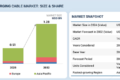
The Switzerland antibody drug conjugates market is a highly sophisticated and growing sector within the European landscape, driven by the presence of major global pharmaceutical players and world-class contract manufacturing infrastructure. Switzerland’s leadership is underscored by the prominence of companies like Roche, which has developed successful ADCs such as Kadcyla, and Novartis, which maintains a strong position in the broader drug conjugates market. Furthermore, the country serves as a critical global manufacturing hub for these complex biologics, with Lonza operating one of the largest ADC production sites in the world. The market is supported by a favorable regulatory framework and significant research and development investments from domestic players focused on advancing clinical pipelines for oncology. As a key part of the European ADC market, Switzerland is strategically positioned to benefit from the rising global demand for targeted cancer therapies and high-containment biologics manufacturing.
Key Drivers, Restraints, Opportunities, and Challenges in the Switzerland Antibody Drug Conjugates Market
The Switzerland antibody drug conjugates market is primarily driven by the presence of major pharmaceutical leaders like Roche, which produces key therapies such as Kadcyla, and large-scale manufacturing hubs like Lonza that support global supply chains. Growth is further propelled by a rising cancer burden, significant research and development investments by domestic players, and a favorable European regulatory framework that accelerates product approvals. However, the market faces restraints such as high manufacturing costs due to the need for specialized high-potency facilities and intense competitive pressure that can lead to price erosion. Opportunities are emerging through the expansion of ADCs into non-oncology therapeutic areas like autoimmune and infectious diseases, as well as the adoption of combination therapies with immunotherapies. Key challenges include managing toxic side effects like hematotoxicity and interstitial lung disease caused by the premature release of cytotoxic payloads, alongside the operational complexity of maintaining sterile, hazardous-material logistics.
Customer Segmentation, Needs, Preferences, and Buying Behavior in the Switzerland Antibody Drug Conjugates Market
The target customers for the Switzerland antibody drug conjugates market primarily include large pharmaceutical companies, such as Roche and Novartis, and emerging biotechnology firms that require specialized expertise to manage the technical complexities of ADC development. These organizations prioritize access to advanced manufacturing technologies and high-containment suites to ensure drug efficacy and stability, often seeking partners like Lonza that offer integrated, end-to-end services from clinical to commercial scale. Customer preferences are shifting toward long-term strategic partnerships that provide robust technical support and regulatory expertise to navigate stringent approval processes for oncology and orphan-designated therapies. Purchasing behavior is characterized by significant capital investment in specialized infrastructure and a strategic move toward outsourcing to contract development and manufacturing organizations (CDMOs) to reduce technology transfer complexity and accelerate speed-to-market for innovative treatments targeting breast cancer, lymphoma, and rare diseases.
Regulatory, Technological, and Economic Factors Impacting the Switzerland Antibody Drug Conjugates Market
The Switzerland antibody drug conjugates market is significantly influenced by a complex interplay of regulatory, technological, and economic factors. Regulatory entry and expansion are supported by a favorable European framework and stringent safety standards, which, while ensuring product efficacy, necessitate high compliance and clinical trial costs to mitigate risks like hematotoxicity and interstitial lung disease. Technologically, the market is driven by advancements in linker and payload chemistry, site-specific conjugation, and the integration of AI to optimize bioprocessing and reduce off-target toxicity, with Switzerland serving as a major manufacturing hub through industry leaders like Roche and Lonza. Economically, market profitability is bolstered by rising R&D investments and the strategic shift from broad chemotherapy to high-value targeted oncology therapies, though it remains restrained by the substantial capital investment required for high-containment manufacturing facilities and intensifying pricing pressures from payers and competitive biosimilar development.
Current and Emerging Trends in the Switzerland Antibody Drug Conjugates Market
The Switzerland antibody drug conjugates market is undergoing a rapid evolution driven by the integration of next-generation technologies, including site-specific conjugation, novel linker chemistry, and innovative payloads that enhance therapeutic efficacy and safety. A significant trend is the shift toward precision-based cancer therapies and the expansion of applications beyond breast cancer into diverse solid tumors and hematological malignancies. These trends are accelerating quickly, supported by substantial R&D investments from domestic leaders like Roche and the presence of major manufacturing hubs like Lonza, which facilitate the transition from clinical-stage assets to commercial-scale production. Furthermore, the market is characterized by a high volume of strategic collaborations and acquisitions, such as Roche’s expansion into metabolic therapies, reflecting a broader movement toward diversified, high-potency pipelines that are projected to maintain robust growth through the next decade.
Technological Innovations and Disruption Potential in the Switzerland Antibody Drug Conjugates Market
Technological innovations such as site-specific conjugation and next-generation linker platforms are gaining significant traction and are poised to disrupt the Switzerland antibody-drug conjugates market by enhancing drug stability and ensuring precise payload delivery. The integration of artificial intelligence and machine learning is further transforming the industry by accelerating target identification, optimizing molecular design, and predicting pharmacokinetics to reduce R&D timelines. Additionally, advancements in bispecific antibody technology and novel payloads, including radioligands and oligonucleotides, are expanding therapeutic possibilities beyond traditional oncology, while the adoption of automated, high-throughput manufacturing processes at hubs like Lonza is streamlining production to meet growing global demand.
Short-Term vs. Long-Term Trends in the Switzerland Antibody Drug Conjugates Market
In the Switzerland antibody drug conjugates market, the initial surge in clinical trial initiations and specialized manufacturing setups is evolving into stable, long-term structural shifts driven by established industry giants like Roche and Lonza. While short-term fluctuations in R&D spending and venture capital financing may occur, the fundamental transformation is being propelled by the integration of site-specific conjugation and next-generation linker technologies that enhance therapeutic precision and safety. The move toward onshoring and localizing complex biopharmaceutical supply chains represents a permanent shift aimed at ensuring national resilience, while the long-term demographic reality of a rising cancer burden among an aging population sustains a constant demand for innovative targeted therapies. These enduring changes are further supported by strategic partnerships and a favorable European regulatory framework that facilitate the transition from experimental platforms to standardized clinical care.