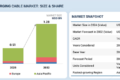
The Switzerland cancer biomarkers market is a highly sophisticated and mature sector, anchored by the presence of global pharmaceutical and diagnostic leaders such as F. Hoffmann-La Roche Ltd, which integrates biomarker development directly into its precision medicine and oncology portfolios. The landscape is characterized by a strong clinical research infrastructure and a high level of investment in life sciences, fostering a favorable environment for the adoption of advanced technologies like next-generation sequencing and digital pathology. Current market dynamics are driven by a rising prevalence of chronic diseases and a significant shift toward personalized medicine, where companion diagnostics are increasingly utilized to tailor treatments to individual molecular profiles. Furthermore, the ecosystem is bolstered by strategic collaborations between major industry players and local hospitals or academic centers, alongside a growing presence of innovative biotech startups focused on metabolic-based liquid biopsies and novel biomarker signatures. Despite the high costs associated with research and stringent regulatory requirements, the Swiss market remains at the forefront of the European diagnostic industry, prioritizing early disease detection and the continuous refinement of clinically validated, scalable testing solutions.
Key Drivers, Restraints, Opportunities, and Challenges in the Switzerland Cancer Biomarkers Market
The Switzerland cancer biomarkers market is primarily driven by a rising cancer incidence, with cases projected to reach over 52,000 annually by 2025, alongside a strong national focus on precision oncology and high healthcare spending. Technological advancements in next-generation sequencing, liquid biopsy, and AI-driven discovery further propel growth by improving diagnostic sensitivity and enabling personalized treatment strategies. However, the market faces significant restraints from the high costs of advanced multi-omics platforms and stringent regulatory requirements, such as compliance with the European Union Medical Device Regulation (MDR). Opportunities abound in the expansion of companion diagnostics and the shift toward early-stage screening for asymptomatic populations, supported by Switzerland’s robust pharmaceutical infrastructure and research collaborations. Challenges remain regarding the complexity of clinical validation for novel biomarkers, potential supply chain constraints for specialized reagents, and the ongoing need for standardized reimbursement policies to ensure widespread patient access.
Customer Segmentation, Needs, Preferences, and Buying Behavior in the Switzerland Cancer Biomarkers Market
The target customers for the Switzerland cancer biomarkers market primarily include pharmaceutical and biotechnology companies, hospitals, diagnostic laboratories, and academic research institutes. These stakeholders prioritize high-performance assay kits and automated, validated solutions that offer rapid turnaround times and high sensitivity for early detection and therapy monitoring. Customer preferences are shifting toward precision medicine and the integration of multi-omics data, driving demand for next-generation sequencing and companion diagnostics that link test results to specific targeted therapies. Purchasing behavior is characterized by a recurring demand for consumables like reagents and assay kits, with institutional buyers seeking strategic partnerships with major manufacturers like Roche and Novartis to ensure access to cutting-edge technology and compliance with evolving regulatory standards.
Regulatory, Technological, and Economic Factors Impacting the Switzerland Cancer Biomarkers Market
The Switzerland cancer biomarkers market is significantly influenced by a complex interplay of regulatory, technological, and economic factors. Regulatory oversight remains stringent, with compliance with the European Union Medical Device Regulation (MDR) acting as a significant barrier to entry for smaller firms while ensuring high standards for clinical validation and safety. Technologically, the integration of artificial intelligence, next-generation sequencing, and liquid biopsy innovations is driving market expansion by enhancing diagnostic sensitivity and streamlining biomarker discovery, though these advancements necessitate substantial up-front investments in digital infrastructure and specialized equipment. Economically, while high research and development expenditures and the presence of major global players like Roche sustain strong market demand and leadership, profitability can be challenged by high capital costs for advanced multi-omics platforms and unfavorable reimbursement scenarios for novel biomarker tests. These factors collectively shape a competitive landscape where established entities with integrated diagnostic and pharmaceutical capabilities maintain a distinct advantage in navigating the high costs and rigorous standards required for market success.
Current and Emerging Trends in the Switzerland Cancer Biomarkers Market
The Switzerland cancer biomarkers market is undergoing a rapid transformation driven by the integration of artificial intelligence and machine learning to accelerate biomarker discovery and enhance diagnostic precision. These trends are evolving quickly, as evidenced by the increasing adoption of next-generation sequencing and liquid biopsies, which enable non-invasive, real-time monitoring of tumor evolution. Furthermore, a significant shift toward personalized medicine and companion diagnostics is reshaping the industry, with major domestic players like F. Hoffmann-La Roche Ltd. leading the development of targeted therapies. While standard protein-based assays remain the largest segment, the market is accelerating toward multi-omics data integration and automated laboratory workflows to address the rising incidence of chronic diseases and the demand for early cancer detection.
Technological Innovations and Disruption Potential in the Switzerland Cancer Biomarkers Market
The Switzerland cancer biomarkers market is being significantly disrupted by the rapid integration of artificial intelligence (AI) and machine learning, which are accelerating the discovery and validation of novel biomarkers through the analysis of complex genomic and clinical datasets. Technological innovations such as Next-Generation Sequencing (NGS) and multi-omics profiling are gaining substantial traction, enabling high-throughput analysis and the development of more precise, targeted therapies. Furthermore, the rise of liquid biopsy and exosome-derived biomarker technologies is revolutionizing the industry by providing non-invasive, real-time monitoring of tumor evolution and treatment response. The adoption of microfluidics and “smart health” tools like automated bioinformatics platforms is further decentralizing care and enhancing diagnostic accuracy, positioning Swiss innovators at the forefront of the global shift toward personalized medicine and data-driven oncology.
Short-Term vs. Long-Term Trends in the Switzerland Cancer Biomarkers Market
In the Switzerland cancer biomarkers market, temporary disruptions such as supply chain constraints for testing instruments and product availability issues linked to upgrading kits for EU Medical Device Regulation compliance are viewed as short-term challenges likely to stabilize. In contrast, the industry is undergoing profound long-term structural shifts driven by the integration of artificial intelligence and machine learning to enhance the precision and speed of biomarker discovery. The transition toward personalized and precision medicine, supported by advancements in next-generation sequencing and omics technologies, represents a permanent transformation fueled by the rising incidence of chronic diseases and the need for early-stage detection. Other enduring shifts include the adoption of non-invasive liquid biopsy techniques and the expansion of companion diagnostics, which are sustained by high investments in Switzerland’s robust clinical research infrastructure and the presence of major industry leaders like F. Hoffmann-La Roche.