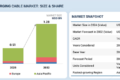
The Japan biosimilars market is a rapidly evolving and mature sector characterized by a significant transition toward cost-effective therapeutic alternatives to manage the economic pressures of an aging population and rising chronic disease prevalence. As the second-largest pharmaceutical market globally, Japan’s landscape is defined by a robust regulatory framework overseen by the Pharmaceuticals and Medical Devices Agency (PMDA), which ensures rigorous standards for safety and efficacy while implementing initiatives to streamline approval processes. The market is increasingly concentrated among both major international players and established domestic firms, such as Celltrion, Sandoz, and Kyowa Kirin, which are leveraging strategic partnerships and government subsidies to enhance domestic manufacturing and supply chain resilience. Key trends shaping the industry include the widespread adoption of biosimilar monoclonal antibodies in oncology and immunology, the integration of pharmacist-led substitution programs, and a shift toward “biosame” launches to defend market share. Despite challenges like stringent clinical data requirements and a historical prescriber bias for originator products, the market is poised for accelerated growth as financial incentives within the Diagnostic Procedure Combination (DPC) hospital payment system and lower patient co-payments drive the demand for sustainable, high-quality diagnostic and treatment solutions.
Key Drivers, Restraints, Opportunities, and Challenges in the Japan Biosimilars Market
The Japan biosimilars market is primarily driven by an aging population, the rising prevalence of chronic diseases like cancer and diabetes, and government efforts to reduce healthcare expenditures through the promotion of cost-effective alternatives to expensive biologics. Significant growth opportunities exist in the expansion of biosimilars into therapeutic areas such as oncology and autoimmune diseases, as well as the potential for increased hospital adoption through the Diagnostic Procedure Combination payment system. However, the market faces notable restraints, including a complex co-pay system that sometimes makes originators cheaper for patients, stringent regulatory requirements from the PMDA, and the high cost and technical complexity of manufacturing. Key challenges include persistent physician and patient concerns regarding efficacy and safety, the emergence of biosames as a defensive market strategy by originator companies, and a lack of robust demand-side policies compared to other developed markets.
Customer Segmentation, Needs, Preferences, and Buying Behavior in the Japan Biosimilars Market
The target customers for the Japan biosimilars market primarily include hospitals—particularly those under the Diagnostic Procedure Combination (DPC) fixed-reimbursement system—cancer treatment centers, and a rapidly growing geriatric population managing chronic conditions like oncology, diabetes, and autoimmune diseases. These institutional customers prioritize cost-effective alternatives to expensive biologics to improve hospital margins and manage national healthcare expenditures, while individual patients increasingly prefer biosimilars to reduce out-of-pocket co-pays. Purchasing behavior is heavily influenced by government supportive policies and reimbursement incentives, with a significant shift toward monoclonal antibodies in oncology settings where the DPC system provides a strong financial incentive for providers to adopt cheaper therapeutic options. Across all segments, customers value safety and therapeutic equivalence, often relying on the rigorous oversight of the Pharmaceuticals and Medical Devices Agency (PMDA) to validate the efficacy of these more affordable biologic alternatives.
Regulatory, Technological, and Economic Factors Impacting the Japan Biosimilars Market
The Japan biosimilars market is significantly influenced by a complex interplay of regulatory, technological, and economic factors. Regulated by the Pharmaceuticals and Medical Devices Agency (PMDA), market entry requires navigating rigorous standards for safety and efficacy, often necessitating local clinical bridging studies that increase compliance costs for new entrants. Technologically, the high complexity of biomanufacturing—including cell line development and advanced analytical characterization—demands substantial investment in sophisticated infrastructure and expertise to ensure product consistency and quality. Economically, while an aging population and rising healthcare expenditures sustain high demand, profitability is challenged by a unique reimbursement system and government-driven cost containment efforts that lead to periodic price reductions. Despite these pressures, the market offers robust expansion opportunities as major biologics face patent expirations and the government increasingly promotes biosimilars as a financially prudent solution to manage national healthcare costs.
Current and Emerging Trends in the Japan Biosimilars Market
The Japan biosimilars market is undergoing a rapid evolution characterized by an accelerated growth trajectory, with market analysts projecting a CAGR between 10% and 22% through the mid-2030s. Current trends include a significant shift toward oncology biosimilars and monoclonal antibodies, driven by the success of products like Herzuma, which recently achieved a 74% market share. Emerging trends are evolving quickly through the introduction of patient-friendly delivery systems, the rise of pharmacist-led substitution programs, and the controversial advent of “biosames”—authorized biologics identical to the original products launched by innovators to defend market share. This transformation is further supported by strategic partnerships between domestic and international firms to expand local biomanufacturing and the integration of digital patient-support services to build physician trust and enhance treatment adherence.
Technological Innovations and Disruption Potential in the Japan Biosimilars Market
Technological innovations in biomanufacturing and analytical characterization are significantly disrupting the Japan biosimilars market by reducing production costs and accelerating development timelines. Advances in biotechnology, including DNA recombinant technology, high-producing cell lines, and the adoption of disposable bioreactors, have enhanced protein expression and eliminated traditional downstream bottlenecks, making the manufacturing process more efficient. Additionally, the emergence of “biosames”—follow-on biologics that are identical to the original and use the same manufacturing lines—presents a disruptive trend that allows for nearly immediate market launch upon patent expiration. Furthermore, the integration of new-generation delivery systems and the potential adoption of AI-powered analytics are expected to further enhance market dynamics and improve patient access to essential therapies.
Short-Term vs. Long-Term Trends in the Japan Biosimilars Market
In the Japan biosimilars market, the initial slow adoption and prescriber hesitancy caused by complex co-pay dynamics are increasingly viewed as short-term hurdles that are giving way to long-term structural shifts driven by an aging population and escalating healthcare costs. A fundamental transformation is occurring through the government’s aggressive promotion of biosimilars to alleviate the national healthcare burden, alongside the expansion of the Diagnostic Procedure Combination (DPC) payment system which provides permanent financial incentives for hospitals to use cost-effective alternatives. Other enduring structural changes include the rapid dominance of oncology biosimilars and monoclonal antibodies, supported by streamlined regulatory frameworks from the PMDA and the growing integration of biosimilars into standard clinical protocols for chronic disease management. While early market growth was limited to a few molecules like filgrastim, the current transition toward a diverse pipeline of complex biologics and strategic partnerships between domestic and international firms represents a permanent evolution of the Japanese pharmaceutical landscape.