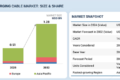
The Japan molecular diagnostics market is a highly advanced and rapidly growing sector, characterized by a sophisticated healthcare infrastructure and a strong cultural emphasis on precision and medical innovation. The landscape is primarily driven by an aging population and a high prevalence of chronic conditions like cancer and cardiovascular diseases, which necessitate early detection and personalized treatment strategies. Technological integration is a defining feature, with next-generation sequencing, real-time PCR, and liquid biopsies gaining significant traction to improve diagnostic accuracy and sensitivity. The market is also witnessing a transformative shift toward decentralized care, fueled by the rapid adoption of point-of-care testing and the integration of artificial intelligence for automated laboratory workflows. While the sector benefits from robust public funding, proactive government health initiatives, and strategic collaborations between academic and private entities, it faces challenges such as high equipment costs and a significant reliance on imported systems. Despite these hurdles, the market remains a vital hub for innovation, increasingly focusing on companion diagnostics and the expansion of digital health tools to meet the evolving needs of its geriatric demographic.
Key Drivers, Restraints, Opportunities, and Challenges in the Japan Molecular Diagnostics Market
The Japan molecular diagnostics market is primarily driven by an aging population and the increasing prevalence of chronic diseases such as cancer and cardiovascular ailments, which necessitate early and precise detection. Growth is further propelled by government funding, favorable regulatory guidelines, and the integration of advanced technologies like next-generation sequencing and point-of-care testing. However, the market faces significant restraints, including the high costs associated with advanced diagnostic instrumentation and complex regulatory and ethical challenges regarding genetic data privacy. Opportunities abound in the development of personalized medicine, companion diagnostics, and the integration of artificial intelligence for enhanced data interpretation. Despite these prospects, the industry must navigate challenges such as the need for highly specialized personnel, the complexity of data analysis, and competition from alternative diagnostic methods like immunoassays and biosensors.
Customer Segmentation, Needs, Preferences, and Buying Behavior in the Japan Molecular Diagnostics Market
The target customers for the Japan molecular diagnostics market primarily include hospital-based laboratories, independent diagnostic centers, and academic and research institutes, with an increasing shift toward decentralized settings like physician offices and retail clinics. These customers prioritize high-throughput automation and precision tools like next-generation sequencing and digital PCR to manage the diagnostic needs of a rapidly aging population and a high prevalence of chronic diseases such as cancer and cardiovascular ailments. Their preferences are increasingly focused on personalized medicine and companion diagnostics that align with government reimbursement pathways for targeted therapies. Purchasing behavior is characterized by a strong demand for reagents and kits, which constitute the largest revenue segment, alongside a growing investment in advanced platforms that integrate artificial intelligence to enhance laboratory efficiency and accuracy. Furthermore, there is a rising trend toward adopting point-of-care and at-home testing technologies as providers seek to align with community-based integrated care systems and reduce patient wait times.
Regulatory, Technological, and Economic Factors Impacting the Japan Molecular Diagnostics Market
The Japan molecular diagnostics market is significantly influenced by a complex interplay of regulatory, technological, and economic factors. Regulatory entry is governed by the Pharmaceuticals and Medical Devices Agency (PMDA), where lengthy review cycles and stringent compliance burdens for new product commercialization can delay market access. Technologically, the integration of next-generation sequencing (NGS), digital PCR, and AI-driven automation is propelling expansion by enhancing diagnostic precision for oncology and infectious diseases, though the high complexity of data analysis and the need for specialized skilled personnel remain significant hurdles. Economically, while the rising prevalence of chronic diseases among an aging population sustains high demand, the market faces headwinds from a high dependence on imported systems, which exposes laboratories to yen depreciation and rising reagent costs that can squeeze profit margins. These factors, combined with the substantial capital investment required for sophisticated platforms, create a challenging yet lucrative environment where technological superiority and strategic alignment with public health goals are essential for profitability.
Current and Emerging Trends in the Japan Molecular Diagnostics Market
The Japan molecular diagnostics market is undergoing a rapid evolution driven by the integration of advanced technologies like next-generation sequencing (NGS) and real-time PCR, with the overall segment projected to grow at a CAGR of approximately 5.9% to 7.8% through 2031. A primary trend is the shift toward personalized medicine and companion diagnostics, particularly in oncology, where hospitals are expanding specialized laboratories to align with targeted-therapy reimbursement and public funding. Decentralization is another significant driver, as point-of-care (POC) testing is advancing at an 10.15% CAGR, supported by regulatory relaxation and the rising adoption of handheld microfluidic devices that reduce turnaround times by 60%. Furthermore, the market is being reshaped by the implementation of artificial intelligence for automated laboratory workflows and the emergence of non-invasive liquid biopsies for real-time disease monitoring, all of which are accelerating to address the healthcare needs of Japan’s rapidly aging population.
Technological Innovations and Disruption Potential in the Japan Molecular Diagnostics Market
Technological innovations such as Next-Generation Sequencing (NGS), digital PCR, and microfluidics are gaining significant traction and are poised to disrupt the Japan molecular diagnostics market by enabling earlier, more precise, and non-invasive testing. The integration of artificial intelligence and machine learning is further transforming the industry by enhancing diagnostic accuracy, streamlining laboratory workflows, and assisting in complex image analysis to address radiologist shortages. Additionally, the development of point-of-care (POC) testing platforms and handheld devices is decentralizing healthcare by providing rapid, real-time results in clinics and home-care settings, which significantly reduces patient wait times and enhances care efficiency for an aging population. Non-invasive liquid biopsy techniques are also reshaping oncology by offering a less invasive alternative to tissue biopsies for comprehensive genomic profiling and targeted therapy selection.
Short-Term vs. Long-Term Trends in the Japan Molecular Diagnostics Market
In the Japan molecular diagnostics market, the massive surge in COVID-19 testing volumes is increasingly viewed as a short-term phenomenon that has stabilized, whereas several other trends represent long-term structural shifts. The move toward decentralization, characterized by the rising adoption of point-of-care and at-home testing, is a permanent transformation driven by the need for quicker results in clinics and emergency rooms and the integration of microfluidics. Similarly, the integration of artificial intelligence and machine learning into laboratory workflows is a fundamental shift aimed at addressing chronic staffing shortages and improving diagnostic accuracy in complex areas like oncology and pathology. Other enduring structural changes include the expansion of personalized medicine and companion diagnostics, which are fueled by the long-term demographic realities of a rapidly aging population and the increasing prevalence of chronic conditions like cancer and Alzheimer’s disease.