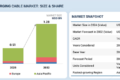
The Switzerland point-of-care diagnostics market is a highly advanced and innovation-driven landscape, anchored by the presence of global diagnostic leaders like Roche and a vibrant ecosystem of research institutions. The market is defined by a strategic shift toward decentralized healthcare, with increasing adoption of rapid testing solutions in hospitals, physician offices, and home-care settings to address the growing burden of chronic and infectious diseases among an aging population. Switzerland has aligned its regulatory framework with the European Union’s In Vitro Diagnostic Regulation (IVDR) to ensure high standards of quality and safety while facilitating broader market access. Key technological trends include the integration of artificial intelligence and digital health tools to enhance diagnostic accuracy, alongside advancements in molecular diagnostics and microfluidics for real-time disease detection. Despite challenges such as high equipment costs and rigorous compliance requirements, the market continues to expand through active collaboration between academia and the IVD industry, as highlighted by annual events like the Swiss Symposium in Point-of-Care Diagnostics.
Key Drivers, Restraints, Opportunities, and Challenges in the Switzerland Point of Care Diagnostics Market
The Switzerland point of care diagnostics market is primarily driven by an aging population and the increasing prevalence of chronic and infectious diseases, such as diabetes and cardiovascular conditions, which necessitate frequent screening and rapid, decentralized testing solutions. Technological advancements, including the integration of artificial intelligence, portable molecular diagnostics, and the development of sophisticated biosensors, further propel market growth by improving diagnostic accuracy and efficiency at the site of care. However, the industry faces significant restraints such as high initial capital and maintenance costs for advanced devices, along with stringent regulatory requirements that increase production timelines. Opportunities abound in the expansion of personalized medicine, the development of disease-specific biomarkers, and growing government initiatives for healthcare innovation. Challenges remain, including limited reimbursement policies, the need for standardized results between point-of-care and centralized laboratory methods, and a shortage of qualified healthcare professionals to interpret complex diagnostic data.
Customer Segmentation, Needs, Preferences, and Buying Behavior in the Switzerland Point of Care Diagnostics Market
The target customers for the Switzerland point of care diagnostics market primarily include hospitals, diagnostic laboratories, physician offices, and a growing segment of home-care users. These institutional customers prioritize rapid, high-precision diagnostic tools that facilitate immediate clinical decision-making and optimize resource utilization amidst a rising burden of chronic and infectious diseases. Their preferences are shifting toward automated, AI-integrated platforms and decentralized testing solutions that provide quicker results than traditional laboratory settings. Purchasing behavior in the professional segment is characterized by strategic investments in reliable diagnostic instruments and a recurring demand for reagents and consumables, while the home-care segment is driven by an aging population seeking convenience and cost-effective real-time monitoring. Across all segments, customers value accuracy, regulatory compliance, and partnerships with established manufacturers like Roche and Abbott that provide robust technical support.
Regulatory, Technological, and Economic Factors Impacting the Switzerland Point of Care Diagnostics Market
The Switzerland point of care diagnostics market is significantly influenced by a complex interplay of regulatory, technological, and economic factors. Regulatory entry and expansion are shaped by onerous premarket approval and IVD labeling requirements, alongside tightening validation and verification standards for hospital-based devices to ensure result consistency. Technologically, the integration of artificial intelligence for automated workflows, advancements in molecular diagnostics like rapid PCR and CRISPR-based technologies, and the adoption of microfluidics and nanotechnology are driving market growth by improving diagnostic precision and speed. Economically, while the rising prevalence of chronic and infectious diseases among an aging population sustains high demand, profitability and widespread adoption can be restrained by the high capital investment required for advanced molecular systems, significant maintenance expenses, and the expensive cost of high-end instruments compared to traditional laboratory alternatives.
Current and Emerging Trends in the Switzerland Point of Care Diagnostics Market
The Switzerland point-of-care (POC) diagnostics market is undergoing a rapid evolution characterized by the decentralization of testing and the integration of digital health solutions to manage an aging population and a rising burden of chronic diseases. Current trends include the widespread adoption of rapid testing in clinical and home settings, fueled by the pandemic’s impact, and a significant shift toward personalized medicine enabled by advancements in nanotechnology, genomics, and molecular diagnostics. Emerging trends are focused on the integration of artificial intelligence and Software as a Medical Device (SaMD) into diagnostic platforms to improve decision-making and laboratory efficiency. These trends are moving quickly, as evidenced by the high level of research activity and the upcoming 2026 Swiss Symposium in Point-of-Care Diagnostics, which will focus on next-generation innovations such as CRISPR-based technologies and multiplex stroke biomarker detection to address unmet medical needs.
Technological Innovations and Disruption Potential in the Switzerland Point of Care Diagnostics Market
Technological innovations such as the integration of artificial intelligence (AI) and machine learning (ML) are significantly disrupting the Switzerland point-of-care diagnostics market by streamlining data analysis, enhancing diagnostic accuracy, and enabling faster clinical decision-making. Emerging trends include the adoption of CRISPR-based diagnostic tools, which offer high specificity and speed for pathogen identification, and the use of nanotechnology and genomics to facilitate personalized medicine. Additionally, advancements in microfluidics, wearable biosensors, and lab-on-a-chip technologies are decentralizing healthcare by providing real-time, non-invasive results in home and remote settings. The integration of Internet-of-Things (IoT) connectivity and Software as a Medical Device (SaMD) further propels this disruption by ensuring seamless data transfer to electronic health records and cloud platforms, supporting the shift toward a more connected and data-driven diagnostic ecosystem.
Short-Term vs. Long-Term Trends in the Switzerland Point of Care Diagnostics Market
In the Switzerland point of care diagnostics market, the massive surge in COVID-19 testing volumes is increasingly viewed as a short-term phenomenon that has largely stabilized, whereas several other trends represent long-term structural shifts. The move toward decentralization, characterized by the rising adoption of point-of-care and home-based testing, is a permanent transformation driven by consumer demand for convenience and the need to reach underserved populations. Similarly, the integration of artificial intelligence, digital health tools, and the Internet-of-Things (IoT) into laboratory workflows is a fundamental shift aimed at enabling real-time data transfer to electronic health records and improving diagnostic accuracy. Other enduring structural changes include the growth of personalized medicine and companion diagnostics, which are fueled by the long-term demographic realities of an aging population and the increasing prevalence of chronic conditions like diabetes and cardiovascular diseases.