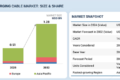
The Switzerland pharmaceutical contract manufacturing market is a globally dominant sector characterized by high-precision expertise and a robust infrastructure centered in the Basel region. As Europe’s third-largest pharma producer, the Swiss landscape is defined by a significant shift toward biologics, cell and gene therapies, and high-potency API manufacturing, which together drive an annual growth rate of approximately 6.5%. The market is highly export-oriented, with roughly 95% of output sent abroad, and it features a dense ecosystem of over 1,200 companies, including major global CDMOs like Lonza as well as specialized sites for multinational giants like Johnson & Johnson. This mature environment benefits from a long-standing tradition of scientific excellence and stringent regulatory standards under Swissmedic, positioning Switzerland as a premium “gold standard” hub for complex, small-batch, and innovative therapeutic modalities. Despite high labor costs and talent shortages in specialized fields like aseptic processing, the industry remains a critical strategic partner for global pharmaceutical firms seeking supply chain resilience and advanced manufacturing capabilities.
Key Drivers, Restraints, Opportunities, and Challenges in the Switzerland Pharmaceutical Contract Manufacturing Market
The Switzerland pharmaceutical contract manufacturing market is primarily driven by the country’s status as a global innovation hub with high R&D investment and a robust infrastructure for complex drug development, including biologics and specialized therapies. Significant growth opportunities exist in the rising demand for cell and gene therapies and the integration of advanced technologies like AI and continuous manufacturing to improve efficiency. However, the market faces restraints such as stringent regulatory compliance costs, intense pricing pressure on innovator drugs, and recent geopolitical shifts, including increased tariffs on Swiss exports. Key challenges include a shortage of skilled personnel in biotechnology and pharmaceutical engineering, capacity bottlenecks in specialized manufacturing suites, and global trade instability that disrupts the supply of critical raw materials.
Customer Segmentation, Needs, Preferences, and Buying Behavior in the Switzerland Pharmaceutical Contract Manufacturing Market
The target customers for the Switzerland pharmaceutical contract manufacturing market primarily include large global pharmaceutical giants, emerging biotechnology firms, and small to mid-cap companies that are increasingly responsible for a significant share of novel drug approvals. These customers prioritize access to specialized, high-value technical expertise in complex modalities such as biologics, antibody-drug conjugates (ADCs), and cell and gene therapies, often seeking the “Swiss Gold Standard” for quality and innovation. Their preferences are shifting toward strategic, end-to-end partnerships and one-stop-shop models that offer integrated services from drug development to commercial-scale manufacturing, including sterile fill-finish and high-potency API production. Purchasing behavior is driven by a need to reduce internal capital expenditures, manage rising R&D costs, and accelerate time-to-market while ensuring compliance with stringent global regulatory standards and maintaining supply chain resilience. Additionally, these customers value sustainability and the ability to scale production quickly through flexible models like modular manufacturing to meet fluctuating demand for innovative treatments.
Regulatory, Technological, and Economic Factors Impacting the Switzerland Pharmaceutical Contract Manufacturing Market
The Switzerland pharmaceutical contract manufacturing market is significantly influenced by a complex interplay of regulatory, technological, and economic factors. Regulatory compliance remains a primary barrier, as manufacturers must navigate stringent Swissmedic, FDA, and EMA standards and the lack of regulated long-term relations with the EU, which can impose high compliance costs and complicate market access. Technologically, the shift toward complex large-molecule biologics, cell and gene therapies, and the integration of Industry 4.0 tools like artificial intelligence and robotics are driving market expansion, though they require massive capital investments in specialized facilities and digital infrastructure. Economically, while high R&D intensity and a first-class reputation for quality sustain demand and support premium margins, profitability is pressured by high personnel costs for a specialized workforce, global supply chain vulnerabilities, and increasing competition from other international life science clusters.
Current and Emerging Trends in the Switzerland Pharmaceutical Contract Manufacturing Market
The Switzerland pharmaceutical contract manufacturing market is undergoing a rapid transformation driven by a fundamental shift from small-molecule drugs to large-molecule biologics, including monoclonal antibodies, antibody-drug conjugates, and cell and gene therapies. This evolution is moving at a fast pace, with biologics manufacturing in the region growing at 10% to 12% annually and cell and gene therapies projected to become a major market force by 2030. These trends are further accelerated by the adoption of advanced technologies such as single-use bioreactors, continuous manufacturing, and AI-driven quality control, which enable higher batch reliability and faster scale-up. Additionally, the industry is witnessing a significant move toward the reshoring of active pharmaceutical ingredient production to Europe to enhance supply chain resilience, positioning Swiss CDMOs as critical strategic partners due to their established regulatory expertise and high-containment infrastructure.
Technological Innovations and Disruption Potential in the Switzerland Pharmaceutical Contract Manufacturing Market
Technological innovations such as artificial intelligence, robotics, and automation are gaining significant traction and are poised to disrupt the Switzerland pharmaceutical contract manufacturing market by revolutionizing manufacturing processes and enhancing operational efficiency. The integration of Industry 4.0 technologies, including the Internet of Things (IoT) and digital twins, is enabling real-time data exchange and process optimization, while advanced manufacturing platforms for continuous manufacturing and small-scale, highly contained process equipment are transforming how treatments for unmet medical needs are launched. Furthermore, the development of specialized capabilities for high-potency API (HPAPI) manufacturing, antibody-drug conjugates (ADCs), and advanced therapy medicinal products (ATMPs) like cell and gene therapies is reshaping the landscape. Innovations in biomanufacturing, such as the use of induce pluripotent stem cells (iPSCs) and CRISPR-Cas9 gene editing, along with stable production platforms for viral vectors, are further driving the industry toward more complex, personalized, and efficient production models.
Short-Term vs. Long-Term Trends in the Switzerland Pharmaceutical Contract Manufacturing Market
In the Switzerland pharmaceutical contract manufacturing market, the post-pandemic “sugar high” of easy capital and temporary surges in COVID-19 related production are increasingly viewed as short-term phenomena that have stabilized, whereas the shift toward biologics and advanced therapies represents a long-term structural transformation. The move toward large-molecule manufacturing, including monoclonal antibodies and cell and gene therapies, is a permanent shift driven by the fact that biologics now account for a significant portion of new drug approvals and global revenue. This structural change is supported by massive capital investments in specialized facilities, such as single-use bioreactor trains and high-containment suites, and a transition from transactional vendor relationships to strategic, end-to-end partnerships. Other enduring trends include the regionalization of supply chains to bolster security and the integration of Pharma 4.0 technologies like continuous manufacturing and AI-driven quality control, which address permanent needs for increased efficiency and regulatory compliance in a highly competitive global landscape.