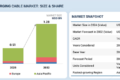
The Japan genomics market is a sophisticated and rapidly expanding sector driven by a combination of an aging population, a high prevalence of chronic diseases like cancer, and strong government support for precision medicine. The landscape is characterized by the widespread integration of next-generation sequencing and artificial intelligence into routine clinical practice, particularly for oncology screening and rare disease diagnostics. Technological advancements in long-read sequencing and multi-omics data integration are further enhancing diagnostic accuracy, while collaborative efforts between research institutes like RIKEN and private companies such as Takara Bio accelerate innovation. Despite the complexities of interpreting clinical variants, the market continues to evolve through the adoption of decentralized genomic testing in hospitals and the expansion of applications into pharmacogenomics and reproductive health, positioning Japan as a pioneer in population-level genomic research.
Key Drivers, Restraints, Opportunities, and Challenges in the Japan Genomics Market
The Japan genomics market is primarily driven by a rapidly aging population, the increasing prevalence of genetic disorders and chronic diseases like cancer, and strong government support through initiatives such as the national genomic medicine project. Technological advancements, particularly in next-generation sequencing and the integration of artificial intelligence for data interpretation, further propel growth by enabling cost-effective, personalized medicine. However, the market faces significant restraints, including high capital investment for advanced equipment and its maintenance, as well as stringent regulatory hurdles and lengthy approval processes. Opportunities abound in the expansion of precision medicine, the development of portable sequencing devices, and the growing application of genomics in fields like agriculture and anti-aging research. Despite these prospects, the industry must navigate critical challenges such as an acute shortage of specialized bioinformatics experts, the management of massive genomic datasets, and evolving ethical concerns regarding data privacy and security.
Customer Segmentation, Needs, Preferences, and Buying Behavior in the Japan Genomics Market
The target customers for the Japan genomics market primarily include hospitals, diagnostic laboratories, academic and research institutes, and pharmaceutical and biotechnology companies. These customers prioritize high-throughput, cost-effective, and accurate sequencing technologies, such as Next-Generation Sequencing (NGS), to address the needs of an aging population and the rising prevalence of chronic diseases like cancer and rare genetic disorders. Research and clinical institutions prefer platforms and services that integrate artificial intelligence for complex data analysis and support precision medicine initiatives. Purchasing behavior is characterized by a high and recurring demand for consumables and reagents, which dominate the market share, and a growing trend toward strategic partnerships between diagnostic firms and university hospitals for population-scale genomic screening. Furthermore, pharmaceutical giants like Takeda and Astellas increasingly invest in genomic services to accelerate drug discovery and the development of targeted therapies.
Regulatory, Technological, and Economic Factors Impacting the Japan Genomics Market
The Japan genomics market is shaped by a complex interplay of regulatory, technological, and economic factors that influence entry and profitability. Regulatory oversight is stringent, with the government implementing science-based evaluation processes for biotechnology products and rigorous standards for data protection and genetic privacy, which can increase compliance costs for new entrants. Technologically, the market is being revolutionized by the integration of artificial intelligence, next-generation sequencing (NGS), and CRISPR-based gene editing, driving demand for high-throughput diagnostic tools and personalized medicine. Economically, while Japan’s rapidly aging population and rising prevalence of chronic diseases like cancer sustain high demand for genomic solutions, the substantial capital investment required for advanced sequencing equipment and high maintenance costs can restrain profitability for smaller facilities. Additionally, while government subsidies and R&D grants foster innovation, limited reimbursement policies for certain genetic tests remain a challenge for widespread market expansion.
Current and Emerging Trends in the Japan Genomics Market
The Japan genomics market is undergoing a rapid transformation driven by the integration of artificial intelligence and machine learning, which are accelerating drug discovery, predictive modeling, and the interpretation of complex genomic data. Current trends include a significant shift toward precision medicine and personalized healthcare, fueled by an aging population and the increasing use of next-generation sequencing (NGS) for oncology mutational profiling and rare disease diagnostics. These trends are evolving quickly, as evidenced by the market’s projected compound annual growth rate (CAGR) of over 13% through 2033 and the increasing adoption of advanced technologies like CRISPR/Cas9 gene editing and long-read sequencing. Furthermore, the decentralization of testing through at-home genomic services and the expansion of pharmacogenomics are reshaping the industry landscape to meet the rising demand for tailored therapeutic interventions.
Technological Innovations and Disruption Potential in the Japan Genomics Market
Technological innovations such as Next-Generation Sequencing (NGS), particularly whole genome sequencing and long-read platforms, are gaining significant traction and are poised to disrupt the Japan genomics market by enabling more comprehensive and precise analysis of complex genetic regions. The integration of artificial intelligence and machine learning is further transforming the industry by accelerating data interpretation, optimizing drug discovery, and enhancing the accuracy of clinical diagnostics through advanced bioinformatics. Additionally, the development of CRISPR-Cas9 gene editing, single-cell sequencing, and liquid biopsy technologies is decentralizing and refining healthcare by providing non-invasive, high-resolution insights that support the growth of personalized medicine and regenerative therapies across the country.
Short-Term vs. Long-Term Trends in the Japan Genomics Market
In the Japan genomics market, the initial surge in demand for COVID-19-related genetic surveillance is increasingly viewed as a short-term phenomenon that has stabilized, whereas several other trends represent long-term structural shifts. The move toward precision medicine, characterized by the rising adoption of next-generation sequencing (NGS) for oncology profiling and rare disease diagnostics, is a permanent transformation driven by the country’s aging population and the increasing prevalence of chronic conditions. Similarly, the integration of artificial intelligence and machine learning into bioinformatics workflows is a fundamental shift aimed at accelerating drug discovery and improving the accuracy of complex genomic data interpretation. Other enduring structural changes include the expansion of genome editing technologies like CRISPR for therapeutic and agricultural applications, which are fueled by robust government research funding and a national strategic focus on biotechnology innovation.