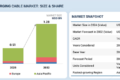
The United States flexible endoscopes market is a highly advanced and dominant sector characterized by a significant shift toward minimally invasive diagnostic and therapeutic procedures. This landscape is driven by an aging population and the rising prevalence of chronic conditions such as gastrointestinal disorders, respiratory infections, and various cancers, which necessitate frequent screenings and early disease detection. The market is increasingly defined by rapid technological integration, including the adoption of artificial intelligence for real-time image enhancement, the development of robotic-assisted platforms for superior precision, and a major transition toward single-use endoscopes to address infection control concerns. While traditional hospital-based settings remain the primary end-user segment due to their robust infrastructure and ability to handle complex interventional workflows, there is an accelerating trend toward the decentralization of care in ambulatory surgical centers and outpatient facilities. Despite challenges such as high equipment costs and stringent reprocessing requirements for reusable models, the market is poised for sustained growth as healthcare providers prioritize diagnostic accuracy, patient safety, and efficient clinical outcomes.
Key Drivers, Restraints, Opportunities, and Challenges in the United States Flexible Endoscopes Market
The United States flexible endoscopes market is primarily driven by an aging population and the rising prevalence of gastrointestinal, respiratory, and urological disorders, which necessitate frequent diagnostic screenings and minimally invasive interventions. Technological advancements, such as the integration of artificial intelligence for real-time lesion detection, robotic-assisted navigation, and high-definition 3D imaging, further propel growth by improving procedural accuracy and efficiency. However, the market faces significant restraints from high capital acquisition costs and the operational complexity of stringent reprocessing and sterilization protocols. Despite these hurdles, substantial opportunities exist in the rapid adoption of single-use disposable endoscopes to eliminate cross-contamination risks and the expansion of ambulatory surgical centers prioritizing portable, cost-effective diagnostic tools. Challenges remain, including an acute shortage of skilled endoscopists and the ongoing regulatory scrutiny regarding infection control and patient safety in complex clinical workflows.
Customer Segmentation, Needs, Preferences, and Buying Behavior in the United States Flexible Endoscopes Market
The target customers for the United States flexible endoscopes market primarily include hospitals, ambulatory surgical centers (ASCs), specialty clinics, and diagnostic imaging centers, with hospitals currently representing the largest share due to their complex interventional capabilities. These institutional buyers prioritize advanced visualization quality, such as AI-assisted 4K imaging, and patient safety, which is driving a significant preference for single-use (disposable) endoscopes to eliminate reprocessing costs and cross-contamination risks. Purchasing behavior is increasingly influenced by a shift toward value-based care, with providers seeking compact and cost-effective platforms that reduce hospital stays and enhance diagnostic accuracy for high-volume procedures in gastroenterology, pulmonology, and urology. Furthermore, the growing elderly population and rising prevalence of chronic conditions sustain a continuous demand for both reusable systems and the associated consumables needed for routine screenings and minimally invasive therapeutic interventions.
Regulatory, Technological, and Economic Factors Impacting the United States Flexible Endoscopes Market
The United States flexible endoscopes market is shaped by a complex interplay of regulatory, technological, and economic factors that influence entry and profitability. Regulatory oversight is stringent, with the FDA mandating rigorous reprocessing guidelines and safety standards to mitigate infection risks, while the fast-tracking of reimbursement for cancer screening programs acts as a significant driver for market expansion. Technologically, the integration of artificial intelligence for real-time image interpretation, high-definition 4K imaging, and the development of robotic-assisted systems are enhancing diagnostic accuracy, although these advancements necessitate substantial investment in hardware and software infrastructure. Economically, while the rising prevalence of chronic diseases among an aging population sustains high demand, profitability is challenged by high equipment costs and a strategic shift toward cost-effective single-use endoscopes that eliminate reprocessing expenses. Furthermore, the expansion of ambulatory surgical centers and outpatient facilities provides new entry points for compact, portable endoscopy systems, though intense competition among established players requires continuous innovation to maintain a competitive edge.
Current and Emerging Trends in the United States Flexible Endoscopes Market
The United States flexible endoscopes market is undergoing a rapid transformation driven by the integration of artificial intelligence for real-time diagnostic assistance and the significant rise of single-use or disposable endoscopes to mitigate cross-contamination risks. These trends are evolving quickly, as evidenced by a projected CAGR of approximately 5.3% to 8.77% through the mid-2030s and the increasing shift toward robotic-assisted endoscopy and miniaturized devices that enable more precise, less invasive interventions. Furthermore, the market is decentralizing as procedures move from traditional hospital settings to ambulatory surgical centers and outpatient facilities, supported by advancements in high-definition 4K imaging and cloud-based software integration. While reusable endoscopes currently maintain a large share of the market, the adoption of single-use technologies in high-risk areas like urology and bronchoscopy is accelerating to meet stringent infection-control standards and patient demand for safer, cost-effective diagnostic solutions.
Technological Innovations and Disruption Potential in the United States Flexible Endoscopes Market
The United States flexible endoscopes market is being significantly disrupted by the integration of artificial intelligence and machine learning, which enhance diagnostic accuracy through real-time anomaly detection, automated image enhancement, and predictive analytics. Technological innovations such as robotic-assisted endoscopy systems are gaining substantial traction by providing surgeons with superior precision, control, and maneuverability during complex minimally invasive procedures. Furthermore, the rapid transition toward high-definition 4K imaging, narrow-band imaging (NBI), and the development of single-use flexible endoscopes is transforming the industry by improving visualization of intricate anatomical structures while addressing critical concerns regarding cross-contamination and infection control. These advancements, complemented by the miniaturization of components and the emergence of wireless, autonomous devices, are decentralizing care and expanding the diagnostic and therapeutic capabilities of endoscopic interventions across hospital and outpatient settings.
Short-Term vs. Long-Term Trends in the United States Flexible Endoscopes Market
In the United States flexible endoscopes market, the temporary surge in procedure volumes immediately following the lifting of pandemic lockdowns and the emergency use of basic telehealth for remote monitoring are viewed as short-term phenomena that have largely stabilized. In contrast, several other trends represent long-term structural shifts that are fundamentally reshaping the industry. The move toward decentralization, characterized by the rising adoption of flexible endoscopy in ambulatory surgical centers and outpatient clinics, is a permanent transformation driven by the need for cost-effective care and patient preference for convenience. Similarly, the integration of artificial intelligence and machine learning for real-time image enhancement and automated lesion detection is a fundamental shift aimed at improving diagnostic accuracy and addressing clinician burnout. Other enduring structural changes include the rapid adoption of single-use endoscopes to eliminate cross-contamination risks and the growth of robotic-assisted systems, which are fueled by the long-term demographic realities of an aging population and the increasing prevalence of chronic gastrointestinal and respiratory conditions.