The Internet of Things (IoT) is no longer a futuristic concept discussed only in technology conferences and innovation labs. It has become a real, fast-growing force transforming industries, reshaping business operations, and redefining how organizations collect, analyze, and use data. The IoT technology market is projected to reach USD 1,148.62 billion by 2030 from USD 959.30 billion in 2025, at a CAGR of 3.7% during the forecast period.
From smart factories and connected healthcare systems to intelligent retail stores and autonomous logistics networks, IoT technology is rapidly becoming the digital backbone of modern business.
And the numbers behind the market growth are impossible to ignore.
The IoT Technology Market is experiencing explosive expansion as organizations across every sector race to improve operational efficiency, reduce costs, automate decision-making, and unlock new revenue opportunities.
For business leaders, the question is no longer whether IoT matters.
The real question is:
Are you moving fast enough to stay competitive in an increasingly connected world?
Understanding the IoT Technology Market
The Internet of Things refers to a network of connected devices capable of collecting, transmitting, and analyzing data in real time.
These connected systems include:
- Smart sensors
- Industrial machines
- Wearable devices
- Vehicles
- Smart appliances
- Healthcare equipment
- Manufacturing systems
IoT enables physical objects to communicate digitally, creating intelligent ecosystems that improve visibility, automation, and decision-making.
The market itself is built around several critical components, including:
- Node Components
- Software Solutions
- Platforms
- Services
Each of these segments plays a vital role in the growth of the IoT ecosystem.
Download PDF Brochure @ https://www.marketsandmarkets.com/pdfdownloadNew.asp?id=258239167
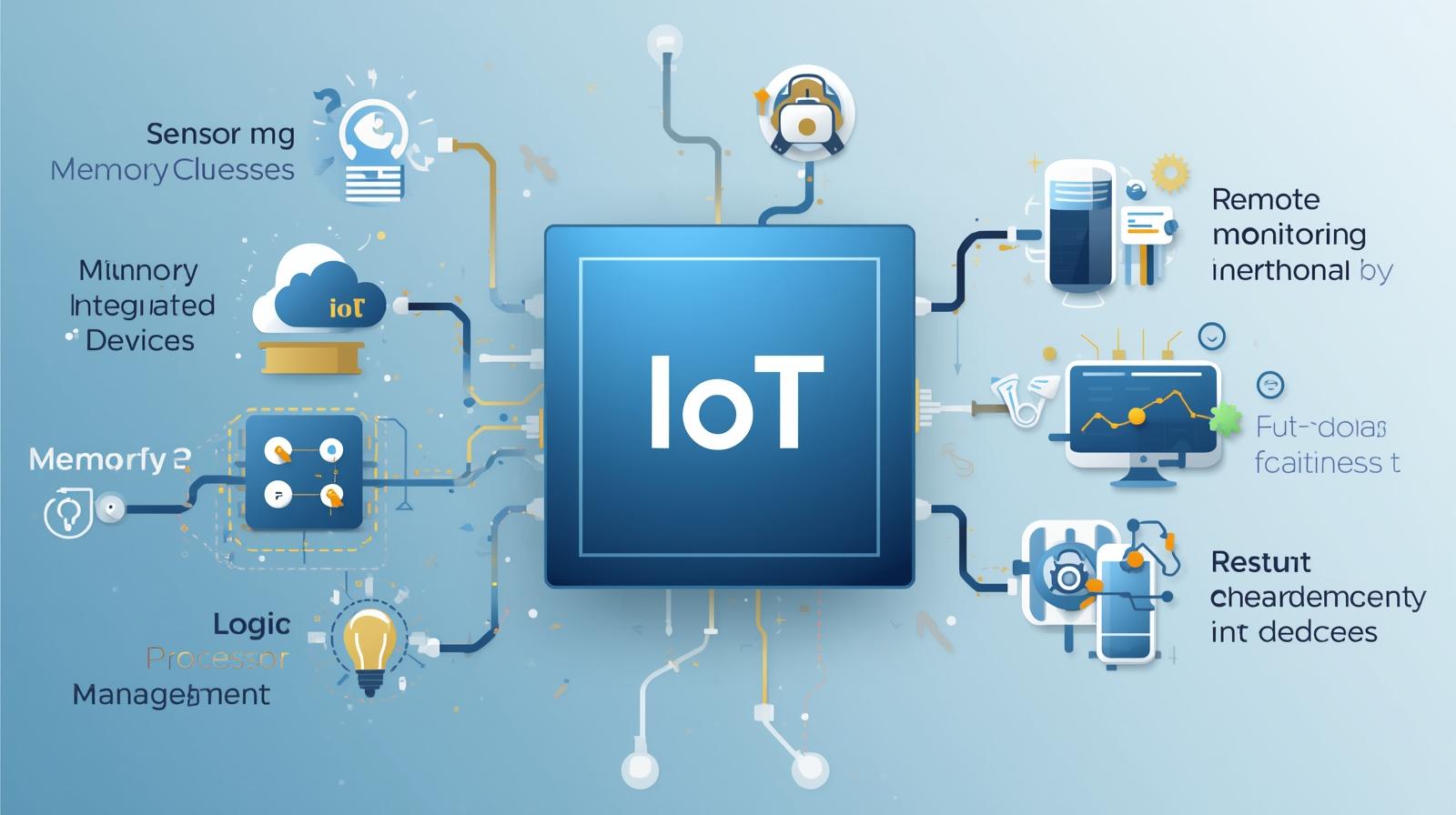
The Core Building Blocks Driving the Market
Node Components: The Foundation of Connected Intelligence
Node components are the physical technologies embedded into IoT systems that enable devices to sense, process, store, and transmit data.
Key node components include:
Sensors
Sensors are the heart of IoT technology.
They collect real-world information such as:
- Temperature
- Pressure
- Motion
- Humidity
- Location
- Light
- Air quality
Without sensors, IoT systems would have no data to analyze.
Today, sensors are powering:
- Smart homes
- Industrial automation
- Wearable healthcare devices
- Autonomous vehicles
- Smart agriculture systems
The demand for advanced sensors is rising rapidly as industries seek real-time operational visibility.
Memory Devices
IoT systems generate massive amounts of data.
Memory devices help store and manage this information efficiently within connected devices.
As IoT deployments expand, demand for faster and more energy-efficient memory solutions continues to increase.
Connectivity ICs
Connectivity integrated circuits (ICs) enable communication between devices through technologies such as:
- Wi-Fi
- Bluetooth
- Zigbee
- Cellular networks
- LPWAN
- 5G
Reliable connectivity is essential for large-scale IoT infrastructure.
The rollout of 5G networks is expected to significantly accelerate IoT adoption by enabling faster data transfer and lower latency.
Processors
Processors act as the “brains” of IoT devices.
They handle:
Data processing
Edge computing
AI inference
Real-time analytics
The rise of edge computing is making advanced processors increasingly important in modern IoT systems.
Logic Devices
Logic devices manage data flow and device functionality within IoT systems.
These components ensure efficient communication between sensors, processors, and connectivity modules.
Software Solutions Are Becoming the Real Growth Engine
While hardware remains essential, software solutions are increasingly driving market value.
Remote Monitoring Solutions
Businesses today want visibility into operations from anywhere in the world.
Remote monitoring software allows organizations to:
- Track equipment performance
- Monitor environmental conditions
- Detect failures
- Improve maintenance efficiency
- Reduce downtime
This capability has become especially important in industries such as:
- Manufacturing
- Energy
- Healthcare
- Logistics
- Agriculture
For example, industrial IoT systems can alert operators about equipment issues before major failures occur.
This predictive capability reduces operational disruptions and saves significant costs.
Data Management Solutions
IoT ecosystems generate enormous volumes of data every second.
Managing that data effectively is now one of the biggest business priorities.
IoT data management solutions help organizations:
- Store data securely
- Analyze operational patterns
- Improve decision-making
- Generate predictive insights
- Support AI applications
Businesses are increasingly recognizing that data itself has become a strategic asset.
Why IoT Platforms Are Critical
IoT platforms serve as the central infrastructure connecting devices, applications, and data systems.
These platforms provide:
- Device management
- Security controls
- Data analytics
- Application integration
- Cloud connectivity
Without scalable platforms, large IoT deployments become difficult to manage.
Major technology companies are investing heavily in cloud-based IoT platforms to support enterprise digital transformation initiatives.
As organizations expand connected ecosystems, platform scalability and cybersecurity are becoming top priorities.
Services Are Fueling Long-Term Market Growth
The IoT services segment is growing rapidly because businesses often require external expertise for implementation and management.
Key services include:
- Consulting
- Integration
- Deployment
- Maintenance
- Security management
- Analytics support
Many organizations understand the value of IoT but lack the internal resources to deploy complex systems successfully.
This creates major opportunities for service providers specializing in digital transformation.
Why the IoT Market Is Growing So Quickly
Several powerful trends are accelerating IoT adoption globally.
Industry 4.0 Is Reshaping Manufacturing
Smart factories are becoming a major driver of IoT growth.
Manufacturers are using IoT technologies to:
- Automate production
- Monitor machinery
- Improve quality control
- Reduce downtime
- Optimize energy usage
Industrial IoT (IIoT) is transforming traditional manufacturing into intelligent, data-driven operations.
Healthcare Is Becoming Connected
Healthcare providers are increasingly adopting IoT-enabled devices for:
- Remote patient monitoring
- Wearable health tracking
- Smart medical devices
- Hospital asset tracking
The demand for connected healthcare solutions surged during the pandemic and continues to grow rapidly.
Smart Cities Are Expanding
Governments worldwide are investing in smart infrastructure projects involving:
- Traffic management
- Smart lighting
- Environmental monitoring
- Public safety systems
- Smart transportation
IoT technology is becoming essential for urban modernization.
Retail and Logistics Are Evolving
Retailers and logistics companies use IoT systems to:
- Track inventory
- Optimize supply chains
- Improve customer experiences
- Monitor delivery conditions
Real-time visibility is becoming a competitive advantage.
Real-World Example: Smart Manufacturing Success
One major automotive manufacturer implemented IoT sensors across its production facilities to monitor machine performance in real time.
The Challenge
Unexpected equipment failures were causing:
Production delays
Increased maintenance costs
Lower operational efficiency
The Solution
The company deployed IoT-enabled predictive maintenance systems using:
Sensors
Connectivity ICs
Remote monitoring software
Data analytics platforms
The Results
The company achieved:
Reduced downtime
Faster maintenance response
Improved production efficiency
Lower operational costs
This case demonstrates how IoT technology directly impacts profitability and competitiveness.
Challenges Businesses Must Prepare For
Despite enormous growth potential, IoT adoption comes with challenges.
Cybersecurity Risks
Connected devices create new security vulnerabilities.
Businesses must secure:
Networks
Devices
Cloud platforms
Data transmission systems
Cybersecurity is becoming one of the most critical aspects of IoT strategy.
Data Privacy Concerns
IoT systems collect massive amounts of sensitive data.
Organizations must comply with privacy regulations and ensure responsible data usage.
Integration Complexity
Many businesses struggle to integrate IoT systems with legacy infrastructure.
Successful deployment often requires:
Technical expertise
Infrastructure upgrades
Cross-functional coordination
The Future of the IoT Technology Market
The next phase of IoT growth will be driven by several emerging technologies.
Artificial Intelligence and IoT Convergence
AI-powered IoT systems will enable:
- Autonomous decision-making
- Predictive analytics
- Intelligent automation
- Real-time optimization
AI is transforming IoT from simple connectivity into intelligent business intelligence.
Edge Computing Expansion
Instead of sending all data to centralized cloud systems, edge computing processes data closer to devices.
This improves:
- Speed
- Efficiency
- Security
- Real-time responsiveness
- 5G Acceleration
5G networks will dramatically improve IoT performance by enabling:
Faster communication
Lower latency
Massive device connectivity
This will unlock new use cases across industries.
Why Business Leaders Must Pay Attention Now
The IoT Technology Market is not simply another technology trend.
It represents a fundamental shift in how businesses operate, compete, and innovate.
Organizations that embrace IoT successfully can achieve:
Greater operational efficiency
Faster decision-making
Reduced costs
Improved customer experiences
New business models
At the same time, companies that delay adoption risk falling behind more agile competitors.
The future business landscape will increasingly depend on:
Connected systems
Intelligent automation
Real-time analytics
AI-driven operations
IoT sits at the center of all these transformations.
The market is growing because businesses are realizing one powerful truth:
Data-driven connectivity is becoming essential for long-term competitiveness.
And in a world where speed, intelligence, and automation matter more than ever, IoT technology is quickly becoming impossible to ignore.
FAQs
1. What is driving the growth of the IoT Technology Market?
Key drivers include Industry 4.0 adoption, smart city development, connected healthcare, remote monitoring demand, AI integration, and the expansion of 5G networks.
2. What are node components in IoT?
Node components are the hardware elements that enable IoT functionality, including sensors, processors, memory devices, connectivity ICs, and logic devices.
3. Why are remote monitoring solutions important?
Remote monitoring allows businesses to track equipment and operations in real time, helping reduce downtime, improve maintenance, and optimize efficiency.
4. How does IoT benefit manufacturing companies?
IoT helps manufacturers improve productivity through predictive maintenance, automation, real-time monitoring, quality control, and energy optimization.
5. What are the biggest challenges in IoT adoption?
Major challenges include cybersecurity risks, data privacy concerns, infrastructure integration complexity, and managing large volumes of connected devices and data.
About MarketsandMarkets™
MarketsandMarkets™ has been recognized as one of America’s Best Management Consulting Firms by Forbes, as per their recent report.
MarketsandMarkets™ is a blue ocean alternative in growth consulting and program management, leveraging a man-machine offering to drive supernormal growth for progressive organizations in the B2B space. With the widest lens on emerging technologies, we are proficient in co-creating supernormal growth for clients across the globe.
Today, 80% of Fortune 2000 companies rely on MarketsandMarkets, and 90 of the top 100 companies in each sector trust us to accelerate their revenue growth. With a global clientele of over 13,000 organizations, we help businesses thrive in a disruptive ecosystem.
The B2B economy is witnessing the emergence of $25 trillion in new revenue streams that are replacing existing ones within this decade. We work with clients on growth programs, helping them monetize this $25 trillion opportunity through our service lines – TAM Expansion, Go-to-Market (GTM) Strategy to Execution, Market Share Gain, Account Enablement, and Thought Leadership Marketing.
Built on the ‘GIVE Growth’ principle, we collaborate with several Forbes Global 2000 B2B companies to keep them future-ready. Our insights and strategies are powered by industry experts, cutting-edge AI, and our Market Intelligence Cloud, KnowledgeStore™, which integrates research and provides ecosystem-wide visibility into revenue shifts.
To find out more, visit www.MarketsandMarkets™.com or follow us on Twitter , LinkedIn and Facebook .
Contact:
Mr. Rohan Salgarkar
MarketsandMarkets™ INC.
1615 South Congress Ave.
Suite 103, Delray Beach, FL 33445
USA: +1-888-600-6441
