The global Preimplantation Genetic Testing (PGT) Market is projected to grow from USD 690.2 million in 2025 to USD 1,135.0 million by 2030, registering a CAGR of 10.5% during the forecast period. The market is witnessing strong growth due to rising infertility rates, increasing prevalence of genetic disorders, and expanding adoption of assisted reproductive technologies (ART) such as IVF.
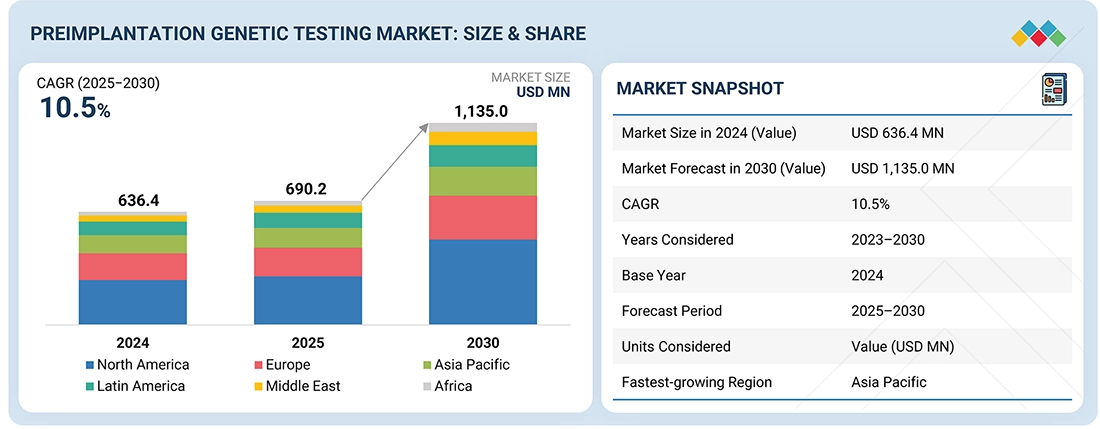
Download PDF Brochure:- https://www.marketsandmarkets.com/pdfdownloadNew.asp?id=605
Market Drivers: Rising Demand for Genetic Screening in Reproductive Medicine
The growing emphasis on preventing hereditary diseases and improving IVF success rates is driving the integration of PGT into routine fertility treatments. Technological advancements in genetic sequencing and embryo screening are enhancing diagnostic precision, enabling clinicians to make better-informed decisions during embryo selection.
Additionally, increasing awareness of personalized reproductive healthcare and improved accessibility to fertility services are supporting widespread adoption globally.
Procedure Insights: Preimplantation Genetic Screening (PGS) Leads
By procedure, preimplantation genetic screening (PGS) is expected to account for the largest share of the market during the forecast period. This is driven by its ability to detect chromosomal abnormalities before embryo transfer, significantly improving implantation success rates.
Key factors contributing to segment growth include:
- Increased adoption in IVF clinics and fertility centers
- Use of high-throughput screening technologies
- Availability of automated and ready-to-use testing solutions
The integration of advanced platforms has improved speed, reliability, and clinical outcomes, reinforcing PGS as a standard practice in fertility treatments.
Technology Trends: Next-Generation Sequencing Dominates
By technology, next-generation sequencing (NGS) holds the largest market share and is expected to maintain its dominance through 2030.
NGS offers:
- High-throughput and comprehensive genetic analysis
- Superior accuracy and sensitivity compared to traditional methods
- Simultaneous screening of multiple genetic conditions
These advantages significantly enhance embryo selection processes and improve IVF success rates. Continuous advancements in sequencing platforms and bioinformatics tools are further improving workflow efficiency, making NGS the preferred technology in precision reproductive medicine.
Regional Insights: Asia Pacific Emerges as Fastest-Growing Market
The Asia Pacific region is expected to register the highest growth during the forecast period. Key growth drivers include:
- Rising infertility rates
- Increasing awareness of genetic disorders
- Expanding adoption of IVF and advanced reproductive technologies
- Government initiatives to improve reproductive healthcare access
Additionally, global and regional companies are strengthening their presence through partnerships and technology integration, unlocking new growth opportunities across the region.
Competitive Landscape: Innovation and Strategic Expansion
Leading companies in the PGT market are focused on enhancing product portfolios, advancing sequencing technologies, and expanding global reach. Key players include : Illumina, Inc. (US), Thermo Fisher Scientific Inc. (US), Agilent Technologies, Inc. (US), CooperCompanies (US), Revvity (US), Abbott (US), Takara Bio Inc. (Japan), and QIAGEN (Germany), among others.
These players are investing in NGS-based solutions, automation, and integrated diagnostic platforms to support the growing demand for reproductive genetic testing.
Speak To Analyst:- https://www.marketsandmarkets.com/speaktoanalystNew.asp?id=605
Strategic Outlook: Transforming Fertility Care Through Precision Genetics
Preimplantation genetic testing is becoming a critical component of modern fertility care, enabling improved clinical outcomes and reduced risk of inherited conditions.
Future growth will be driven by:
- Continued innovation in sequencing and screening technologies
- Expansion of IVF and fertility services globally
- Increasing focus on personalized and preventive healthcare
As reproductive medicine evolves, PGT will play a central role in shaping the future of precision fertility treatments.