The quantum computing market is rapidly emerging as one of the most transformative sectors in the global technology landscape. With the ability to process complex calculations far beyond the capabilities of traditional computers, quantum computing is attracting substantial investments from governments, technology companies, research institutions, and venture capital firms worldwide. The market is witnessing accelerated innovation driven by advancements in quantum hardware, cloud-based quantum platforms, artificial intelligence integration, and increasing research collaborations.
Rising Investments from Technology Giants
Leading technology companies are significantly increasing their investments in quantum computing research and development. Major players are focusing on building scalable quantum processors, improving qubit stability, and developing advanced algorithms capable of solving real-world problems. These investments are aimed at achieving quantum advantage, where quantum systems outperform classical computers in critical applications.
Companies are also expanding partnerships with universities and research laboratories to accelerate innovation. Such collaborations are helping bridge the gap between theoretical quantum physics and practical commercial applications, creating a strong foundation for future market growth.
Growing Government Support and Funding
Governments across the globe are recognizing quantum computing as a strategic technology with long-term economic and national security implications. Several countries are launching national quantum initiatives and allocating significant funding toward research programs, infrastructure development, and talent acquisition.
Public sector support is encouraging startups and academic institutions to participate in the growing ecosystem. Research grants, innovation hubs, and international collaborations are contributing to the expansion of quantum computing capabilities and commercialization opportunities.
Advancements in Quantum Hardware Development
One of the key trends shaping the quantum computing market is the continuous improvement in quantum hardware technologies. Researchers are working on enhancing qubit performance, reducing error rates, and increasing computational stability. Superconducting qubits, trapped ions, and photonic quantum systems are among the leading technologies driving innovation.
As hardware becomes more reliable and scalable, industries are expected to adopt quantum solutions for complex optimization, simulation, and cryptographic tasks. The progress in hardware development is also attracting investor confidence and encouraging long-term funding in the sector.
Integration of Artificial Intelligence and Machine Learning
Artificial intelligence and machine learning are playing a growing role in quantum computing research. AI-driven optimization techniques are helping scientists improve quantum algorithms, error correction, and system performance. At the same time, quantum computing has the potential to enhance machine learning processes by solving data-intensive problems more efficiently.
The convergence of AI and quantum computing is opening new opportunities in healthcare, financial modeling, cybersecurity, logistics, and material science. This trend is expected to drive further investments as industries seek advanced computational capabilities to gain competitive advantages.
Expansion of Cloud-Based Quantum Computing Services
Cloud-based quantum computing platforms are making quantum technology more accessible to businesses, developers, and researchers. Technology providers are offering quantum computing-as-a-service solutions that allow users to experiment with quantum algorithms without investing in expensive infrastructure.
This accessibility is accelerating research activities and enabling startups and enterprises to explore quantum applications in a cost-effective manner. The cloud model is also fostering a broader ecosystem of developers and researchers, which is crucial for market expansion.
Increasing Focus on Cybersecurity Applications
Quantum computing is expected to revolutionize cybersecurity by introducing both opportunities and challenges. While quantum systems may eventually break traditional encryption methods, they are also driving the development of quantum-resistant cryptography and advanced security protocols.
Organizations are investing in post-quantum cryptography research to prepare for future cybersecurity threats. This growing focus on secure communication and data protection is contributing to the increasing demand for quantum technologies.
Download PDF Brochure @ https://www.marketsandmarkets.com/pdfdownloadNew.asp?id=144888301
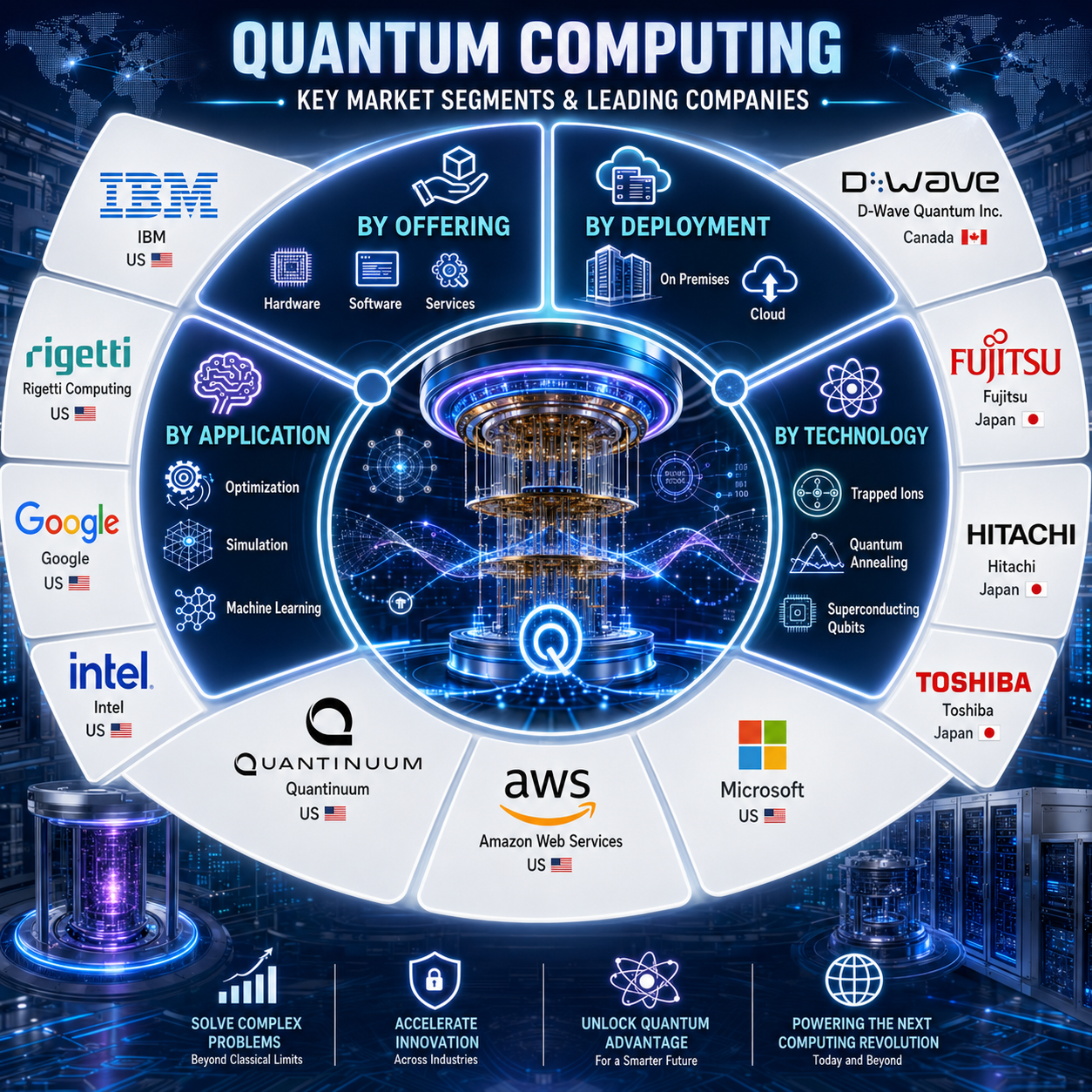
Expanding Applications Across Industries
The potential applications of quantum computing are expanding across multiple sectors. In healthcare, quantum simulations can accelerate drug discovery and personalized medicine development. Financial institutions are exploring quantum algorithms for risk analysis and portfolio optimization. Manufacturing and logistics companies are evaluating quantum-powered optimization techniques to improve operational efficiency.
As industries continue to identify practical use cases, the commercial value of quantum computing is expected to increase substantially. This broadening application scope is attracting new investors and supporting market growth.
Future Outlook
The quantum computing market is poised for significant growth in the coming years as technological advancements continue to reshape the industry. Increased investments, supportive government initiatives, AI integration, and expanding industrial applications are expected to drive innovation and commercialization.
Although challenges such as error correction, scalability, and high development costs remain, ongoing research efforts are steadily addressing these limitations. As the ecosystem matures, quantum computing is likely to become a critical technology for solving some of the world’s most complex computational problems, creating substantial opportunities for businesses, researchers, and investors alike.
FAQs – Quantum Computing Market Key Trends Fueling Investments and Research Advancements
1. What is driving growth in the quantum computing market?
The market is primarily driven by rising investments from technology companies, government funding initiatives, advancements in quantum hardware, and increasing demand for high-performance computing solutions.
2. Why are companies investing heavily in quantum computing?
Companies are investing to achieve quantum advantage, which can solve complex problems faster than classical computers, especially in areas like optimization, AI, cryptography, and simulation.
3. How is artificial intelligence linked to quantum computing?
AI helps improve quantum algorithms, error correction, and system optimization, while quantum computing has the potential to significantly enhance machine learning and data processing capabilities.
4. What role does government funding play in this market?
Governments support quantum computing through national programs, research grants, and infrastructure development, aiming to strengthen technological leadership and cybersecurity capabilities.
5. What are cloud-based quantum computing services?
These are platforms that allow users to access quantum computers remotely via the cloud, enabling researchers and businesses to experiment without owning physical quantum hardware.
6. Which industries benefit most from quantum computing?
Key industries include healthcare, finance, cybersecurity, logistics, manufacturing, and materials science due to its ability to solve highly complex computational problems.
7. What are the major challenges in quantum computing development?
Key challenges include qubit stability, high error rates, scalability issues, and high development costs.
8. How will quantum computing impact cybersecurity?
It will both challenge traditional encryption methods and drive the development of quantum-resistant cryptography for enhanced data protection.
9. Is quantum computing commercially viable today?
Quantum computing is still in the early stages, but cloud access and pilot projects are making it increasingly viable for research and specialized applications.
10. What is the future outlook for the quantum computing market?
The market is expected to grow significantly as technology matures, investments increase, and real-world applications become more widespread.
