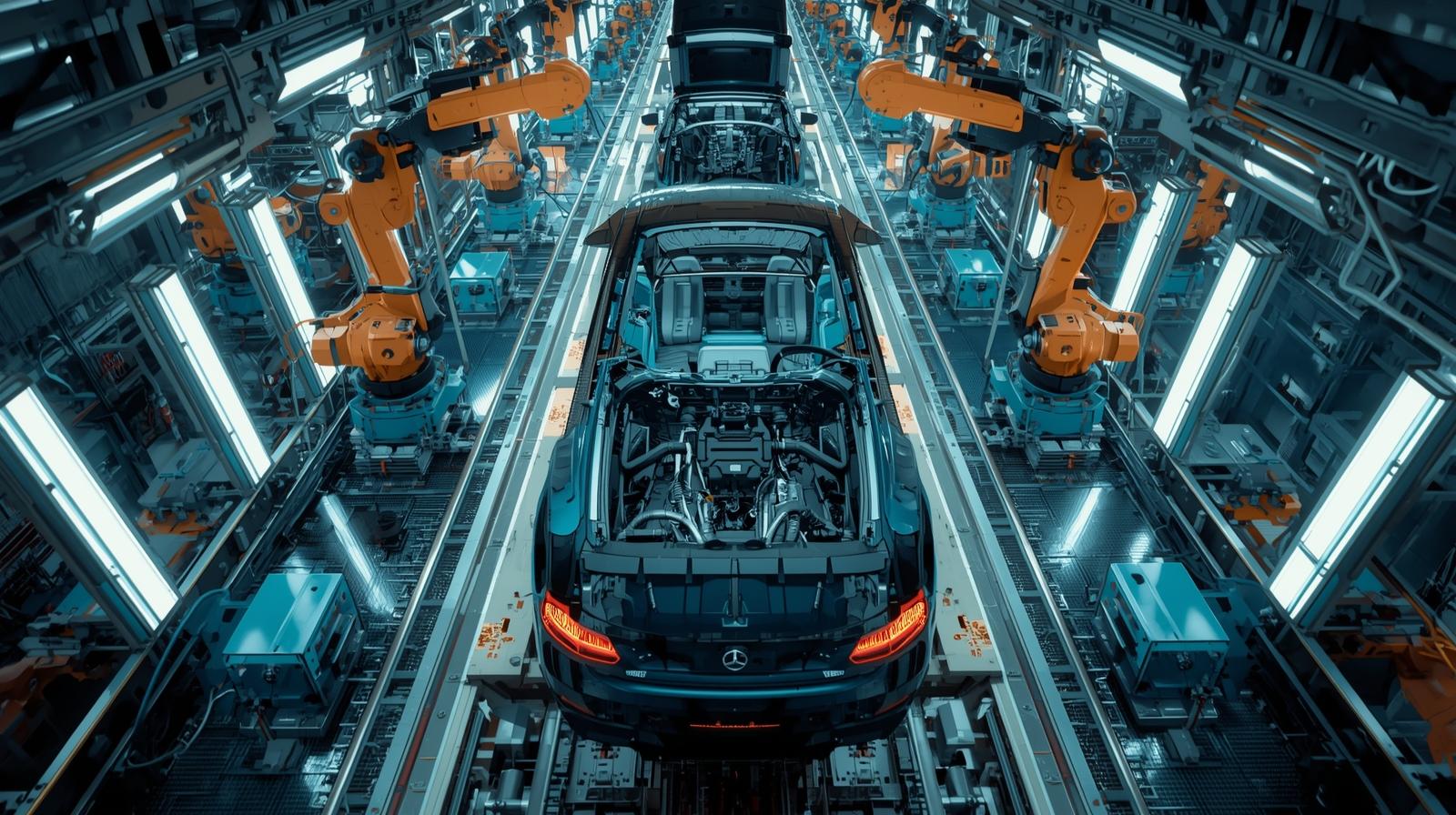
The Automotive Manufacturing Equipment Market ecosystems are undergoing a rapid transformation as the global automotive industry shifts toward electrification, automation, and smart manufacturing. Traditional production lines are being replaced by highly connected, data-driven, and automated ecosystems that integrate robotics, AI, IoT, and advanced machinery to improve efficiency, precision, and scalability.
According to industry insights from MarketsandMarkets, the Automotive Manufacturing Equipment Market ecosystems are expanding steadily, driven by rising vehicle production, growing adoption of electric vehicles (EVs), and increasing investment in Industry 4.0 technologies. (Source: MarketsandMarkets – Automotive Manufacturing Equipment Market Report)
Today, automotive manufacturing is no longer a linear process—it is a fully integrated ecosystem where machines, software, and systems work together in real time.
Understanding Automotive Manufacturing Equipment Market Ecosystems
The Automotive Manufacturing Equipment Market ecosystems refer to the interconnected network of equipment, technologies, and processes used in vehicle production. This includes everything from CNC machines and robotics to automated guided vehicles (AGVs), stamping systems, and AI-powered inspection tools.
These ecosystems are designed to:
- Improve production efficiency
- Reduce operational costs
- Enhance product quality
- Enable flexible manufacturing
- Support EV and hybrid vehicle production
As automotive complexity increases, the importance of the Automotive Manufacturing Equipment Market ecosystems continues to grow.
Key Drivers of Automotive Manufacturing Equipment Market Ecosystems
Several factors are accelerating the expansion of Automotive Manufacturing Equipment Market ecosystems:
1. Rise of Electric Vehicles (EVs)
The shift toward EVs is reshaping manufacturing requirements. Battery assembly, lightweight materials, and precision engineering demand advanced equipment and highly integrated ecosystems.
2. Industry 4.0 Transformation
Smart factories powered by IoT, AI, and automation are a core part of the Automotive Manufacturing Equipment Market ecosystems, enabling real-time monitoring and predictive maintenance.
3. Increasing Vehicle Production
Global demand for passenger and commercial vehicles is pushing manufacturers to scale operations using automated ecosystems.
4. Focus on Efficiency and Cost Reduction
Automakers are adopting advanced ecosystems to minimize downtime, reduce waste, and improve production speed.
5. Government Support and Regulations
Policies supporting EV adoption and domestic manufacturing are encouraging investment in modern automotive production ecosystems.
Download PDF Brochure @ https://www.marketsandmarkets.com/pdfdownloadNew.asp?id=75023639
Core Components of Automotive Manufacturing Equipment Market Ecosystems
The Automotive Manufacturing Equipment Market ecosystems consist of several interconnected components:
Robotics and Automation Systems
Industrial robots are widely used for welding, painting, assembly, and material handling, improving consistency and speed.
CNC Machines
CNC machines provide high-precision manufacturing for engine parts, transmission systems, and structural components.
Automated Guided Vehicles (AGVs)
AGVs enable smooth material movement across production lines, improving workflow efficiency.
Injection Molding and Stamping Equipment
These machines are essential for producing automotive body parts and interior components.
AI and IoT Systems
AI-driven analytics and IoT connectivity enhance predictive maintenance, quality control, and operational optimization within the Automotive Manufacturing Equipment Market ecosystems.
Key Trends in Automotive Manufacturing Equipment Market Ecosystems
Shift Toward Smart Manufacturing
One of the strongest trends in the Automotive Manufacturing Equipment Market ecosystems is the transition to smart factories where machines communicate and self-optimize using real-time data.
Expansion of Robotics in Production Lines
Robotics adoption continues to grow, especially in high-precision and repetitive tasks, reducing human error and increasing efficiency.
Integration of AI-Powered Quality Control
AI-based vision systems are increasingly used for defect detection, ensuring higher product quality and consistency.
Flexible and Modular Manufacturing Systems
Manufacturers are adopting flexible ecosystems that allow quick switching between different vehicle models, especially important for EV production.
Growth of Connected Manufacturing Platforms
Cloud-based platforms are enabling centralized control and monitoring of global production facilities within the Automotive Manufacturing Equipment Market ecosystems.
Industry Applications of Automotive Manufacturing Equipment Market Ecosystems
The Automotive Manufacturing Equipment Market ecosystems play a crucial role across multiple stages of vehicle production:
Vehicle Assembly
Automated assembly lines ensure precise and efficient vehicle construction.
Body-in-White Manufacturing
Robotics and stamping equipment are used for assembling vehicle frames and structures.
EV Battery Production
Specialized ecosystems are used for battery cell manufacturing, assembly, and testing.
Painting and Coating
Automated systems ensure uniform coating quality and reduced material waste.
Quality Inspection and Testing
AI-powered systems detect defects and ensure compliance with strict automotive standards.
Benefits of Automotive Manufacturing Equipment Market Ecosystems
The adoption of Automotive Manufacturing Equipment Market ecosystems offers several advantages:
- Higher production efficiency
- Improved product quality and consistency
- Reduced operational costs
- Enhanced workplace safety
- Greater flexibility in manufacturing
- Faster time-to-market for new vehicles
These benefits are driving widespread adoption across global automotive manufacturers.
Challenges in Automotive Manufacturing Equipment Market Ecosystems
Despite strong growth, the Automotive Manufacturing Equipment Market ecosystems face several challenges:
High Initial Investment
Advanced manufacturing systems require significant capital expenditure.
Integration Complexity
Integrating new technologies with legacy systems can be difficult.
Skilled Workforce Requirements
Automation requires trained professionals for operation and maintenance.
Cybersecurity Risks
Increased connectivity exposes manufacturing ecosystems to potential cyber threats.
Supply Chain Disruptions
Global supply chain issues can impact equipment availability and deployment.
Future Outlook of Automotive Manufacturing Equipment Market Ecosystems
The future of the Automotive Manufacturing Equipment Market ecosystems is expected to be shaped by deeper automation and digital integration.
Key future developments include:
- Fully autonomous manufacturing plants
- AI-driven predictive production systems
- Expansion of digital twin technology
- Greater adoption of sustainable manufacturing practices
- Seamless integration of EV-focused production ecosystems
As automotive production becomes increasingly complex, the Automotive Manufacturing Equipment Market ecosystems will play a central role in enabling intelligent, scalable, and efficient manufacturing.
The Automotive Manufacturing Equipment Market ecosystems are transforming the automotive industry by replacing traditional production methods with intelligent, connected, and automated systems. Driven by EV adoption, Industry 4.0, and advanced automation technologies, these ecosystems are redefining how vehicles are designed and manufactured.
As the industry continues to evolve, the Automotive Manufacturing Equipment Market ecosystems will remain at the core of innovation, enabling faster, smarter, and more efficient vehicle production worldwide.
About MarketsandMarkets™
MarketsandMarkets™ has been recognized as one of America’s Best Management Consulting Firms by Forbes, as per their recent report.
MarketsandMarkets™ is a blue ocean alternative in growth consulting and program management, leveraging a man-machine offering to drive supernormal growth for progressive organizations in the B2B space. With the widest lens on emerging technologies, we are proficient in co-creating supernormal growth for clients across the globe.
Today, 80% of Fortune 2000 companies rely on MarketsandMarkets, and 90 of the top 100 companies in each sector trust us to accelerate their revenue growth. With a global clientele of over 13,000 organizations, we help businesses thrive in a disruptive ecosystem.
The B2B economy is witnessing the emergence of $25 trillion in new revenue streams that are replacing existing ones within this decade. We work with clients on growth programs, helping them monetize this $25 trillion opportunity through our service lines – TAM Expansion, Go-to-Market (GTM) Strategy to Execution, Market Share Gain, Account Enablement, and Thought Leadership Marketing.
Built on the ‘GIVE Growth’ principle, we collaborate with several Forbes Global 2000 B2B companies to keep them future-ready. Our insights and strategies are powered by industry experts, cutting-edge AI, and our Market Intelligence Cloud, KnowledgeStore™, which integrates research and provides ecosystem-wide visibility into revenue shifts.
To find out more, visit www.MarketsandMarkets™.com or follow us on Twitter , LinkedIn and Facebook .
Contact:
Mr. Rohan Salgarkar
MarketsandMarkets™ INC.
1615 South Congress Ave.
Suite 103, Delray Beach, FL 33445
USA: +1-888-600-6441
