The global LiDAR simulation market is witnessing rapid expansion as automakers accelerate the development of autonomous vehicles, advanced driver assistance systems (ADAS), and software-defined vehicle platforms. As vehicle automation becomes increasingly sophisticated, manufacturers require scalable and cost-effective methods to validate LiDAR sensors, perception systems, and autonomous driving algorithms under thousands of real-world and edge-case scenarios.
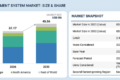
The LiDAR simulation market size is projected to grow from USD 0.93 billion in 2025 to USD 4.01 billion by 2032, registering a CAGR of 23.1% during the forecast period. Increasing adoption of virtual testing environments, sensor fusion technologies, and autonomous vehicle development programs is expected to drive substantial LiDAR simulation market growth worldwide.
LiDAR Simulation Industry Overview
LiDAR simulation refers to the use of advanced software platforms and virtual environments to test, validate, and optimize LiDAR-based perception systems before real-world deployment. These solutions enable automotive manufacturers, technology companies, and autonomous vehicle developers to simulate complex traffic conditions, weather environments, road infrastructure, and object interactions.
Compared with traditional physical testing, LiDAR simulation provides significant advantages in terms of cost reduction, development speed, scalability, and safety. Engineers can evaluate millions of driving scenarios within virtual environments while improving sensor performance and autonomous decision-making capabilities.
As autonomous driving systems become increasingly dependent on accurate environmental perception, LiDAR simulation is becoming a critical component of modern vehicle development strategies.
Autonomous Vehicle Development Driving LiDAR Simulation Market Growth
The rapid advancement of autonomous driving technologies is one of the strongest growth drivers within the LiDAR simulation market. Autonomous vehicles require extensive validation across diverse road conditions, traffic situations, and environmental scenarios before commercial deployment.
LiDAR simulation platforms enable developers to evaluate object detection, obstacle recognition, path planning, and vehicle behavior under controlled virtual conditions. These capabilities significantly reduce the time and cost associated with physical testing while improving overall system reliability.
Growing investments in robotaxis, autonomous passenger vehicles, and self-driving commercial transportation solutions are expected to continue accelerating demand for LiDAR simulation technologies.
Solid-State LiDAR Accelerating Simulation Demand
Solid-state LiDAR is expected to account for a significant share of the LiDAR simulation market due to its growing adoption across autonomous vehicles and advanced driver assistance systems. Compared with traditional mechanical LiDAR systems, solid-state LiDAR offers improved durability, lower power consumption, compact design, and lower manufacturing costs.
As automotive manufacturers increasingly integrate solid-state LiDAR into vehicle platforms, simulation environments are becoming essential for validating sensor performance, perception accuracy, and environmental awareness capabilities. Simulation tools help developers optimize sensor configurations before costly production deployments.
The increasing use of solid-state LiDAR across passenger vehicles and autonomous mobility platforms is expected to strengthen demand for advanced simulation solutions.
Download PDF Brochure @ https://www.marketsandmarkets.com/pdfdownloadNew.asp?id=66204434
Virtual Testing and Digital Twin Technologies Transforming Vehicle Validation
Virtual testing is emerging as one of the most important trends within the LiDAR simulation market. Modern simulation platforms allow engineers to create highly realistic digital twins of vehicles, sensors, road environments, and traffic ecosystems.
Digital twin technologies enable manufacturers to test rare and dangerous scenarios that would be difficult, expensive, or unsafe to replicate in physical environments. Engineers can evaluate performance across various weather conditions, lighting environments, traffic densities, and road configurations.
The growing adoption of digital engineering methodologies and software-defined vehicle architectures is expected to accelerate demand for virtual testing platforms across the automotive industry.
ADAS and Level 3 Autonomous Vehicles Expanding Market Opportunities
The increasing deployment of Level 2+, Level 3, and advanced ADAS systems is creating significant growth opportunities within the LiDAR simulation market. Automakers are increasingly relying on simulation environments to validate adaptive cruise control, lane centering, emergency braking, collision avoidance, and automated driving functions.
Regulatory requirements and safety certification programs are also encouraging manufacturers to adopt more comprehensive testing strategies. Simulation platforms enable continuous validation throughout vehicle development while supporting over-the-air software updates and feature enhancements.
As advanced driver assistance systems become standard across a wider range of vehicle segments, demand for LiDAR simulation solutions is expected to rise substantially.
Sensor Fusion and AI-Based Validation Enhancing Simulation Platforms
Sensor fusion is becoming increasingly important in autonomous vehicle development as manufacturers combine LiDAR, radar, cameras, ultrasonic sensors, and artificial intelligence algorithms to improve environmental perception.
LiDAR simulation platforms help developers evaluate how multiple sensors interact under complex operating conditions. These solutions support AI model training, perception system validation, object classification, and autonomous decision-making processes.
As automotive companies continue investing in intelligent mobility solutions and autonomous driving technologies, sensor fusion validation is expected to remain a major contributor to LiDAR simulation market growth.
North America Emerging as a High-Growth LiDAR Simulation Market
North America is expected to remain one of the fastest-growing regions within the LiDAR simulation market due to strong investments in autonomous vehicle technologies, robotaxi deployments, advanced driver assistance systems, and intelligent transportation infrastructure.
Companies developing autonomous mobility solutions are increasingly utilizing LiDAR simulation platforms to accelerate product development while meeting safety and regulatory requirements. Growing testing activities involving autonomous passenger vehicles, robotaxis, and commercial trucks are further supporting market expansion.
The presence of major autonomous vehicle developers, technology providers, and automotive OEMs is expected to continue driving LiDAR simulation market growth across the region.
Future Outlook for the LiDAR Simulation Market
The future of the LiDAR simulation market will be shaped by autonomous driving innovation, software-defined vehicles, AI-powered validation platforms, sensor fusion technologies, and digital twin ecosystems. As automotive manufacturers increasingly rely on virtual development environments, simulation technologies will become indispensable for reducing development costs, accelerating innovation, and improving vehicle safety.
Growing investments in autonomous mobility, connected vehicles, intelligent transportation systems, and advanced perception technologies will continue creating substantial opportunities for LiDAR simulation providers, software developers, and automotive technology companies. As a result, the LiDAR simulation market is expected to experience exceptional growth and technological advancement through 2032.
Request Free Sample Report @ https://www.marketsandmarkets.com/requestsampleNew.asp?id=66204434