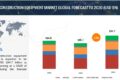
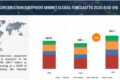
The heavy construction equipment market is projected to grow from USD 160.11 billion in 2026 to USD 226.91 billion by 2033, at a CAGR of 5.1%. The growth of this market can be attributed to the increasing urbanization, infrastructure development Initiatives carried out by governments for smart city initiatives, and technological advancements in the heavy construction equipment industry.
Heavy construction equipment manufacturers across the globe are focusing on automation, electrification, and connected fleet technologies to improve efficiency, safety, and uptime. Market segments, such as crawler excavators, mini excavators, rigid dump trucks, and wheel loaders, are leading this transformation with telematics, semi-autonomous operations, and electric variants. OEMs like Caterpillar, Volvo, Hitachi, JCB, and Deere are heavily investing in these technologies, reshaping productivity. The successful implementation of any of these technologies can change the business landscape of the heavy construction equipment market.
Download PDF Brochure @ https://www.marketsandmarkets.com/pdfdownloadNew.asp?id=179948937
The heavy construction equipment market is witnessing strong growth, with electrification trends varying across regions and equipment types. Currently, Europe leads electrification adoption with ~6–10%, driven by stringent emission norms and high adoption in compact equipment such as mini excavators and compact loaders for urban applications. Asia Pacific, with ~2–4%, is emerging rapidly, particularly in electric excavators, dump trucks, and loaders used in mining and large-scale earthmoving, supported by China’s aggressive push toward zero-emission equipment. North America, with ~1–3%, is in an early adoption phase, with growth focused on pilot deployments of electric haul trucks and loaders in mining and quarrying. Electrification is the highest in compact and mid-size equipment, while heavy-duty segments are gradually transitioning through hybrid and electrification-ready platforms due to high energy requirements. Alongside electrification, the industry is witnessing strong momentum in autonomous operations, particularly in mining haul trucks and large excavators, where OEMs are deploying semi- and fully autonomous systems to improve productivity, safety, and cost efficiency. OEMs such as Caterpillar, Komatsu, Volvo Construction Equipment, Liebherr, SANY, and XCMG are actively investing in electric and hybrid platforms, autonomous electric fleets, and next-generation energy solutions, positioning themselves to capitalize on the transition toward sustainable heavy construction equipment.
By application, the commercial segment is projected to witness the highest growth from 2026 to 2033, driven by the increasing development of industrial facilities, logistics parks, data centers, warehouses, and large commercial complexes across developed and emerging economies. The demand for heavy construction equipment is rising as these projects require high-volume earthmoving, site leveling, and material handling operations within tight timelines and high utilization cycles. Equipment such as crawler excavators, wheel loaders, articulated dump trucks, and motor graders is extensively used due to their ability to handle large-scale and continuous operations efficiently. The shift toward pre-engineered buildings and large logistics infrastructure is driving the demand for precision-enabled and high-productivity machines, supported by automation and telematics integration. Regionally, Asia Pacific dominates this segment and is also the fastest-growing region, supported by strong commercial expansion in countries like China and India, where large-scale development across industrial hubs, urban commercial infrastructure, and logistics corridors is driving sustained equipment demand.
MARKET ECOSYSTEM
The heavy construction equipment market ecosystem consists of multiple interconnected layers, including component suppliers, OEMs, distributors, rental service providers, and end users. Component manufacturers such as Cummins, John Deere, and Rolls-Royce supply engines and key systems, while OEMs like Caterpillar, Volvo Construction Equipment, and Hitachi Construction Machinery assemble complete machines. Distribution and service players such as Komatsu, JCB, and Liebherr ensure market reach and after-sales support, while rental firms like United Rentals and Herc Rentals provide flexible access to equipment. Overall, the ecosystem is driven by collaboration, enabling efficiency, innovation, and sustainable growth.
Request Free Sample Report @ https://www.marketsandmarkets.com/requestsampleNew.asp?id=179948937