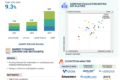
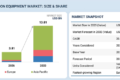
The global metagenomic sequencing market is experiencing rapid growth as researchers and healthcare organizations increasingly adopt advanced sequencing technologies to study complex microbial communities. The market is projected to grow from USD 2.0 billion in 2023 to USD 4.5 billion by 2028, registering an impressive CAGR of 17.5% during the forecast period.
The market’s expansion is fueled by continuous technological innovations in next-generation sequencing (NGS) platforms, increasing investments from governments and private organizations, and growing participation in large-scale sequencing initiatives. As metagenomic sequencing becomes an essential tool for microbiome research, infectious disease surveillance, environmental studies, and precision medicine, demand for high-throughput and cost-effective sequencing solutions continues to rise.
However, limited funding for metagenomic research activities in many developing countries remains a challenge that could moderately restrain market growth during the forecast period.
Market Drivers Fueling Growth
Continuous Innovation in Next-Generation Sequencing (NGS)
Technological advancements in NGS platforms have significantly improved sequencing speed, accuracy, throughput, and affordability. Modern sequencing systems enable researchers to analyze entire microbial communities without the need for traditional culture-based methods, opening new opportunities across clinical diagnostics, agriculture, environmental science, and pharmaceutical research.
Improved automation, cloud-based bioinformatics platforms, and enhanced data analysis tools have further streamlined sequencing workflows, making metagenomic studies more accessible to research laboratories worldwide.
Growing Government and Private Funding
Governments, academic institutions, and private organizations continue to increase investments in genomic research and large-scale sequencing programs. Funding initiatives aimed at understanding microbial ecosystems, antimicrobial resistance, emerging infectious diseases, and public health surveillance are creating strong demand for advanced metagenomic sequencing technologies.
These investments are accelerating research activities while encouraging collaborations among biotechnology companies, research institutes, and healthcare organizations.
Expanding Applications Across Industries
Metagenomic sequencing has evolved beyond academic research and is now widely used across multiple industries, including:
- Clinical diagnostics
- Infectious disease detection
- Human microbiome research
- Environmental monitoring
- Agricultural biotechnology
- Food safety testing
- Pharmaceutical research
- Drug discovery
The expanding application landscape continues to generate new opportunities for sequencing technology providers worldwide.
Challenges Facing the Market
Despite its strong growth potential, the metagenomic sequencing market faces several challenges.
High equipment costs, complex data analysis requirements, and limited financial resources available for genomic research in developing economies remain significant barriers to widespread adoption. Additionally, the need for specialized bioinformatics expertise and robust computational infrastructure may limit implementation in resource-constrained settings.
Nevertheless, ongoing reductions in sequencing costs and improvements in workflow automation are expected to gradually overcome these challenges.
Competitive Landscape
The global metagenomic sequencing market is highly consolidated, with several major life sciences companies accounting for a significant share of global revenues. Leading market participants continue to strengthen their competitive positions through:
- Product innovation
- Strategic collaborations
- Technology partnerships
- Research investments
- Geographic expansion
- New sequencing platform launches
Prominent companies operating in the market include Illumina, Inc., Thermo Fisher Scientific Inc., PerkinElmer, Inc., QIAGEN N.V., Oxford Nanopore Technologies Plc., and Pacific Biosciences of California, Inc.
Leading Companies in the Metagenomic Sequencing Market
Illumina, Inc.
Illumina held the largest share of the global metagenomic sequencing market in 2022, maintaining its leadership through an extensive portfolio of sequencing platforms, consumables, and bioinformatics software.
The company is recognized globally for its sequencing and array-based technologies that support life science research, translational genomics, consumer genomics, and molecular diagnostics. Its comprehensive product ecosystem enables researchers to perform high-throughput sequencing with exceptional accuracy and efficiency.
Illumina’s continued investment in research and development has resulted in frequent technological innovations that enhance sequencing performance while reducing operational complexity. The company’s ability to consistently introduce next-generation sequencing solutions has helped maintain its leadership position within the rapidly evolving genomics industry.
Thermo Fisher Scientific Inc.
Thermo Fisher Scientific ranked as the second-largest player in the metagenomic sequencing market in 2022. The company offers one of the industry’s most comprehensive portfolios of sequencing instruments, reagents, consumables, software solutions, and laboratory workflow services.
Its metagenomic sequencing solutions support a broad range of applications, including environmental monitoring, clinical diagnostics, food safety, microbiome research, and infectious disease surveillance.
Thermo Fisher’s competitive advantage stems from its strong global presence, integrated laboratory solutions, and continuous investment in innovation. The company consistently develops new sequencing technologies and workflow improvements designed to meet the evolving needs of researchers worldwide.
Strategic collaborations and partnerships have further strengthened its market position. For example, the company’s collaboration with AstraZeneca to co-develop next-generation sequencing-based companion diagnostics demonstrates its commitment to expanding precision medicine applications while reinforcing its leadership in molecular diagnostics.
Future Outlook
The future of the metagenomic sequencing market appears exceptionally promising as advances in sequencing technologies continue to unlock new possibilities in biological research and healthcare. Growing interest in microbiome science, precision medicine, infectious disease monitoring, and environmental sustainability is expected to drive sustained demand over the coming years.
Emerging technologies such as long-read sequencing, artificial intelligence-assisted bioinformatics, cloud-based genomic analysis, and automated laboratory workflows are likely to further enhance the accessibility and efficiency of metagenomic sequencing.
As governments, research institutions, and biotechnology companies continue investing in genomic research, the market is expected to witness significant innovation, broader clinical adoption, and expanding commercial opportunities. Organizations capable of delivering scalable, high-performance, and cost-effective sequencing solutions will remain well-positioned to capitalize on the growing global demand for metagenomic sequencing technologies.