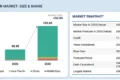
The EV battery market is projected to reach USD 168.95 billion by 2035, from USD 103.04 billion in 2026, with a CAGR of 5.6%. This growth is driven by the transition toward lower-cost battery chemistries and higher manufacturing efficiency across the EV value chain. Battery manufacturers are accelerating deployment of LFP and LMFP chemistries to reduce dependence on nickel and cobalt while improving cost competitiveness for mass-market vehicles. At the same time, advances in cell-to-pack (CTP), cell-to-body (CTB), and larger cell formats are increasing energy utilization at the pack level and lowering battery system costs per kWh. Reflecting these improvements, average EV battery prices continued to decline in 2025. China maintained a significant cost advantage, with average battery prices in 2025 falling below USD 85/kWh, supported by its integrated supply chain, large-scale manufacturing capabilities, and strong adoption of LFP batteries. These developments are helping OEMs improve vehicle affordability while increasing driving range across passenger and commercial EV segments.
The EV battery market is being reshaped by a combination of next-generation cell technologies, manufacturing innovation, and regulatory changes that are altering cost structures and competitive positioning. One major technology shift is the adoption of larger-format cylindrical cells and cell-to-pack (CTP) architectures to increase energy density and reduce pack complexity. For instance, Tesla continues advancing its 4680 cylindrical battery platform, while BYD uses its Blade Battery design to improve space utilization and safety. At the chemistry level, lithium iron phosphate (LFP) batteries are expanding into mid- and premium-segment EVs due to lower raw material dependency, while companies such as LG Energy Solution and CATL are investing in fast-charging battery platforms. Manufacturing is also changing through dry-electrode coating and AI-enabled production systems. For instance, Tesla is scaling dry-electrode processes to reduce manufacturing steps, while Panasonic Energy is focusing on production efficiency for next-generation cells. On the regulatory side, the European Union Battery Regulation, introducing battery passports and carbon footprint disclosure, along with sourcing incentives under the Inflation Reduction Act in the US, is pushing automakers and battery suppliers to localize production, improve traceability, and strengthen recycling capabilities. These developments are shifting market leadership from pure scale expansion toward technology ownership, regional manufacturing, and compliance-driven supply chain control.
Download PDF Brochure @ https://www.marketsandmarkets.com/pdfdownloadNew.asp?id=100188347
Pouch battery form is expected to hold a significant share of the EV battery market during the forecast period, due to its superior packaging efficiency and higher energy density compared with conventional cylindrical formats. This enables automakers to maximize driving range within limited vehicle space. Its lightweight and flexible design reduces inactive material content and improves pack-level energy utilization, making it particularly attractive for passenger EVs and long-range vehicle platforms. In addition, pouch cells allow customized battery dimensions, giving OEMs greater flexibility to optimize vehicle floor architecture and enhance cabin space. Continuous improvements in thermal management, structural integration, and safety performance are further strengthening its adoption in high-capacity EV applications. For instance, in March 2026, LG Energy Solution highlighted its pouch battery platforms featuring enhanced cooling systems and “No Thermal Propagation” pack technologies to improve safety and thermal control. OEMs and battery suppliers are also increasingly integrating pouch cells directly into battery packs to reduce module complexity, lower vehicle weight, and increase usable energy density, supporting the continued market leadership of pouch battery formats.
PHEVs are expected to hold a significant share of the EV battery market, as they provide a practical transition pathway between internal combustion vehicles and fully battery-electric mobility. By combining electric driving capability with an onboard combustion engine, these vehicles reduce range anxiety while increasing battery demand per vehicle compared with conventional hybrid models. Market growth in this segment is being supported by consumer preference in regions where charging infrastructure remains uneven and by demand for greater long-distance driving flexibility. OEMs are also expanding next-generation PHEV portfolios with larger battery packs and extended electric-only driving range, increasing battery capacity requirements at the vehicle level. In 2025, global PHEV sales continued to grow, particularly across China and Europe, contributing significantly to EV battery consumption. To support this trend, PHEV platforms are increasingly adopting higher-capacity batteries to deliver EV-like daily driving capability while retaining hybrid flexibility. For instance, Gotion Inc. (China) supplied LFP pouch battery cells for SAIC-GM-Wuling 2026 Wuling Starlight L PHEV models in China, while CATL provided LFP battery cells for 2026 PHEV vehicle programs developed by Changan Automobile and FAW Group, reinforcing the role of advanced battery technologies in expanding the PHEV market.
China is expected to lead the EV battery market due to its highly integrated electric vehicle and battery ecosystem, covering raw material mining, refining, cell manufacturing, battery pack assembly, and EV production. The country maintains a strong position in global lithium processing and continues expanding domestic battery manufacturing capacity, creating cost advantages and enabling faster commercialization of new technologies. China’s market leadership is further supported by strong domestic EV demand, widespread charging infrastructure, and large-scale production by manufacturers such as CATL and BYD. The rapid adoption of LFP batteries, continuous technological advancement, and government support for localized manufacturing are strengthening its competitive position. For instance, LFP batteries accounted for more than 75% of China’s EV battery market in 2025. China is also accelerating the deployment of sodium-ion batteries to reduce dependence on lithium price fluctuations and support lower-cost EV segments. Commercial deployment is increasingly focused on passenger vehicles, commercial fleets, and cold-weather applications. For instance, in May 2026, CATL announced an investment of USD 735 million to add 40 GWh of annual sodium-ion battery production capacity at its Fuding Shidai facility in Ningde, Fujian. These developments are expected to strengthen China’s leadership in the global EV battery market.
Companies that invest early in cost-efficient technologies such as LFP, manganese-rich, solid-state readiness, cell-to-pack integration, and automated giga-scale production can improve margins and accelerate commercialization. Similarly, evolving regulations around battery passports, carbon disclosure, and local sourcing are opening opportunities for regional supply chain expansion and circular battery models. To capture these opportunities, market participants should strengthen partnerships across mining, refining, cell manufacturing, and vehicle OEM networks; expand regional production footprints; invest in recycling and second-life battery capabilities; and build traceability and data-driven manufacturing systems to meet regulatory and sustainability requirements. Players that combine technology differentiation with resilient and compliant supply chains are expected to gain long-term competitive advantage in the EV battery market.
Request Free Sample Report @ https://www.marketsandmarkets.com/requestsampleNew.asp?id=100188347
Key Players
The major players in the EV battery market include Contemporary Amperex Technology Co., Limited (China), BYD Company Ltd. (China), LG Energy Solution (South Korea), CALB (China), and Gotion Inc. (China). These companies are focusing on improving battery energy density, accelerating next-generation battery technology development, securing long-term raw material sourcing agreements, and expanding manufacturing capacity through strategic partnerships and localized production networks to strengthen their market position.