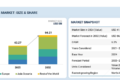
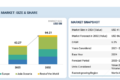
The global farm equipment market is expected to expand from USD 133.48 billion in 2026 to USD 181.67 billion by 2033, registering a CAGR of 4.5% during the forecast period. This growth is being driven by increasing adoption of electric tractors, farm equipment rental services, and advanced precision farming technologies, along with regulatory frameworks such as TREM V standards. Other factors driving the market include rising labour costs, the growing need to enhance agricultural productivity, government subsidies, and the ongoing shift toward commercial-scale farming. Together, these trends are accelerating demand for modern machinery and efficient irrigation solutions across global agricultural markets.
The 131–250 HP and >250 HP tractor segments are creating significant growth opportunities across Europe as farms become larger, labor costs rise, and farmers seek higher field productivity from fewer machines. The 131–250 HP range remains the backbone of mixed farming and contractor operations due to its versatility for cultivation, planting, transport, and precision agriculture, while the >250 HP segment is expanding rapidly in France, Germany, and Eastern Europe, where land consolidation and large-scale grain production require high-capacity 4WD tractors. OEMs are responding with advanced, technology-rich platforms; for example, in 2025, Fendt expanded its 700 Vario Gen7.1 range (up to 303 HP) with enhanced DynamicPerformance technology, improved fuel efficiency, and FendtONE digital connectivity, while also strengthening its 800 Vario lineup offering up to 343 HP for large-scale operations. These developments, combined with increasing adoption of GPS guidance, telematics, auto-steering, and precision farming technologies, are expected to accelerate fleet modernization and create new opportunities in both the mid- and high-horsepower tractor segments across Europe.
Download PDF Brochure @ https://www.marketsandmarkets.com/pdfdownloadNew.asp?id=164005174
The global forestry equipment market is dominated by harvesters, forwarders, skidders, feller bunchers, and loaders, with harvesters and forwarders expected to offer the strongest growth opportunities over the next five years as forestry operators increasingly adopt cut-to-length (CTL) harvesting methods that improve productivity, reduce labor dependence, and minimize environmental impact. Europe, particularly Sweden, Finland, Germany, and other Nordic countries, remains the most advanced and largest market for mechanized forestry, driven by replacement demand and sustainable forest management practices, while North America continues to be a major market, supported by large-scale timber harvesting and gradual CTL adoption. Emerging opportunities are also growing in Brazil, Chile, Australia, and selected Asia-Pacific markets as plantation forestry expands and labor shortages intensify. Leading manufacturers such as John Deere Forestry, Komatsu Forest, Ponsse, Tigercat, and Rottne are investing in telematics, automation, operator-assist technologies, fuel-efficient powertrains, and future hybrid and autonomous forestry machines. For companies looking to enter the market, the greatest opportunities will lie in building strong dealer and service networks, expanding aftermarket support, and offering digital and precision forestry solutions, as customers increasingly prioritize machine uptime, productivity, connectivity, and sustainability alongside equipment performance.
Theagricultural equipment rental market is creating significant opportunities around high-horsepower tractors (131–250 HP and above), combine harvesters, and self-propelled sprayers, which are among the most rented machines due to their high purchase costs and seasonal utilization. Large tractors such as the John Deere 8R Series and Fendt 700 Vario are increasingly rented by contractors and large farms for heavy tillage, planting, and transport operations, while combine harvesters such as the CLAAS LEXION and John Deere X9 are in high demand during peak wheat, rice, maize, and soybean harvesting seasons. Self-propelled sprayers, including the John Deere R Series Sprayers and Case IH Patriot, are also gaining popularity through rental fleets as growers adopt precision application technologies without significant upfront investment. The expansion of custom hiring centers in India, machinery-sharing platforms in Europe, and contractor-based farming services in North and South America is creating new business opportunities for dealers, rental providers, OEM financing arms, and fleet operators. As labor shortages, mechanization rates, and demand for advanced farming technologies continue to rise, equipment rental is expected to become one of the fastest-growing business models in agriculture, enabling wider access to high-value machinery while generating recurring revenue streams for industry participants.
North America is the second-largest farm equipment market globally, driven by large-scale commercial farming and high mechanization, accounting for roughly 17–19% of global demand. The region shows the highest demand for high-horsepower tractors <30 HP which are used in row-crop farming, while 2WD tractors remain widely preferred in flat, large-acreage fields due to lower cost and easier maintenance, with 4WD mainly used in heavy tillage and wet soil conditions. Growth is being shaped by the rapid adoption of precision farming technologies such as GPS auto-steering, telematics, variable-rate application (VRA), AI-based yield mapping, and autonomous tractor systems, led by OEMs like Deere, CNH Industrial, and AGCO. Electric tractors are still in early adoption stages and are mainly used in small farms, orchards, vineyards, and municipal or indoor agricultural applications, where compact size and low noise are important. In the US, adoption is supported indirectly through federal clean energy incentives and state-level programs such as California CORE (Clean Off-Road Equipment Voucher Incentive Project), which provides purchase subsidies for zero-emission agricultural equipment, encouraging early deployment of electric and hybrid farm machinery in specific low-power segments.
Key Market Players:
The farm equipment market is dominated by established players such as Deere & Company (US), AGCO Corporation (US), CNH Industrial (Netherlands), Kubota Corporation (Japan), CLAAS KGAA mbH (Germany), Mahindra & Mahindra (India), ISEKI & Co., Ltd. (Japan), Escorts Kubota Limited (India), SDF Group (Germany), and Yanmar Holdings Co., Ltd (Japan). These companies adopted strategies such as product development, deals, and others to gain traction in the market.
Request Free Sample Report @ https://www.marketsandmarkets.com/requestsampleNew.asp?id=164005174