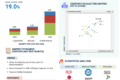
The global healthcare and biotechnology landscape is experiencing rapid transformation as advanced sensing technologies enable faster, more accurate, and personalized monitoring solutions. Among these innovations, biosensors are emerging as a critical technology supporting real-time diagnostics, disease management, wearable healthcare devices, and biotechnology applications. Biosensor Market Growth Trends reflect the increasing adoption of intelligent sensor technologies across healthcare, food safety, environmental monitoring, agriculture, and research industries.
Biosensors combine biological recognition elements with electronic detection systems to identify and measure biological signals, chemical compounds, and physiological conditions. Their ability to provide rapid, accurate, and minimally invasive analysis is driving demand across multiple sectors.
The evolution of artificial intelligence, Internet of Things (IoT), microelectronics, and wearable technologies is further accelerating Biosensor Market Growth Trends, creating new opportunities for advanced healthcare monitoring and smart diagnostic solutions.
Understanding Biosensors
A biosensor is an analytical device that detects biological information by converting a biological response into a measurable signal. These devices typically consist of three major components:
- Bioreceptor: Detects specific biological molecules such as enzymes, antibodies, DNA, or cells.
- Transducer: Converts biological interactions into measurable electrical, optical, or physical signals.
- Signal Processing System: Processes and analyzes collected data for interpretation.
Biosensors are widely used for glucose monitoring, infectious disease detection, cancer diagnostics, drug development, environmental testing, and food quality assessment.
Key Biosensor Market Growth Trends
1. Rising Demand for Point-of-Care Diagnostics
One of the most significant Biosensor Market Growth Trends is the increasing adoption of point-of-care (POC) diagnostic solutions. Healthcare providers and patients are seeking faster diagnostic methods that deliver accurate results without requiring complex laboratory infrastructure.
Biosensor-based diagnostic devices enable:
- Rapid disease detection
- Real-time health monitoring
- Portable testing solutions
- Reduced diagnostic costs
- Improved patient outcomes
The growing need for decentralized healthcare services is expected to further increase demand for biosensor technologies.
2. Expansion of Wearable Healthcare Devices
Wearable technology is transforming personal health management by enabling continuous monitoring of vital health parameters. Biosensors integrated into smartwatches, patches, and wearable medical devices are becoming increasingly popular.
These devices can monitor:
- Blood glucose levels
- Heart rate
- Oxygen saturation
- Body temperature
- Blood pressure
- Hydration levels
The integration of biosensors with wearable platforms represents a major driver of Biosensor Market Growth Trends, particularly as consumers and healthcare providers focus on preventive healthcare.
Download PDF Brochure @ https://www.marketsandmarkets.com/pdfdownloadNew.asp?id=798
3. Integration of Artificial Intelligence and IoT
Artificial intelligence and IoT connectivity are enhancing biosensor capabilities by enabling advanced data analysis, remote monitoring, and predictive healthcare solutions.
AI-powered biosensors can:
- Analyze complex biological data
- Detect health patterns
- Support early disease prediction
- Improve diagnostic accuracy
- Enable personalized treatment strategies
Connected biosensor systems are becoming an essential part of digital healthcare ecosystems, strengthening future market opportunities.
4. Growth of Personalized Medicine
Personalized medicine focuses on developing treatments based on individual patient characteristics, genetics, and health conditions. Biosensors play a crucial role by providing continuous biological data for customized healthcare decisions.
Applications include:
- Biomarker detection
- Drug response monitoring
- Genetic analysis
- Chronic disease management
As healthcare moves toward precision medicine, Biosensor Market Growth Trends are increasingly influenced by demand for personalized diagnostic and monitoring solutions.
5. Advancements in Nanotechnology-Based Biosensors
Nanotechnology is improving biosensor sensitivity, accuracy, and detection speed. Nanomaterials such as graphene, nanoparticles, and nanowires are enabling the development of highly efficient biosensing platforms.
Advantages of nanotechnology-based biosensors include:
- Enhanced detection capability
- Smaller device size
- Faster response time
- Improved sensitivity
- Lower sample requirements
These advancements are expected to support next-generation biosensor development across healthcare and research applications.
Major Applications Driving Market Growth
Healthcare and Medical Diagnostics
Healthcare remains the largest application area for biosensors. Rising cases of chronic diseases such as diabetes, cardiovascular disorders, and cancer are increasing demand for continuous monitoring and early detection technologies.
Pharmaceutical and Biotechnology Research
Biosensors are used in drug discovery, molecular analysis, and clinical research. They help researchers analyze biological interactions and accelerate pharmaceutical development.
Food Safety and Quality Monitoring
Biosensors enable rapid detection of contaminants, pathogens, and chemical residues in food products. Increasing food safety regulations are creating new opportunities in this segment.
Environmental Monitoring
Environmental biosensors are used to detect pollutants, toxins, and changes in ecosystem conditions. Growing environmental concerns are increasing adoption of biosensor-based monitoring solutions.
Agriculture Applications
Biosensors are supporting precision agriculture by monitoring soil conditions, plant health, and agricultural contaminants.
Growth Opportunities in the Biosensor Market
Several opportunities are expected to accelerate Biosensor Market Growth Trends:
Increasing Adoption of Remote Patient Monitoring
The expansion of telehealth and remote healthcare services is creating demand for connected biosensors capable of transmitting real-time patient data.
Rising Demand for Home Healthcare Devices
Patients are increasingly using portable diagnostic and monitoring devices at home, creating opportunities for consumer-focused biosensor solutions.
Development of Multiplex Biosensors
Multiplex biosensors capable of detecting multiple biomarkers simultaneously are gaining attention due to their potential in complex disease diagnosis.
Integration with Artificial Intelligence Platforms
AI-enabled biosensors can improve healthcare decision-making by transforming raw sensor data into actionable insights.
Expansion in Emerging Markets
Improving healthcare infrastructure, increasing medical technology investments, and growing awareness of preventive healthcare are creating new growth opportunities in developing economies.
Challenges Affecting Market Expansion
Despite strong growth potential, the biosensor market faces several challenges:
- High development and manufacturing costs
- Complex regulatory approval processes
- Data privacy concerns for connected devices
- Technical challenges in achieving long-term sensor stability
- Limited reimbursement coverage in some regions
- Need for improved accuracy and reliability
Addressing these challenges will be important for broader commercialization and adoption.
Regional Outlook
North America is expected to maintain a strong position in the biosensor market due to advanced healthcare infrastructure, high adoption of wearable devices, and significant investments in biotechnology research.
Europe is witnessing growth supported by healthcare innovation, government initiatives, and increasing demand for advanced diagnostic solutions.
Asia-Pacific is expected to experience significant growth due to rising healthcare expenditure, expanding medical technology industries, increasing chronic disease prevalence, and growing adoption of digital health solutions.
Emerging markets in Latin America and the Middle East are also creating opportunities as healthcare modernization continues.
Future Outlook
The future of Biosensor Market Growth Trends will be shaped by continuous innovation in sensor technology, artificial intelligence, nanotechnology, and digital healthcare platforms.
Future developments are expected to focus on:
- Flexible and wearable biosensors
- Implantable monitoring devices
- AI-powered diagnostic systems
- Smartphone-connected biosensors
- Real-time disease prediction platforms
- Advanced biomarker detection technologies
As healthcare systems shift toward prevention, early diagnosis, and personalized treatment, biosensors will become increasingly important in enabling efficient and accessible healthcare solutions.
Biosensor Market Growth Trends demonstrate the growing importance of advanced sensor technologies in transforming healthcare and expanding applications beyond medicine. From wearable health monitoring and point-of-care diagnostics to environmental sensing and biotechnology research, biosensors are enabling faster, smarter, and more personalized solutions.
With continued advancements in AI, IoT, nanotechnology, and biomedical engineering, the biosensor market is positioned for strong growth. As organizations worldwide focus on improving healthcare outcomes and operational efficiency, advanced biosensors will play a vital role in shaping the future of intelligent monitoring technologies.
Frequently Asked Questions (FAQs)
1. What are the key factors driving Biosensor Market Growth Trends?
The major factors driving Biosensor Market Growth Trends include increasing demand for point-of-care diagnostics, rising adoption of wearable healthcare devices, growth of personalized medicine, advancements in nanotechnology, expansion of remote patient monitoring, and integration of artificial intelligence and IoT technologies.
2. How are biosensors transforming healthcare?
Biosensors are transforming healthcare by enabling real-time health monitoring, early disease detection, continuous patient tracking, and personalized treatment approaches. They support applications such as glucose monitoring, cardiac monitoring, infectious disease testing, cancer biomarker detection, and remote healthcare management.
3. What are the major applications of biosensors beyond healthcare?
Beyond healthcare, biosensors are used in food safety monitoring, environmental analysis, agriculture, biotechnology research, pharmaceutical development, and industrial quality control. These applications are contributing to broader Biosensor Market Growth Trends.
4. How is artificial intelligence influencing the biosensor market?
Artificial intelligence enhances biosensor capabilities by analyzing complex biological data, improving diagnostic accuracy, enabling predictive healthcare insights, and supporting automated decision-making. AI-integrated biosensors are helping create smarter and more connected healthcare systems.
5. What is the future outlook for the Biosensor Market?
The future of the biosensor market is expected to be driven by wearable sensors, implantable monitoring devices, AI-powered diagnostics, smartphone-connected biosensors, and advanced biomarker detection technologies. Increasing focus on preventive healthcare and personalized medicine will continue to create new growth opportunities.
About MarketsandMarkets™
MarketsandMarkets™ has been recognized as one of America’s Best Management Consulting Firms by Forbes, as per their recent report.
MarketsandMarkets™ is a blue ocean alternative in growth consulting and program management, leveraging a man-machine offering to drive supernormal growth for progressive organizations in the B2B space. With the widest lens on emerging technologies, we are proficient in co-creating supernormal growth for clients across the globe.
Today, 80% of Fortune 2000 companies rely on MarketsandMarkets, and 90 of the top 100 companies in each sector trust us to accelerate their revenue growth. With a global clientele of over 13,000 organizations, we help businesses thrive in a disruptive ecosystem.
The B2B economy is witnessing the emergence of $25 trillion in new revenue streams that are replacing existing ones within this decade. We work with clients on growth programs, helping them monetize this $25 trillion opportunity through our service lines – TAM Expansion, Go-to-Market (GTM) Strategy to Execution, Market Share Gain, Account Enablement, and Thought Leadership Marketing.
Built on the ‘GIVE Growth’ principle, we collaborate with several Forbes Global 2000 B2B companies to keep them future-ready. Our insights and strategies are powered by industry experts, cutting-edge AI, and our Market Intelligence Cloud, KnowledgeStore™, which integrates research and provides ecosystem-wide visibility into revenue shifts.
To find out more, visit www.MarketsandMarkets™.com or follow us on Twitter , LinkedIn and Facebook .
Contact:
Mr. Rohan Salgarkar
MarketsandMarkets™ INC.
1615 South Congress Ave.
Suite 103, Delray Beach, FL 33445
USA: +1-888-600-6441