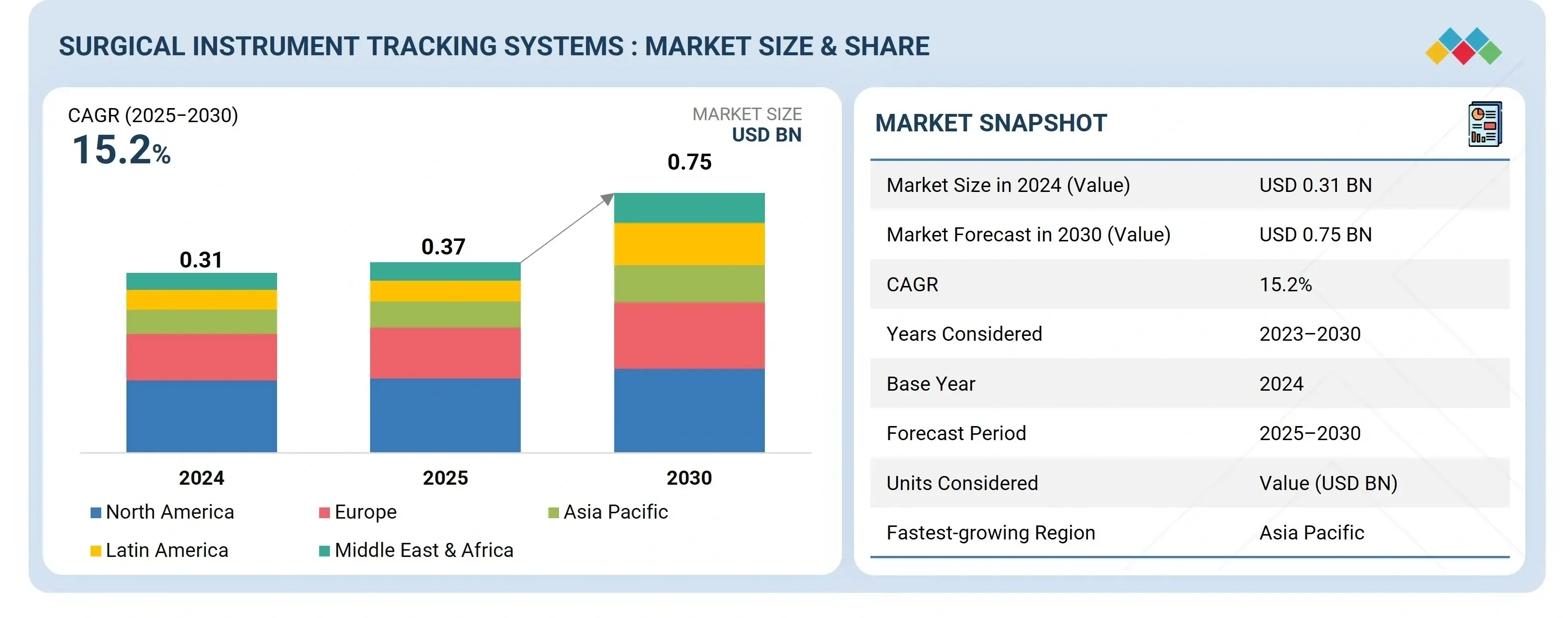
The global surgical instrument tracking system market is projected to grow from USD 371.4 million in 2025 to USD 751.2 million by 2030, at a CAGR of 15.2% during the forecast period. Market growth is being driven by the increasing need for surgical efficiency, improved inventory management, and enhanced patient safety across healthcare facilities.
Download PDF Brochure:- https://www.marketsandmarkets.com/pdfdownloadNew.asp?id=211153029
The rising incidence of hospital-acquired infections (HAIs) and stringent regulatory requirements, such as the FDA’s Unique Device Identification (UDI) mandate, are accelerating the adoption of instrument tracking systems. Healthcare providers are increasingly focusing on minimizing instrument misplacement, reducing operational inefficiencies, and ensuring compliance with sterilization and safety standards.
While high initial implementation costs and resistance to adopting new technologies may pose challenges, ongoing advancements such as AI integration and RFID miniaturization are expected to create significant growth opportunities in the coming years.
Barcode Technology Leads Market Adoption
By technology, the barcode segment accounted for the largest share of the market in 2024. Barcode-based tracking systems are widely adopted due to their cost-effectiveness, ease of implementation, and reliability across healthcare settings.
These systems enable efficient tracking of surgical instruments throughout sterilization, storage, and usage cycles, reducing manual errors and improving workflow efficiency. Their compatibility with existing hospital infrastructure and lower capital investment requirements make them a preferred choice, particularly for facilities seeking scalable and compliant solutions.
Software Segment Dominates by Component
By component, the software segment held the largest share of the market in 2024. Software solutions play a critical role in enabling real-time tracking, data management, and workflow optimization within healthcare facilities.
Advanced tracking software provides end-to-end visibility into instrument lifecycle management, including usage, maintenance, and sterilization history. This supports regulatory compliance, reduces surgical delays, and enhances operational efficiency. The growing shift toward digital healthcare systems and subscription-based software models is further driving segment growth.
Speak To Analyst:- https://www.marketsandmarkets.com/speaktoanalystNew.asp?id=211153029
North America Leads Global Market
North America accounted for the largest share of the surgical instrument tracking systems market in 2024. The region’s dominance is attributed to its advanced healthcare infrastructure, high surgical volumes, and stringent regulatory frameworks.
Healthcare providers in the US are early adopters of innovative technologies and prioritize patient safety, driving widespread implementation of tracking solutions. The presence of key market players, along with supportive government initiatives and strong reimbursement systems, further supports market growth.
Additionally, the increasing need to reduce surgical errors, streamline sterile processing workflows, and improve asset management continues to fuel demand across the region.
Competitive Landscape
Key players in the surgical instrument tracking system market include Becton, Dickinson and Company (US), B. Braun SE (Germany), Getinge AB (Sweden), STERIS (US), Securitas Healthcare LLC (US), Mobile Aspects (US), ASSA ABLOY AB (Sweden), Xerafy (Singapore), SpaTrack Medical Limited (UK), and Syrma SGS (India), among others.
These companies are focusing on technological advancements, product innovation, and strategic partnerships to enhance tracking accuracy, improve workflow efficiency, and strengthen their global market presence.