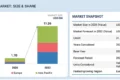
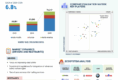
The autonomous trucks market is projected to grow from USD 50.82 billion in 2026 to USD 158.69 billion by 2035, at a CAGR of 13.5%. Market growth is being driven by the expansion of autonomous freight operations across hub-to-hub corridors, logistics hubs, ports, and distribution networks, where predictable routes and high vehicle utilization support autonomous deployment. Daimler Truck, Volvo Group, TRATON Group, PACCAR, and Hyundai Motor Company are collaborating with autonomous driving technology providers, including Aurora Innovation, Plus, Torc Robotics, Waabi, and Kodiak Robotics, for commercial deployments of Level 4 trucks for long-haul freight transportation, while also advancing Level 2 and Level 3 automated driving capabilities in production vehicles. At the same time, investments in sensor redundancy, remote fleet supervision, AI-based perception systems, and validation programs are supporting the transition from controlled pilots to revenue-generating freight operations. These developments are accelerating the adoption of autonomous trucks across commercial logistics and freight transportation networks.
By application, the last-mile delivery trucks segment is expected to account for the largest share of the autonomous trucks market during the forecast period. The segment is supported by the increasing use of autonomous trucks for scheduled freight movement between distribution centers, warehouses, and retail locations, where fixed routes and recurring operations simplify deployment. Companies are prioritizing these use cases to scale autonomous transportation in commercial logistics. In November 2025, Daimler Truck expanded the deployment of Active Brake Assist and Active Sideguard Assist across selected Mercedes-Benz Actros models in Europe. These systems provide Automatic Emergency Braking (AEB) and Blind Spot Detection (BSD) capabilities, enhancing collision avoidance and vulnerable road user protection in commercial freight operations. The development highlights the growing adoption of advanced driver assistance technologies to improve safety and support the progression toward higher levels of vehicle automation. As commercial adoption expands across retail and consumer goods distribution, last-mile delivery trucks are expected to remain the largest application segment in the autonomous trucks market.
Download PDF Brochure @ https://www.marketsandmarkets.com/pdfdownloadNew.asp?id=87328844
By level of autonomy, the L4 (level 4) segment is expected to witness the fastest growth during the forecast period. Growth in this segment is driven by increasing investments in autonomous highway freight solutions and the shift from testing to planned commercial deployment. Truck manufacturers are integrating L4 technology into production platforms to support hub-to-hub transportation, where defined operating conditions enable autonomous driving with minimal human intervention. In January 2026, TRATON Group (Germany) and PlusAI (US) expanded their global partnership to accelerate the development and commercialization of L4 autonomous trucks for highway operations in the US and Europe. The collaboration includes factory integration of autonomous driving technology across TRATON’s truck brands and supports future large-scale deployment. Such initiatives are expected to accelerate the adoption of L4 autonomous trucks and drive the segment’s growth during the forecast period.
By sensor type, the LiDAR segment is expected to account for the largest share of the autonomous trucks market during the forecast period. LiDAR is widely used in commercial vehicles to support object detection, environmental mapping, lane positioning, and obstacle recognition. Its adoption is increasing across Level 2, Level 3, and Level 4 truck platforms as OEMs focus on improving perception capabilities and driving performance. For example, in May 2026, Hesai Technology (China) secured a design win from a leading European OEM, resulting in an order for more than one million LiDAR units. The development highlights the growing integration of LiDAR into next-generation vehicle platforms equipped with advanced driver assistance and automated driving functions. Additionally, in September 2025, the Stark Area Regional Transit Authority (SARTA) showcased buses equipped with Perrone Robotics’ TONY/MAX platform, integrating LiDAR, lane keeping, and automated braking technologies. These deployments demonstrate the expanding use of LiDAR-enabled semi-autonomous and autonomous driving systems in commercial and public transportation vehicles.
Europe is expected to be the fastest-growing market for autonomous trucks during the forecast period. The region is witnessing increased investment in automated freight transportation, connected commercial vehicles, and autonomous public mobility programs. Growth is also supported by active participation from truck OEMs, bus manufacturers, autonomous driving technology developers, and logistics operators. For example, in January 2026, IVECO Group (Italy) and Plus (US) launched a new autonomous driving program in Spain to develop and validate autonomous heavy-duty trucks for commercial operations. In June 2026, a fully autonomous bus line was introduced in Barcelona, Spain, as part of a public mobility initiative to demonstrate autonomous transit operations in an urban environment. Such deployments highlight the region’s efforts to expand autonomous driving technologies across both freight and passenger transportation applications. As autonomous truck and bus programs continue to scale across Europe, the region is expected to register the highest growth in the autonomous trucks market during the forecast period.
Request Free Sample Report @ https://www.marketsandmarkets.com/requestsampleNew.asp?id=87328844