The semiconductor industry is undergoing a major transformation as companies move beyond traditional monolithic chip designs and adopt modular architectures to meet growing performance demands. Increasing complexity in chip development, rising manufacturing costs, and limitations in conventional transistor scaling are encouraging semiconductor manufacturers to explore more flexible solutions. Among these innovations, chiplet technology has emerged as a critical approach for designing high-performance processors and advanced computing systems.
The Chiplet Market Growth is accelerating as organizations across industries adopt chiplet-based architectures to improve scalability, reduce development timelines, and optimize semiconductor performance. Unlike conventional chips built on a single large silicon die, chiplets allow manufacturers to combine multiple smaller dies with specialized functions into one advanced package. This modular approach enables companies to develop customized solutions for artificial intelligence (AI), cloud computing, automotive electronics, consumer devices, and high-performance computing applications.
As demand for faster and more energy-efficient computing continues to increase, chiplet technology is becoming a strategic solution for overcoming semiconductor industry challenges while enabling next-generation electronic systems.
Understanding Chiplet Technology and Modular Semiconductor Design
Chiplet technology refers to the use of multiple smaller semiconductor dies, each designed for specific functions, that are integrated into a single package to operate as a complete system. Instead of designing a large and complex system-on-chip (SoC), semiconductor companies can develop individual chiplets for computing, memory, connectivity, graphics, artificial intelligence acceleration, or input/output functions.
This modular architecture provides greater flexibility compared with traditional chip designs. Manufacturers can reuse existing chiplet designs, combine different technologies, and create customized processors based on application requirements. For example, a company can pair a high-performance computing chiplet with a specialized AI accelerator and advanced memory chiplet to create a processor optimized for artificial intelligence workloads.
The ability to mix and match functional components is one of the primary reasons why the Chiplet Market Growth is gaining momentum across the semiconductor ecosystem.
Rising Demand for AI and High-Performance Computing
One of the strongest factors driving Chiplet Market Growth is the rapid expansion of artificial intelligence and high-performance computing applications. Modern AI models, including generative AI systems, require enormous computing power, advanced memory capabilities, and efficient data processing architectures.
Traditional chip designs often struggle to meet these requirements because increasing chip size leads to higher costs, manufacturing challenges, and lower production yields. Chiplet architectures provide a more efficient approach by allowing manufacturers to integrate specialized processing units designed specifically for AI workloads.
AI-focused chiplet solutions can combine multiple technologies, including:
- AI acceleration units
- Graphics processing components
- High-bandwidth memory modules
- Networking and communication chiplets
This flexibility enables semiconductor companies to develop powerful computing platforms capable of handling complex AI workloads while improving energy efficiency.
Download PDF Brochure @ https://www.marketsandmarkets.com/pdfdownloadNew.asp?id=131809383
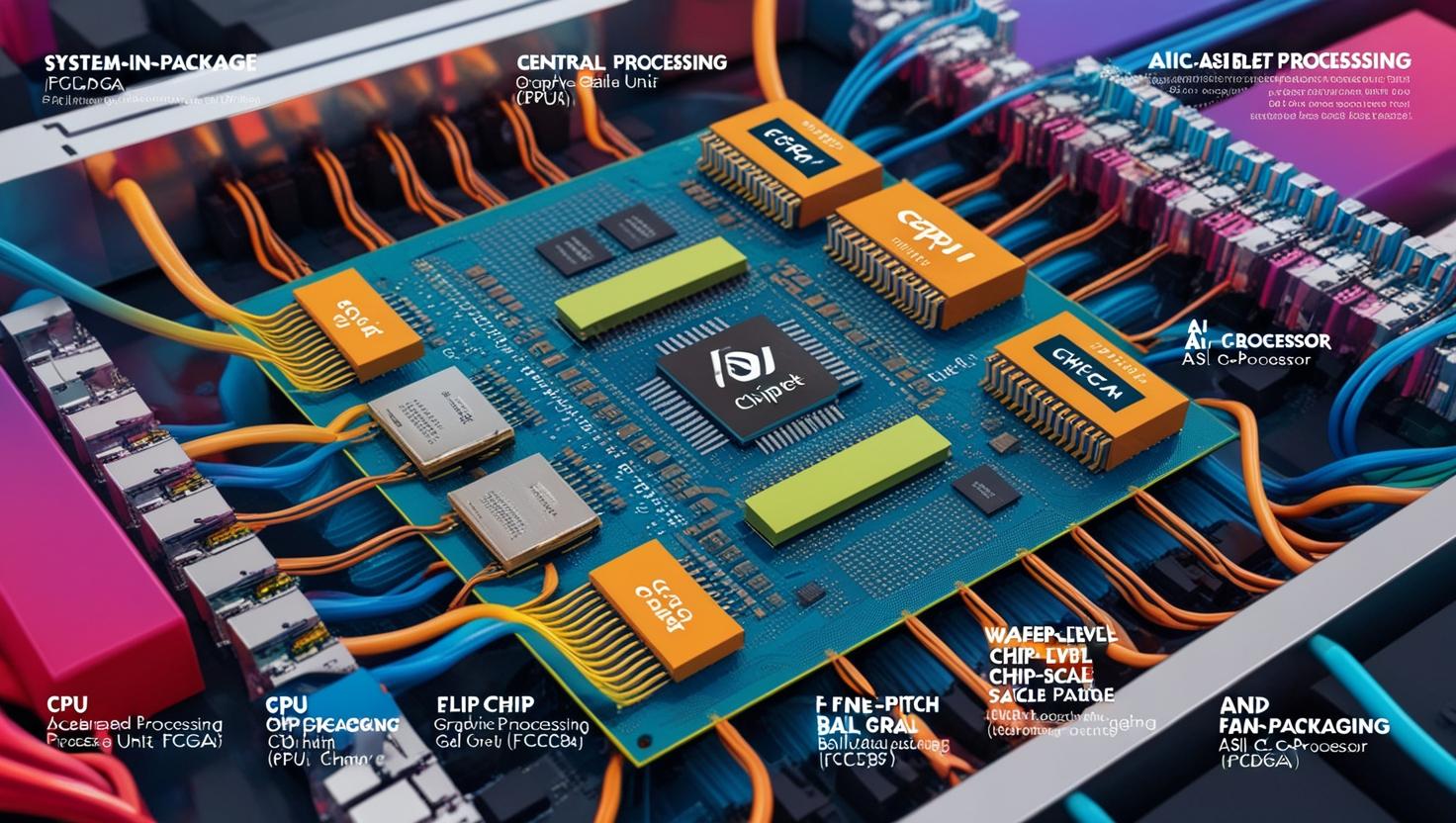
Overcoming Challenges of Traditional Semiconductor Scaling
For several decades, semiconductor advancement depended primarily on shrinking transistor sizes. However, continued miniaturization has become increasingly challenging due to rising fabrication costs, engineering complexity, and physical limitations.
Chiplet technology provides an alternative path by shifting innovation from simply making larger chips to creating more intelligent combinations of smaller components.
The benefits of chiplet-based designs include:
- Improved manufacturing yield
- Reduced development costs
- Faster product customization
- Greater design flexibility
- Integration of multiple process technologies
By separating a complex processor into smaller functional blocks, manufacturers can produce individual chiplets more efficiently and integrate them into advanced systems.
This capability is becoming a major factor supporting the long-term expansion of the chiplet industry.
Advanced Packaging Technologies Fueling Chiplet Adoption
The success of chiplet architectures depends heavily on advancements in semiconductor packaging technologies. Unlike traditional packaging methods, chiplet-based systems require highly sophisticated solutions that enable fast communication between multiple dies.
Advanced packaging technologies supporting chiplet adoption include:
- 2.5D packaging
- 3D chip stacking
- Through-silicon vias (TSVs)
- Advanced interconnect technologies
- High-density packaging platforms
These technologies allow chiplets to function together as a unified system while maintaining high performance and reducing communication delays.
As semiconductor companies continue investing in advanced packaging capabilities, chiplet-based processors are becoming increasingly practical for commercial applications
Role of Open Standards in Expanding the Chiplet Ecosystem
A major development influencing Chiplet Market Growth is the emergence of open chiplet standards. Previously, chiplet solutions were often developed using proprietary technologies, limiting compatibility between components from different suppliers.
Open standards allow chiplets from multiple vendors to communicate effectively, creating a broader and more flexible semiconductor ecosystem.
The advantages of standardized chiplet interfaces include:
- Faster product development
- Increased supplier collaboration
- Reduced design complexity
- Greater innovation opportunities
A stronger chiplet ecosystem will allow companies to source specialized components from different suppliers and create customized semiconductor solutions more efficiently.
Applications Driving Chiplet Market Growth
Data Centers and Cloud Computing
The expansion of cloud computing and AI-driven data centers is creating significant demand for chiplet-based processors. Data centers require powerful computing infrastructure capable of managing massive volumes of information while maintaining energy efficiency.
Chiplets enable data center operators to deploy processors optimized for specific workloads such as:
- Artificial intelligence processing
- Cloud applications
- Big data analytics
- High-performance simulations
By combining specialized computing and memory components, chiplet architectures help improve processing capabilities while reducing power consumption.
Artificial Intelligence and Machine Learning Systems
AI applications are among the biggest beneficiaries of chiplet technology. Machine learning models require specialized hardware capable of handling complex calculations efficiently.
Chiplet-based AI processors allow manufacturers to integrate:
- Dedicated AI accelerators
- Memory chiplets
- High-speed communication modules
- Processing cores
This modular approach enables faster innovation because companies can upgrade individual components without redesigning the entire chip.
The continued growth of AI applications is expected to remain a major contributor to the expansion of the chiplet market.
Automotive Electronics and Autonomous Vehicles
The automotive industry is increasingly adopting advanced semiconductor solutions due to the growth of electric vehicles, autonomous driving, and connected vehicle technologies.
Modern vehicles require powerful processors for:
- Autonomous navigation
- Advanced driver assistance systems (ADAS)
- Vehicle connectivity
- Real-time data processing
Chiplet architectures provide automotive manufacturers with scalable computing platforms that can support increasingly complex vehicle functions.
As vehicles become more software-driven, demand for flexible semiconductor solutions is expected to increase.
Consumer Electronics
Consumer electronics manufacturers are also exploring chiplet architectures to improve device performance and efficiency.
Applications include:
- Smartphones
- Gaming systems
- Wearable devices
- Smart home products
Chiplets allow manufacturers to create customized processors that balance performance, power consumption, and cost.
Emerging Trends Shaping the Chiplet Market
Growth of 3D Chiplet Integration
Three-dimensional integration is becoming a key trend in chiplet development. By stacking multiple chiplets vertically, manufacturers can achieve higher computing density while reducing physical space requirements.
3D chiplet integration improves:
- Processing speed
- Memory bandwidth
- Energy efficiency
- System performance
This technology is particularly important for AI and high-performance computing applications.
Increasing Demand for Customized Processors
Different industries require specialized computing solutions, and chiplets provide the flexibility needed to address these unique requirements.
Instead of creating one universal processor, manufacturers can develop application-specific systems by combining different chiplets.
This approach supports innovation in areas such as:
- AI computing
- Automotive systems
- Edge devices
- Industrial automation
Heterogeneous Integration of Multiple Technologies
One of the biggest advantages of chiplets is the ability to integrate different semiconductor technologies into a single package.
Manufacturers can combine:
- Advanced logic chips
- Memory components
- Analog circuits
- Communication modules
This heterogeneous integration enables better performance and allows companies to optimize each component independently.
Challenges Impacting Chiplet Adoption
Although chiplet technology offers significant advantages, several challenges remain.
Design Complexity
Developing chiplet-based systems requires advanced engineering capabilities to ensure compatibility between different components.
Challenges include:
- Thermal management
- Data communication
- System reliability
- Software optimization
High Packaging Requirements
Advanced chiplet systems require sophisticated packaging technologies, which can increase manufacturing complexity and investment requirements.
Companies must develop specialized production capabilities to support large-scale chiplet manufacturing.
Supply Chain Coordination
A chiplet ecosystem involves multiple suppliers providing different components. Managing quality, compatibility, and production coordination can be challenging.
However, increasing industry collaboration and standardization efforts are expected to address these limitations.
Future Outlook of Chiplet Market Growth
The future of the Chiplet Market Growth is closely connected to the evolution of AI, cloud computing, automotive technologies, and advanced electronics. As semiconductor manufacturers continue searching for alternatives to traditional scaling methods, chiplet architectures will become increasingly important.
Future developments are expected to focus on:
- Advanced 3D packaging
- AI-optimized chiplets
- Open chiplet ecosystems
- Energy-efficient computing solutions
- Increased adoption across industries
The shift toward modular semiconductor architectures represents a fundamental change in chip design philosophy. By enabling flexible, scalable, and cost-efficient solutions, chiplets are expected to become a cornerstone technology for future computing systems.
The Chiplet Market Growth is accelerating as the semiconductor industry embraces modular architectures to overcome traditional chip design limitations. By allowing manufacturers to combine specialized components into advanced packages, chiplets provide a flexible solution for developing high-performance and customized semiconductor systems.
Driven by artificial intelligence, data centers, automotive innovation, and next-generation computing demands, chiplet technology is reshaping the future of semiconductor manufacturing. As advanced packaging technologies mature and industry standards improve, chiplets are expected to play a central role in enabling faster, smarter, and more efficient electronic systems.
