Rail transportation is entering a new era of digital transformation, where connectivity, automation, and real-time intelligence are reshaping railway operations. As governments and transportation authorities modernize aging rail infrastructure, the Digital Railway Market is emerging as a critical driver of safer, smarter, and more efficient mobility.
Unlike conventional railway systems that relied on manual operations and standalone control systems, today’s digital rail networks integrate Artificial Intelligence (AI), the Internet of Things (IoT), cloud computing, edge computing, advanced communication networks, and predictive analytics into a unified ecosystem. These technologies improve operational efficiency, enhance passenger experiences, optimize asset utilization, and strengthen railway safety.
As investments in high-speed rail, metro systems, freight corridors, and smart city initiatives continue to rise, technological innovation is accelerating Digital Railway Market growth across global transportation networks.
History of Digital Railway Evolution
The railway industry has experienced remarkable transformation over the past century.
Traditional Railway Era
Early railway operations relied on manual signaling, mechanical switches, paper-based scheduling, and human supervision. Although effective during their time, these systems were often constrained by operational inefficiencies and safety challenges.
Electrification and Automation
The adoption of electronic signaling, centralized traffic control, and automated train protection significantly enhanced operational reliability and passenger safety. Railway operators also introduced computerized scheduling systems to improve operational efficiency.
The Digital Transformation Era
Today, railways are evolving into intelligent transportation ecosystems powered by AI, IoT, cloud platforms, edge computing, and real-time analytics. These technological advancements are shaping the Digital Railway Market outlook, enabling predictive maintenance, autonomous operations, and highly connected railway infrastructure.
Market research indicates strong trends Download the PDF to uncover business insights.
Current State of Digital Railway Architecture
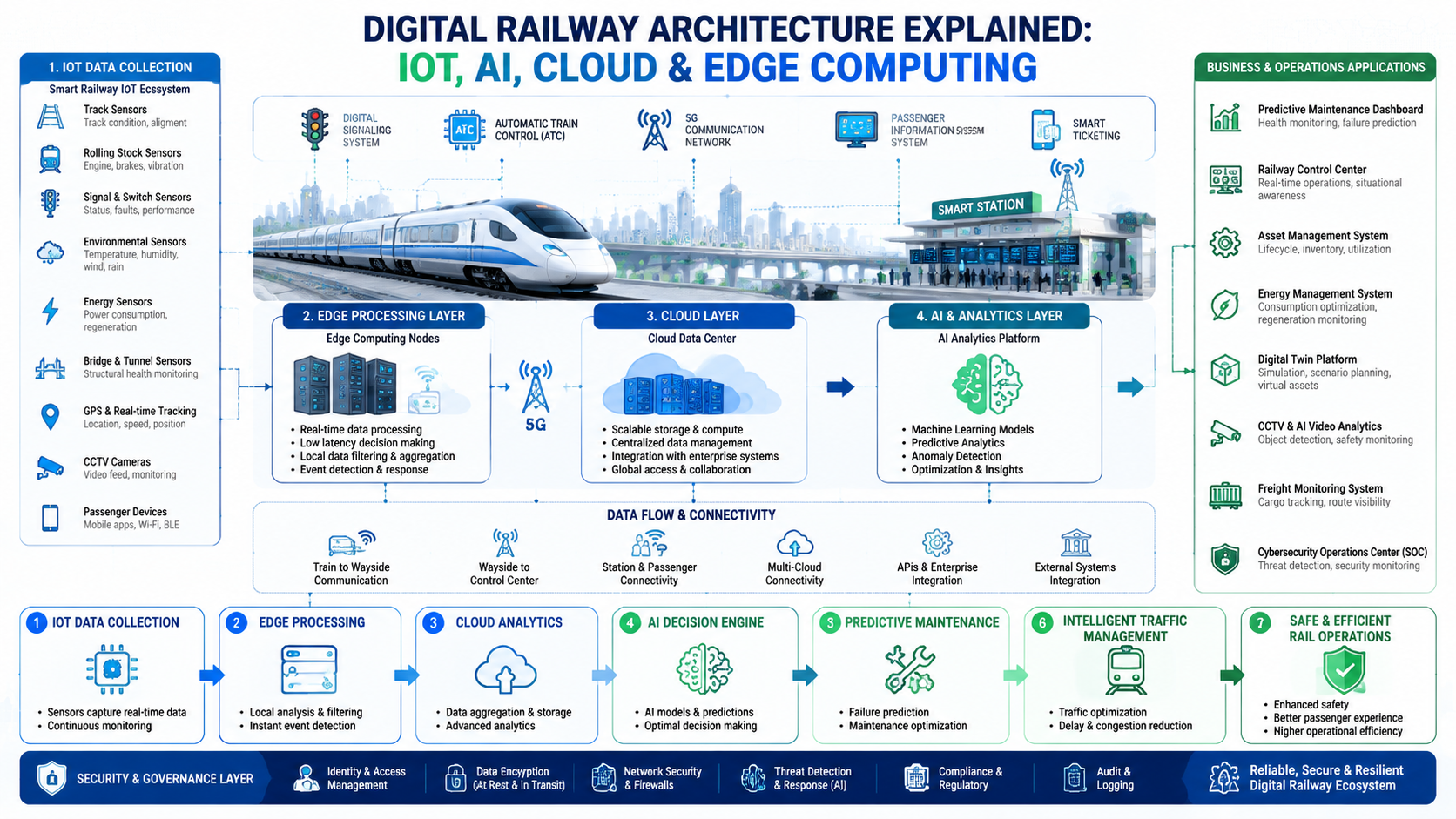
Modern digital railway ecosystems integrate multiple technologies into a centralized, data-driven operating platform.
Core architectural layers include:
- Smart railway sensors
- IoT-enabled infrastructure
- AI-powered analytics
- Edge computing gateways
- Cloud data platforms
- Railway communication networks
- Digital signaling systems
- Passenger information systems
- Asset management platforms
- Cybersecurity frameworks
This integrated architecture enables continuous monitoring, faster decision-making, and greater operational resilience across railway networks.
This Sample Report is designed to fuel your business growth download it today.
Core Components of Digital Railway Architecture
A digital railway comprises interconnected technologies that work together to optimize railway operations.
IoT Sensors
Connected sensors continuously monitor:
- Track conditions
- Rolling stock health
- Signal equipment
- Bridges and tunnels
- Environmental conditions
- Energy consumption
These sensors generate real-time operational data that supports predictive analytics and proactive maintenance.
Artificial Intelligence
AI enhances railway operations by:
- Predicting equipment failures
- Optimizing train schedules
- Identifying safety risks
- Managing traffic congestion
- Supporting autonomous operations
AI significantly improves operational efficiency while minimizing service disruptions.
Cloud Computing
Cloud platforms support:
- Centralized data storage
- Fleet management
- Passenger analytics
- Enterprise asset management
- Operational dashboards
- Multi-site coordination
Cloud computing enables scalable infrastructure and enterprise-wide collaboration.
Edge Computing
Edge computing processes data closer to railway assets, reducing latency for:
- Signal control
- Autonomous train operations
- Video analytics
- Safety monitoring
- Emergency response
This architecture enables real-time decision-making, even in remote operating environments.
How AI, IoT, Cloud & Edge Computing Work Together
Modern digital railways depend on the seamless integration of intelligent technologies.
A typical workflow includes:
- IoT sensors capture real-time operational data.
- Edge devices process latency-sensitive information locally.
- Cloud platforms consolidate enterprise-wide operational data.
- AI models analyze patterns and predict potential failures.
- Control centers optimize railway operations in real time.
- Maintenance teams receive automated alerts and recommendations.
- Passengers benefit from safer, more reliable, and efficient services.
This intelligent workflow forms the foundation of the Digital Railway Market analysis, enabling railway operators to improve safety, operational efficiency, and service quality.
Key Technologies Transforming the Digital Railway Market
Several emerging technologies are accelerating the evolution of digital railway infrastructure.
Predictive Maintenance
AI continuously monitors equipment health to identify potential failures before they occur, reducing downtime and maintenance costs.
Intelligent Signaling Systems
Digital signaling enhances train separation, increases network capacity, and strengthens operational safety.
Autonomous Train Operations
AI-enabled train control supports automated acceleration, braking, routing, and speed optimization.
Digital Twins
Digital replicas of railway assets enable operators to simulate infrastructure performance, assess upgrades, and optimize maintenance planning.
5G Connectivity
High-speed, low-latency communication enables real-time monitoring, connected trains, and seamless coordination across railway networks.
Cybersecurity
Modern digital railways implement identity management, encryption, network monitoring, and AI-driven threat detection to safeguard critical infrastructure.
These innovations continue to expand the Digital Railway Market size as operators invest in intelligent transportation systems.
Industry Applications Across Modern Rail Networks
Digital railway technologies are transforming multiple transportation sectors.
High-Speed Rail
AI enhances scheduling, passenger flow management, and predictive maintenance across high-speed rail networks.
Metro Systems
Urban transit operators leverage IoT and automation to improve punctuality, minimize congestion, and enhance passenger safety.
Freight Rail
Smart logistics platforms enable real-time cargo tracking, route optimization, and fleet management.
Passenger Rail
Digital ticketing, personalized travel information, and AI-powered customer support significantly improve the passenger experience.
Smart Cities
Digital railway systems integrate with urban mobility platforms, supporting multimodal transportation and sustainable city development.
These applications continue to strengthen the Digital Railway Market share across global transportation infrastructure.
Challenges and Future Opportunities
Despite rapid technological advancement, several challenges remain.
Railway operators continue addressing:
- Legacy infrastructure integration
- Cybersecurity risks
- High deployment costs
- Regulatory compliance
- Workforce digital skill development
- Data interoperability
At the same time, these challenges create substantial opportunities for technology providers delivering scalable and intelligent digital railway solutions.
Future Outlook of the Digital Railway Market
The future of rail transportation will be defined by intelligent automation and connected infrastructure.
Key investment priorities include:
- AI-powered traffic management
- Autonomous train operations
- Edge AI platforms
- Predictive maintenance ecosystems
- Digital twin technology
- Smart station management
- Cloud-native railway platforms
- Green railway technologies
- Integrated mobility ecosystems
- 5G-enabled connected rail networks
These advancements are expected to shape the Digital Railway Market forecast, creating long-term opportunities for railway operators, infrastructure providers, cloud service providers, telecom companies, and technology vendors.
As sustainability and digital transformation become strategic priorities, demand for intelligent railway ecosystems is expected to accelerate worldwide.
The railway industry is transitioning from conventional transportation infrastructure to a fully connected digital ecosystem powered by AI, IoT, cloud computing, and edge intelligence. These technologies enable real-time monitoring, predictive maintenance, intelligent traffic management, and enhanced passenger experiences while improving operational efficiency and network resilience.
As governments and railway operators continue to accelerate modernization initiatives, investments in digital infrastructure will drive innovation across high-speed rail, metro systems, freight transportation, and smart city ecosystems. Organizations that embrace intelligent railway technologies will be well positioned to enhance safety, optimize operations, and support long-term sustainable mobility.
The Digital Railway Market is expected to experience sustained growth as digital transformation reshapes the future of rail transportation. Organizations that invest early in connected, AI-driven railway architectures will be strategically positioned to capitalize on the next generation of intelligent mobility solutions.