Data Center Chip Market Trends
The rapid expansion of artificial intelligence (AI), cloud computing, big data analytics, and high-performance computing (HPC) is reshaping the global digital infrastructure landscape. At the center of this transformation are advanced semiconductor technologies that enable faster processing, higher efficiency, and scalable computing capabilities. The Data Center Chip Market Trends are evolving rapidly as enterprises, cloud service providers, and hyperscale data center operators invest in next-generation processors designed to support increasingly complex workloads.
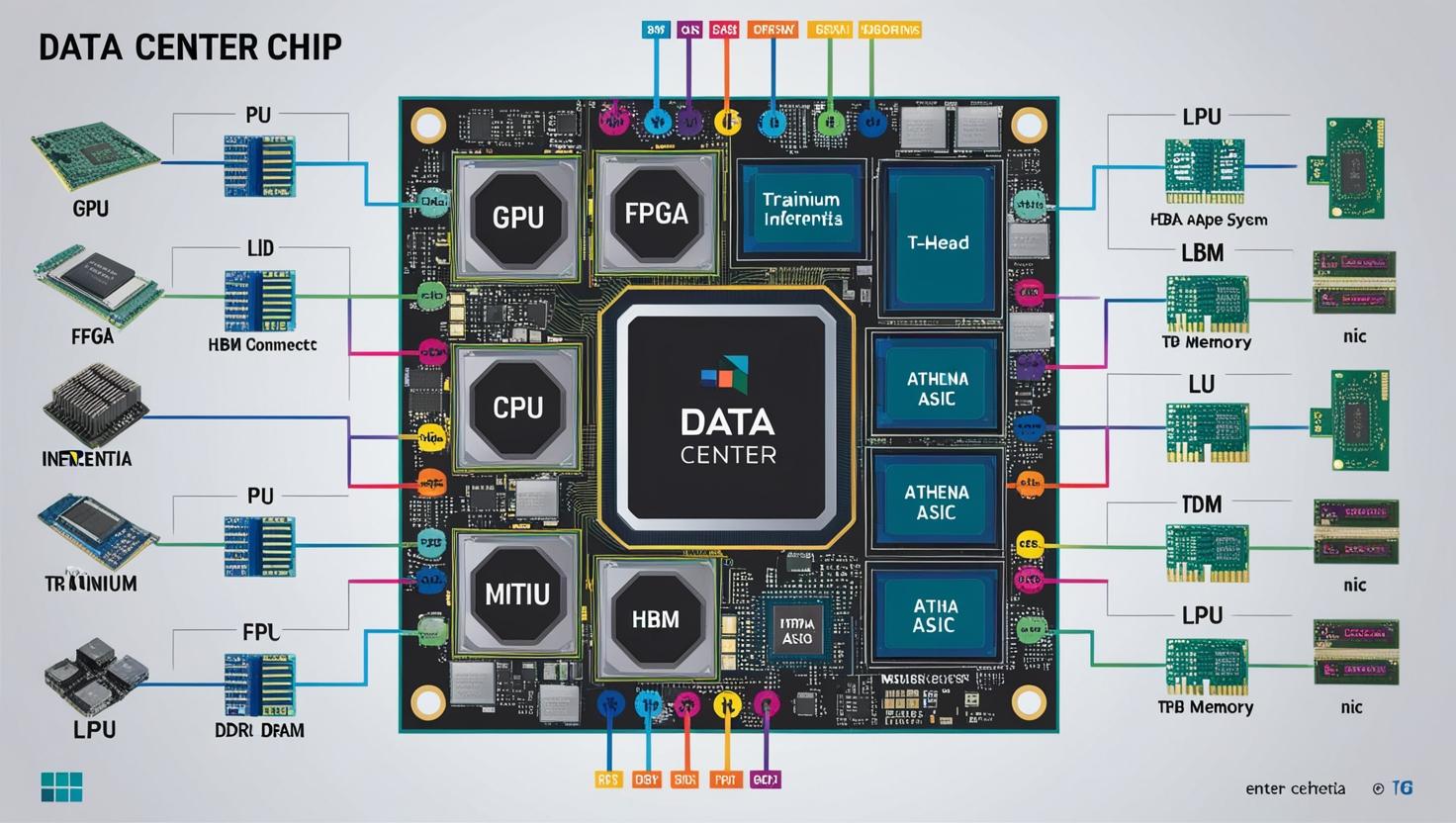
Modern data centers are no longer focused only on traditional computing tasks. The rise of generative AI, large language models (LLMs), real-time analytics, and accelerated computing has created demand for specialized chips, including GPUs, CPUs, AI accelerators, custom ASICs, networking chips, and advanced memory solutions. These innovations are driving the shift toward more powerful and energy-efficient data center architectures.
The Data Center Chip Market Trends highlight a transition from general-purpose processors toward highly optimized semiconductor solutions capable of handling massive AI workloads while reducing power consumption and improving operational efficiency. Data Center Chip Market is expected to reach USD 687.65 billion by 2032 from USD 283.16 billion in 2026, registering a CAGR of 15.9% during the forecast period
Key Takeaways: Data Center Chip Market Trends
- AI and generative AI workloads are accelerating demand for advanced data center chips.
- GPUs, AI accelerators, custom ASICs, and high-performance CPUs are becoming essential components of modern data centers.
- Hyperscale cloud providers are investing heavily in custom silicon solutions to optimize performance and efficiency.
- High Bandwidth Memory (HBM) is emerging as a critical technology for AI computing infrastructure.
- Advanced packaging technologies such as 2.5D and 3D integration are improving chip performance.
- Networking chips and high-speed interconnects are becoming increasingly important for AI cluster scalability.
- Energy efficiency and thermal management are major priorities for next-generation data center designs.
- Edge computing adoption is creating new opportunities for specialized data center processors.
- Semiconductor innovation is becoming a key competitive factor in AI infrastructure development.
- The future of data centers will depend on intelligent, scalable, and workload-optimized chip architectures.
Understanding the Data Center Chip Market
Data center chips are specialized semiconductor components designed to support computing, storage, networking, and AI processing within data center environments. These chips form the foundation of digital infrastructure by enabling servers to process, analyze, and transfer enormous volumes of data.
Major categories of data center chips include:
- Central Processing Units (CPUs)
- Graphics Processing Units (GPUs)
- AI Accelerators
- Application-Specific Integrated Circuits (ASICs)
- Field-Programmable Gate Arrays (FPGAs)
- Networking processors
- Memory chips
The growing complexity of workloads is pushing organizations to adopt diverse chip architectures instead of relying only on traditional processors.
Download PDF Brochure @ https://www.marketsandmarkets.com/pdfdownloadNew.asp?id=39999570
AI Workloads Driving Data Center Chip Market Trends
One of the strongest drivers influencing the Data Center Chip Market Trends is the rapid adoption of artificial intelligence.
Generative AI applications require enormous computing power for:
- Model training
- Inference processing
- Data analysis
- Real-time decision-making
Traditional processors are often unable to deliver the performance required for advanced AI workloads. As a result, data center operators are increasingly deploying specialized AI chips optimized for parallel processing and accelerated computing.
AI-focused processors provide:
- Higher computational performance
- Improved energy efficiency
- Faster AI model execution
- Reduced processing latency
The increasing deployment of AI applications across industries such as healthcare, finance, automotive, and manufacturing is expected to continue driving demand for advanced data center chips.
GPUs Becoming a Core Component of AI Infrastructure
Graphics Processing Units (GPUs) have become one of the most important technologies shaping the future of data centers.
Originally designed for graphics processing, GPUs are now widely used for AI and machine learning because of their ability to perform large numbers of parallel calculations simultaneously.
Modern data centers use GPUs for:
- AI model training
- Deep learning workloads
- Scientific simulations
- High-performance computing
The increasing demand for AI services has accelerated investments in GPU-based data center infrastructure, making GPUs a central element of emerging Data Center Chip Market Trends.
Growth of Custom AI Chips and ASICs
Another major trend transforming the market is the increasing adoption of custom silicon.
Cloud providers and technology companies are developing application-specific chips to optimize workloads and reduce dependence on general-purpose processors.
Custom ASICs provide:
- Improved performance per watt
- Lower operational costs
- Workload-specific optimization
- Enhanced scalability
Hyperscale companies are investing in custom AI accelerators to support internal AI platforms, cloud services, and large-scale machine learning applications.
This shift toward specialized processors represents a significant evolution in data center architecture.
High Bandwidth Memory (HBM) Supporting AI Computing
Memory technology is becoming increasingly important as AI models grow larger and require faster data access.
High Bandwidth Memory (HBM) is emerging as a critical component in AI-powered data centers due to its ability to provide:
- Extremely high memory bandwidth
- Lower power consumption
- Faster data transfer
- Improved AI accelerator performance
HBM integration with advanced processors is helping overcome memory bottlenecks in AI workloads.
As AI systems continue becoming more complex, demand for advanced memory solutions will remain a key factor influencing Data Center Chip Market Trends.
Advanced Packaging Technologies Transforming Chip Design
The semiconductor industry is adopting advanced packaging technologies to improve performance and overcome limitations associated with traditional chip scaling.
Key technologies include:
- 2.5D packaging
- 3D chip integration
- Chiplet architectures
- Advanced interconnect technologies
These approaches allow multiple chip components to be combined into high-performance systems.
Advanced packaging helps improve:
- Computing efficiency
- Data transfer speed
- Thermal management
- Design flexibility
The adoption of chiplet-based designs is expected to become increasingly important as data center workloads continue expanding.
Networking Chips Enabling AI Data Centers
Modern AI workloads require massive data movement between processors, memory systems, and storage platforms.
High-speed networking solutions are becoming essential for large-scale AI clusters.
Important networking components include:
- Network interface controllers (NICs)
- Smart NICs
- Data processing units (DPUs)
- High-speed interconnects
These technologies improve communication between computing resources and enable efficient distributed AI processing.
As AI data centers become larger and more complex, networking chips will play a critical role in future infrastructure development.
Energy Efficiency Becomes a Key Market Priority
Data centers consume significant amounts of electricity, making energy efficiency a major focus for operators.
Advanced data center chips help address energy challenges through:
- Better performance per watt
- Optimized architectures
- Lower thermal output
- Intelligent workload management
The growing emphasis on sustainable computing is encouraging semiconductor companies to develop processors that deliver higher performance while reducing energy consumption.
Energy-efficient chip designs will remain one of the most important factors shaping future Data Center Chip Market Trends.
Edge Computing Creating New Opportunities
While hyperscale data centers remain a major market driver, edge computing is creating additional opportunities for specialized processors.
Edge data centers require chips capable of:
- Real-time processing
- Low-latency responses
- Local AI inference
- Efficient power usage
Applications such as autonomous vehicles, industrial automation, smart cities, and IoT systems are increasing demand for edge-optimized computing solutions.
Challenges Affecting the Data Center Chip Market
Despite strong growth opportunities, several challenges influence market development.
High Semiconductor Manufacturing Costs
Developing advanced processors requires significant investment in:
- Research and development
- Semiconductor fabrication
- Packaging technologies
Supply Chain Constraints
The semiconductor industry continues to face challenges related to:
- Manufacturing capacity
- Advanced node availability
- Component shortages
Thermal Management Issues
Higher-performance chips generate more heat, requiring advanced cooling technologies and efficient data center designs.
Addressing these challenges will be critical for sustaining future market growth.
Future Outlook of Data Center Chip Market Trends
The future of the Data Center Chip Market Trends will be shaped by continued innovation in AI, semiconductor design, and computing architectures.
Future developments are expected to include:
- More powerful AI accelerators
- Advanced chiplet-based architectures
- Greater adoption of HBM technology
- Energy-efficient processors
- AI-optimized networking solutions
- Increased use of custom silicon
As digital workloads continue expanding, next-generation data center chips will become essential for supporting the global AI economy.
The Data Center Chip Market Trends reflect a fundamental transformation in how modern computing infrastructure is designed and operated. Advanced processors, AI accelerators, custom ASICs, high-bandwidth memory, and next-generation networking technologies are enabling data centers to handle increasingly demanding workloads.
Driven by artificial intelligence, cloud expansion, and digital transformation, the demand for high-performance and energy-efficient chips will continue to rise. As organizations build the next generation of intelligent data centers, advanced semiconductor technologies will remain at the core of global computing innovation.
