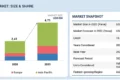
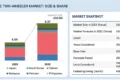
The EV charging cable market is projected to grow from USD 2.01 billion in 2026 to USD 5.63 billion by 2033, at a CAGR of 15.8%.
OEMs are increasingly transitioning toward high-voltage vehicle architectures to enable shorter charging durations, higher energy transfer efficiency, and improved vehicle range, accelerating investments across the charging value chain. At the same time, charging infrastructure deployment is evolving from an early adoption phase to a scale-up phase, creating sustained demand for reliable and cost-effective charging solutions. The expansion of EV production, increasing installation of residential and destination charging infrastructure, and growing preference for overnight and workplace charging are reinforcing the demand outlook for normal charging cables. In addition, the rising participation of utilities, real estate developers, fleet operators, and commercial establishments in deploying charging assets is expanding the installed base of AC charging points, positioning normal charging cables as a critical component supporting large-scale EV infrastructure build-out and long-term recurring replacement demand.
By cable type, normal charging cables are closely tied to the accelerating deployment of AC charging infrastructure by OEMs, charge point operators (CPOs), startups, utilities, and private businesses aiming to monetize the expanding EV ecosystem. As normal charging cables are predominantly used in residential, workplace, destination, and semi-public charging applications, the increasing installation of charging points across apartments, offices, retail centers, hospitality venues, and parking facilities is expected to sustain strong volume demand. Compared with DC fast charging, AC charging infrastructure requires lower capital investment, easier grid integration, and is better suited for long-duration parking scenarios, encouraging wider adoption by commercial property owners, fleet operators, and real estate developers. This growing business case for public, semi-public, and private charging deployment is expected to directly support cable consumption. For instance, in 2026, the Iberdrola–bp pulse joint venture announced investments of approximately USD 110 million to expand its EV charging network across European countries, targeting more than 2,200 charging points and reinforcing demand for AC charging infrastructure. Similarly, in 2025, IONITY accelerated its destination charging strategy through partnerships with hospitality and commercial establishments, expanding AC charging availability at hotels and leisure destinations across Europe. Additionally, Tesla strengthened its Destination Charging program, with more than 50,000 Wall Connectors deployed globally across hotels, restaurants, office buildings, and retail locations, highlighting the growing business opportunity for public, semi-public, and private stakeholders to install charging points and consequently drive demand for normal charging cables.
Download PDF Brochure @ https://www.marketsandmarkets.com/pdfdownloadNew.asp?id=71981137
Public charging represents the fastest-growing application in the EV charging cable market, supported by rising EV adoption, large-scale investments in charging infrastructure, and government initiatives aimed at improving charging accessibility. The number of publicly accessible charging points is expanding rapidly, creating sustained demand for charging cables across highway corridors, urban fast-charging hubs, fleet depots, and destination charging networks. According to industry estimates, Europe crossed 1 million public charging points in 2024, compared with around 900,000 in 2023, while the European Union targets 3.5 million charging points by 2030 under its broader electrification agenda. The growing deployment of ultra-fast charging systems, increasing electrification of commercial fleets, and evolving interoperability requirements are further strengthening demand for advanced charging cables. For instance, in January 2025, Electra secured around USD 304 million in Series B financing to accelerate the deployment of thousands of fast-charging points across Europe, signaling capital inflows into public charging infrastructure. In April 2025, Fastned reported operating more than 350 charging stations across Europe, reflecting the steady expansion of high-traffic public charging sites in core markets. In May 2025, Milence confirmed plans to deploy 1,700 public charging points for heavy-duty trucks across Europe by 2027, underscoring the growing electrification of freight corridors and depot-linked charging networks.
Europe EV charging cable market is supported by high EV adoption rates, stringent decarbonization targets, extensive charging infrastructure deployment, and a mature automotive manufacturing ecosystem. Investments in public and private charging networks, coupled with increasing adoption of smart charging and vehicle-to-grid technologies, are sustaining demand for charging cables across residential, commercial, and public applications. The region’s strong supplier base and emphasis on localized EV supply chains further strengthen its position in the market. For instance, in 2025, Milence, the joint venture established by Daimler Truck, TRATON Group, and Volvo Group, accelerated the deployment of charging hubs for heavy-duty electric vehicles across key European freight corridors, supporting the expansion of high-capacity charging infrastructure. In 2025, Fastned announced network expansion across multiple European countries, including Germany, France, Italy, and Spain, increasing the number of charging stations to address growing EV adoption. Additionally, in 2026, Kempower expanded its manufacturing capabilities in Europe and introduced higher-power charging solutions to support the region’s increasing demand for scalable charging infrastructure, creating incremental opportunities for EV charging cable suppliers serving both AC and DC charging applications.
Key Players
The prominent players in the EV charging cable market include TE Connectivity (Switzerland), LEONI AG (Germany), Aptiv PLC (Ireland), Yazaki Corporation (Japan), and Prysmian Group (Italy). The market share was derived by considering a certain percentage of the segmental revenue for each of the companies mentioned above, along with their growth strategies and new products. These companies also offer extensive solutions in the EV charging cable industry.
Request Free Sample Report @ https://www.marketsandmarkets.com/requestsampleNew.asp?id=71981137