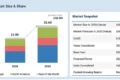
The global Industrial Vehicles Market size is projected to grow from USD 54.41 billion in 2026 to USD 91.44 billion by 2035, at a CAGR of 5.9%.
The global Industrial Vehicles Market is experiencing steady growth.
Consequently, industries increasingly invest in warehouse automation and smart manufacturing.
Moreover, the rapid expansion of e-commerce, distribution centers, logistics hubs, and manufacturing facilities has increased demand for industrial vehicles.
Additionally, electrification, automation, and connected fleet technologies transform the vehicle landscape.
Industrial Vehicles Industry Overview
Industrial vehicles are specialized machines designed to transport, lift, stack, tow, and handle materials across warehouses, manufacturing plants, logistics centers, ports, airports, and industrial facilities. The market includes forklifts, aisle trucks, tow tractors, container handlers, pallet trucks, reach trucks, and automated guided vehicles (AGVs), each serving different material handling applications.
Modern industrial vehicles integrate electric drivetrains, telematics, IoT connectivity, fleet management software, autonomous navigation systems, and AI-powered diagnostics to improve productivity, workplace safety, and operational efficiency. As Industry 4.0 adoption accelerates, industrial vehicles are becoming an integral part of connected manufacturing ecosystems.
Warehouse Automation Driving Industrial Vehicles Market Growth
Warehouse automation remains one of the primary drivers of the Industrial Vehicles Market. Companies are increasingly automating material handling operations to improve throughput, reduce operational costs, minimize human error, and address labor shortages.
The rapid growth of e-commerce and omnichannel retail has significantly increased investments in fulfillment centers and automated warehouses, where industrial vehicles play a critical role in inventory movement, pallet transportation, and order fulfillment. Smart warehouse technologies continue creating substantial opportunities for industrial vehicle manufacturers worldwide.
Battery-Operated Industrial Vehicles Leading Market Demand
Battery-operated industrial vehicles are expected to account for the largest Industrial Vehicles Market share as organizations prioritize sustainability, lower operating costs, and reduced emissions. Electric forklifts and warehouse vehicles provide quieter operation, lower maintenance requirements, and improved energy efficiency compared to conventional internal combustion engine models.
Advancements in lithium-ion battery technology, fast charging systems, and battery management solutions are improving productivity while supporting continuous warehouse operations. As environmental regulations become more stringent, battery-powered industrial vehicles are expected to dominate future market growth.
Download PDF Brochure @ https://www.marketsandmarkets.com/pdfdownloadNew.asp?id=164686137
Autonomous Industrial Vehicles Transforming Material Handling
Autonomous industrial vehicles are reshaping warehouse and manufacturing operations through AI-powered navigation, machine vision, LiDAR, and real-time obstacle detection. Automated Guided Vehicles (AGVs) and Autonomous Mobile Robots (AMRs) are increasingly deployed for repetitive material handling tasks, improving productivity while enhancing workplace safety.
These intelligent vehicles reduce labor dependency, optimize warehouse workflows, and enable 24/7 operations with minimal human intervention. Growing adoption of autonomous technologies is expected to become one of the strongest trends shaping the Industrial Vehicles Market.
AI, Telematics and Smart Warehouse Technologies
Artificial intelligence, IoT connectivity, cloud-based fleet management, predictive maintenance, and telematics are transforming industrial vehicle operations. Connected fleet platforms provide real-time visibility into vehicle location, battery health, maintenance schedules, utilization rates, and operator performance.
AI-driven analytics help optimize fleet deployment, reduce downtime, improve warehouse productivity, and lower total ownership costs. Integration with Warehouse Management Systems (WMS) and Enterprise Resource Planning (ERP) platforms further enhances operational efficiency across smart factories and logistics facilities.
These digital technologies are expected to remain key innovation drivers throughout the forecast period.
Logistics and Manufacturing Driving Industrial Vehicle Adoption
The logistics and manufacturing sectors are expected to account for the largest demand within the Industrial Vehicles Market. Increasing warehouse capacity, expanding global supply chains, and higher freight volumes continue driving investments in advanced material handling equipment.
Manufacturers are modernizing production facilities with automated transport systems, while logistics providers are deploying intelligent warehouse vehicles to improve inventory accuracy and faster order fulfillment. The continued expansion of industrial automation is expected to strengthen long-term market demand.
Asia Pacific Leading the Industrial Vehicles Market Share
Asia Pacific is expected to dominate the Industrial Vehicles Market share, driven by rapid industrialization, manufacturing expansion, warehouse construction, and growing e-commerce activities. China, India, Japan, and South Korea continue investing heavily in smart factories, logistics infrastructure, and industrial automation technologies.
The region’s strong manufacturing base, expanding export industries, and increasing adoption of electric industrial vehicles are expected to reinforce its leadership position throughout the forecast period.
Future Outlook for the Industrial Vehicles Market
The future of the Industrial Vehicles Market will be shaped by warehouse automation, battery electrification, artificial intelligence, autonomous navigation, connected fleet management, and Industry 4.0 technologies. As manufacturing and logistics industries continue accelerating digital transformation, industrial vehicles will become increasingly intelligent, connected, and autonomous.
Growing investments in AI-powered warehouse systems, autonomous forklifts, lithium-ion batteries, cloud-based fleet management, and smart material handling solutions will continue creating significant opportunities for OEMs, warehouse operators, logistics providers, and industrial automation companies. As a result, the Industrial Vehicles Market is expected to witness sustained technological innovation, expanding market share, and steady global growth through 2035.
Request Free Sample Report @ https://www.marketsandmarkets.com/requestsampleNew.asp?id=164686137